

The House Oversight and Government Reform Committee voted Wednesday to subpoena Attorney General Pam Bondi for testimony as part of its continuing examination of the federal government’s handling of the case against convicted sex offender Jeffrey Epstein.
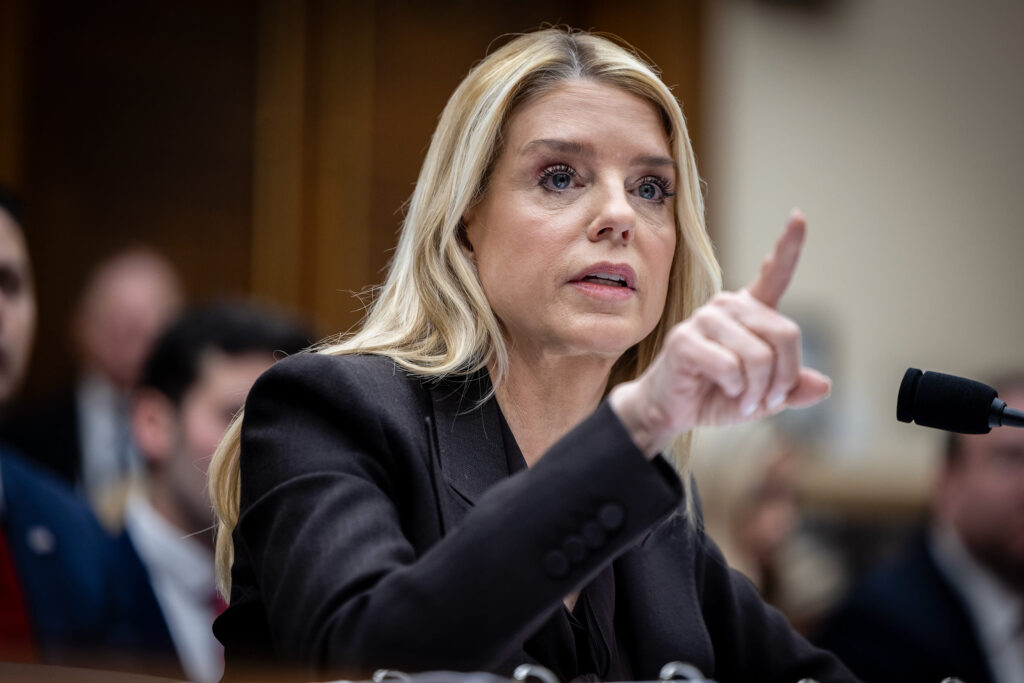
The panel adopted a motion introduced by Rep. Nancy Mace, R-S.C., directing that Bondi appear before the committee. Five Republicans joined Democrats in backing the measure, signaling bipartisan frustration over lingering questions surrounding the Justice Department’s management and release of investigative materials tied to Epstein.
In addition to Mace, Republican Reps. Lauren Boebert of Colorado, Tim Burchett of Tennessee, Michael Cloud of Texas and Scott Perry of Pennsylvania supported the subpoena effort.
The Justice Department did not immediately provide comment when contacted about the vote.
Rep. James Comer, R-Ky., who chairs the committee, said ahead of the vote that Bondi had offered to brief members at the Justice Department regarding the Epstein-related records and “anything else pertaining to that.” Lawmakers from both parties, however, indicated they preferred public testimony before the committee itself.
Rep. Robert Garcia of California, the panel’s top Democrat, said constituents continue to seek clarity about how the department handled the release of millions of pages of material.
“The attorney general has gone to speak, obviously, to other committees,” Garcia said. “I think it’s important that she is in front of our committee. She can directly answer questions about the release of the files, about transparency, about ensuring that victims and survivors are protected.”
Bondi testified before the House Judiciary Committee last month during a session focused on Justice Department oversight. During that appearance, Democratic lawmakers sharply questioned her about decisions surrounding the Epstein files. They contended that the department shielded certain prominent individuals whose names surfaced in the records while failing to sufficiently protect the identities of Epstein’s victims.
Bondi rejected allegations of a cover-up during that hearing.
The Oversight Committee’s action comes after a protracted dispute over the pace and scope of the Justice Department’s disclosure of materials from its Epstein investigation.
Last August, the committee issued a subpoena to the department seeking related documents. Congress subsequently passed the Epstein Files Transparency Act with bipartisan backing, and President Donald Trump signed the measure into law in November. The statute required the department to release all investigative material by Dec. 19, 2025.
The Justice Department ultimately disclosed millions of records in multiple installments, with the final tranche made public in late January. The staggered rollout drew criticism from some lawmakers who argued the law contemplated a more comprehensive release by the statutory deadline.
Early batches of documents drew attention for containing relatively few references to President Trump. Subsequent releases included records that mentioned the president. Trump has not been accused of wrongdoing in connection with Epstein.
A CBS News analysis determined that the Justice Department removed tens of thousands of files from the public archive. Some of those materials included explicit images or identifying details of survivors. The rationale for pulling other documents — including certain redacted call logs — has not been fully explained.
The investigation extends beyond the attorney general. Commerce Secretary Howard Lutnick, whose past associations with Epstein have drawn scrutiny, agreed to an interview with the Oversight Committee, Comer said Tuesday. A date for that session has not yet been announced.
Lutnick was among numerous prominent figures whose communications with Epstein surfaced following the Justice Department’s release of its investigative trove. Although Lutnick has said he severed ties with Epstein in 2005, documents indicated that contact continued after Epstein pleaded guilty in Florida state court in 2008 to prostitution-related charges and before his death by suicide in 2019 while facing federal sex-trafficking charges.
As part of its broader inquiry, the committee has sought testimony from former officials and individuals connected to Epstein, as well as documents from his estate.
Investigators conducted closed-door depositions last month with former President Bill Clinton and former Secretary of State Hillary Clinton. Video recordings of those sessions were released earlier this week. Bill Clinton told investigators, “There’s nothing that I saw when I was around him that made me realize he was trafficking women.” Hillary Clinton said she knew “nothing about him.”
The subpoena vote underscores the political sensitivity surrounding the Epstein case years after his death. Lawmakers from both parties face sustained public pressure to demonstrate transparency in cases involving wealthy and politically connected figures.
For Republicans, compelling Bondi’s testimony presents a complex dynamic. While some GOP members joined Democrats in seeking her appearance, the move also places scrutiny on an administration led by President Trump, who signed the transparency law and whose name appears in portions of the released records. Though no wrongdoing has been alleged against Trump, the political optics remain delicate.
For Democrats, pressing Bondi publicly allows them to frame the issue as one of institutional accountability and victim protection. Allegations that survivors’ identities were not adequately shielded may resonate beyond partisan lines, particularly given bipartisan passage of the transparency legislation.
The Justice Department, meanwhile, must balance competing obligations: safeguarding sensitive information while satisfying statutory disclosure requirements and congressional oversight demands. Decisions to redact or remove materials — even when justified by privacy or legal concerns — risk fueling speculation in a case already steeped in distrust.
The Oversight Committee’s next steps could shape broader debates about executive branch transparency. If Bondi appears and provides detailed explanations for the department’s actions, lawmakers may either quell concerns or intensify scrutiny depending on her testimony.
At stake is not only political accountability but public confidence in how the government handles investigations involving powerful individuals. The Epstein case, despite years of legal proceedings and document releases, continues to test the credibility of institutions tasked with delivering justice and transparency.
CBSNews





