

NAIROBI, Kenya — The death toll from catastrophic flooding that struck Kenya Friday evening has climbed to 43 as relentless heavy rains continue unleashing widespread destruction across at least 16 counties, leaving thousands of families counting devastating losses after floodwaters swept away homes, agricultural land, and critical infrastructure while displacing nearly five thousand people struggling to survive the disaster’s aftermath.
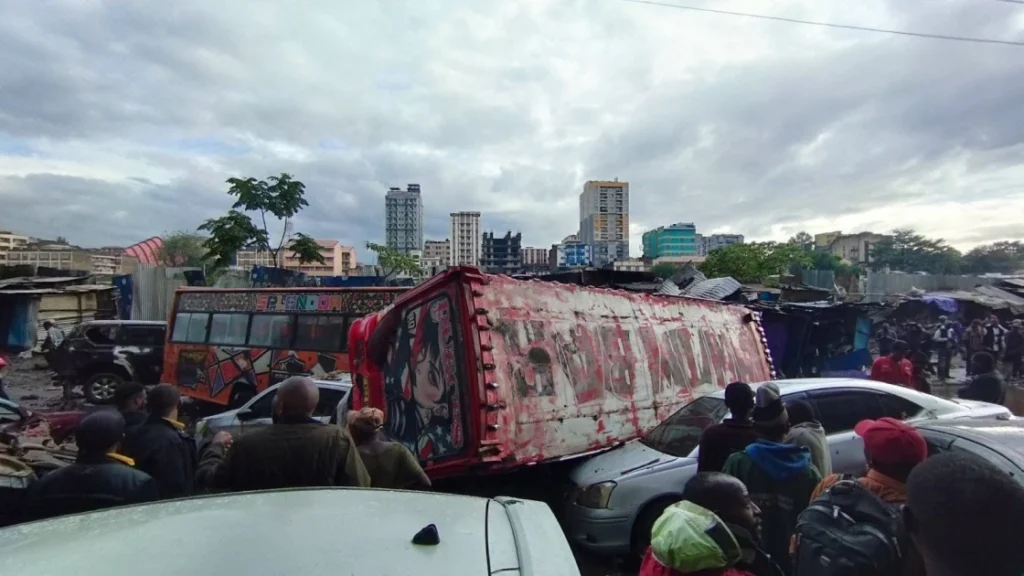
Government figures reveal the floods have affected more than 10,000 households, with 4,845 people forcibly displaced and seeking shelter in safer areas as water levels remain dangerously elevated across multiple regions. The escalating humanitarian crisis has overwhelmed local response capabilities, prompting urgent calls for national emergency assistance and international humanitarian support.
In Nairobi’s Grogon garages district, more than 30 vehicles have remained stranded since Friday after torrential floodwaters inundated underground parking facilities, transforming them into submerged traps for automobiles whose owners now face substantial financial losses. Vehicle owners have been compelled to arrange towing services to extract their cars as mechanics begin the arduous process of assessing damage and estimating repair costs.
“We are trying to remove them and fix them… many have been damaged. My car is about Ksh90,000,” Abdala Weke, an affected vehicle owner, told Citizen Digital, conveying the significant economic burden the flooding has imposed on individuals already facing challenging economic circumstances in Kenya’s capital.
Mechanic Wachira Zakayo cautioned that repairs could prove extraordinarily expensive, requesting patience from distressed motorists confronting unexpected financial obligations. “The cost is high… we tell them pole, they should not blame us because these are acts of God,” Zakayo explained, using the Swahili expression for sympathy while characterizing the flooding as a natural disaster beyond human control or prevention.
The flooding’s human toll extends far beyond damaged vehicles to families who lost everything they owned. In Hazina estate, South B, hundreds of residents found themselves homeless after flash floods tore through the neighborhood with terrifying speed, demolishing houses and washing away possessions accumulated over lifetimes. The suddenness of the disaster left families no time to salvage belongings before raging waters consumed their homes.
Angela Penina, a Hazina estate resident, described her desperate circumstances caring for a newborn infant without shelter or basic necessities. “I have no place to stay, I have a one-week-old baby and the house has been swept away by water… I don’t have clothes for the baby,” she revealed, her voice conveying the anguish of a new mother facing homelessness with a vulnerable infant requiring constant care and protection from the elements.
Penina’s situation exemplifies the particular vulnerability of women, children, elderly individuals, and those with disabilities during natural disasters when sudden displacement strips away the basic securities of shelter, clothing, and safety. The presence of a one-week-old child dramatically compounds the crisis, as newborns require specialized care, warmth, and sanitation that homeless conditions cannot provide.
Similar devastation was documented in Kinoo, where numerous families could not access homes that remained completely submerged beneath standing floodwaters days after the initial deluge. Residents indicated that at least five churches and several schools sustained damage, disrupting both spiritual community life and educational services for children whose academic progress has been interrupted indefinitely.
“Every year we have a perennial issue of flooding here… today some cannot even worship. Many families are trapped inside their houses,” Richard Migwi, a Kinoo resident, lamented. His comments highlighted the chronic nature of flooding in certain Kenyan communities where inadequate drainage infrastructure, unplanned urban development, and environmental degradation have created conditions where seasonal rains predictably produce catastrophic flooding.
The reference to “perennial” flooding issues raises critical questions about disaster preparedness, infrastructure investment, and urban planning failures that leave vulnerable communities repeatedly exposed to preventable disasters. That residents anticipate annual flooding yet remain without effective mitigation measures suggests systemic governmental failures to protect citizens from foreseeable natural hazards.
The entrapment of families inside submerged houses created life-threatening situations where residents faced choices between remaining in flooded homes with rising water levels or attempting to evacuate through dangerous currents that could sweep them away. Emergency responders have struggled to reach trapped individuals in areas where roads became impassable and conventional rescue equipment proved inadequate for the scale of inundation.
The flooding struck at the end of the working week, catching many families unprepared as Friday evening typically represents a time when people relax at home rather than monitoring weather warnings or preparing emergency evacuations. The timing may have contributed to the high casualty toll as residents had little warning before flash floods overwhelmed neighborhoods with shocking rapidity.
Kenya’s meteorological services had issued warnings about heavy rainfall expected across multiple regions, though the severity of flooding apparently exceeded forecasted impacts. Climate change has intensified rainfall patterns across East Africa, producing more frequent extreme weather events that traditional infrastructure and disaster response systems were never designed to handle.
The 16 counties affected by flooding span diverse geographic regions, suggesting that the weather system producing torrential rains covered vast territories rather than constituting a localized phenomenon. The geographic breadth of the disaster strains national response capabilities as emergency services must simultaneously address crises across multiple jurisdictions with limited personnel, equipment, and financial resources.
Agricultural losses from the flooding will compound food security challenges in a nation where many rural families depend on subsistence farming for survival. Floodwaters that swept across farmland destroyed crops nearing harvest, killed livestock, and contaminated soil with debris and pollutants that will reduce agricultural productivity for subsequent growing seasons. The economic impacts will reverberate for months or years as affected families struggle to recover livelihoods.
Road damage and infrastructure destruction have severed transportation links connecting communities to markets, medical facilities, and essential services. The isolation compounds the humanitarian crisis as emergency supplies cannot reach affected populations and injured or ill individuals cannot access medical care. Reconstruction of damaged roads, bridges, and public infrastructure will require substantial government expenditure at a time when Kenya faces significant fiscal constraints.
The death toll of 43 represents confirmed fatalities, though the actual number may prove higher as rescue teams access previously unreachable areas and discover additional victims. In major flooding events, accurate casualty counts often require days or weeks to compile as bodies are recovered from floodwaters, collapsed structures, and downstream locations where currents deposited them.
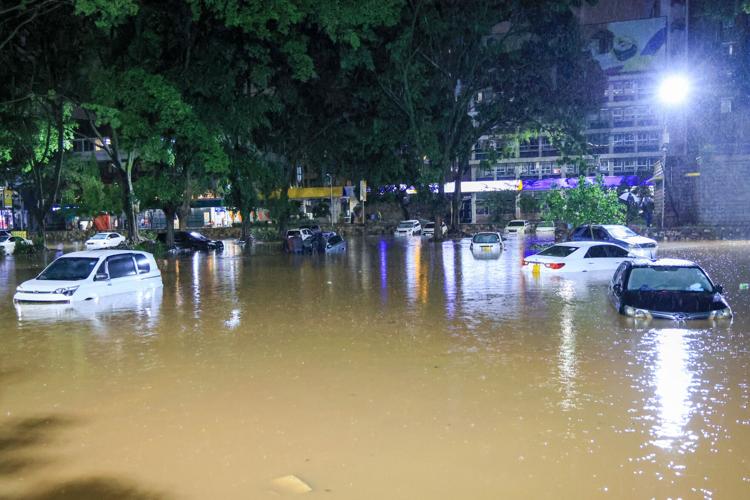
The 4,845 displaced individuals now crowd into temporary shelters including schools, churches, and community centers where conditions are cramped, sanitation facilities are overwhelmed, and privacy is nonexistent. Displaced populations face elevated risks of disease outbreaks as inadequate water and sanitation services create environments where cholera, typhoid, and other waterborne illnesses spread rapidly through vulnerable communities.
Humanitarian organizations have mobilized to provide emergency assistance including food, clean water, medical care, and temporary shelter materials. However, the scale of need far exceeds available resources, leaving many displaced families without adequate support. International appeals for emergency funding will be necessary to mount comprehensive humanitarian responses addressing immediate survival needs and longer-term recovery requirements.
The psychological trauma of losing homes, possessions, and in some cases loved ones will affect survivors for years. Children who witnessed terrifying floods destroying their homes and communities may experience lasting emotional impacts requiring mental health interventions that Kenya’s overstretched health system is poorly equipped to provide.
As floodwaters gradually recede in some areas, the enormity of destruction becomes visible. Homes stand as hollow shells filled with mud and debris, personal belongings are scattered across landscapes transformed beyond recognition, and the overwhelming task of cleaning, rebuilding, and recovering begins for exhausted survivors who lost everything.
The disaster renews urgent conversations about climate adaptation, disaster preparedness, urban planning reform, and infrastructure investment necessary to protect Kenyan communities from increasingly frequent and severe extreme weather events. Without substantial changes in how the nation manages water resources, regulates urban development, and prepares for climate-driven disasters, similar catastrophes will continue claiming lives and destroying livelihoods with tragic regularity.
For the 43 people who perished and the thousands now homeless, the flooding represents a preventable tragedy that better infrastructure, early warning systems, and disaster response capabilities might have mitigated. Their suffering stands as an indictment of systemic failures and a call to action demanding that Kenya prioritize protecting its most vulnerable citizens from foreseeable natural disasters.





