

Roughly 140 U.S. service members have been wounded during the first ten days of the war involving Iran, including eight troops with severe injuries, according to new figures released by the Pentagon.
Defense officials said the majority of the wounded soldiers have already returned to duty after receiving treatment for relatively minor injuries sustained during Iranian missile and drone strikes targeting American military installations across the Middle East.
Pentagon chief spokesman Sean Parnell disclosed the updated casualty figures Tuesday, offering the most detailed look yet at the human toll of the conflict on U.S. forces.
“Since the start of Operation Epic Fury, approximately 140 U.S. service members have been wounded over 10 days of sustained attacks,” Parnell said in a statement.
“The vast majority of these injuries have been minor, and 108 service members have already returned to duty. Eight service members remain listed as severely injured and are receiving the highest level of medical care.”
The casualty figures represent the first comprehensive estimate released by the Pentagon regarding injuries among American forces since the conflict began.
Prior to the disclosure, defense officials had only confirmed that eight service members were seriously wounded.
Two people familiar with the matter had earlier indicated to Reuters that the number of injured troops could reach as high as 150, a figure that had not previously been made public.
Following the publication of that report, the Pentagon clarified that the official estimate stood at roughly 140 wounded personnel.
Neither the Pentagon nor military officials have provided detailed information about the specific injuries sustained by troops.
According to Reuters, it remains unclear whether the casualty figures include traumatic brain injuries, which frequently occur when soldiers are exposed to powerful explosions from missiles or drones.
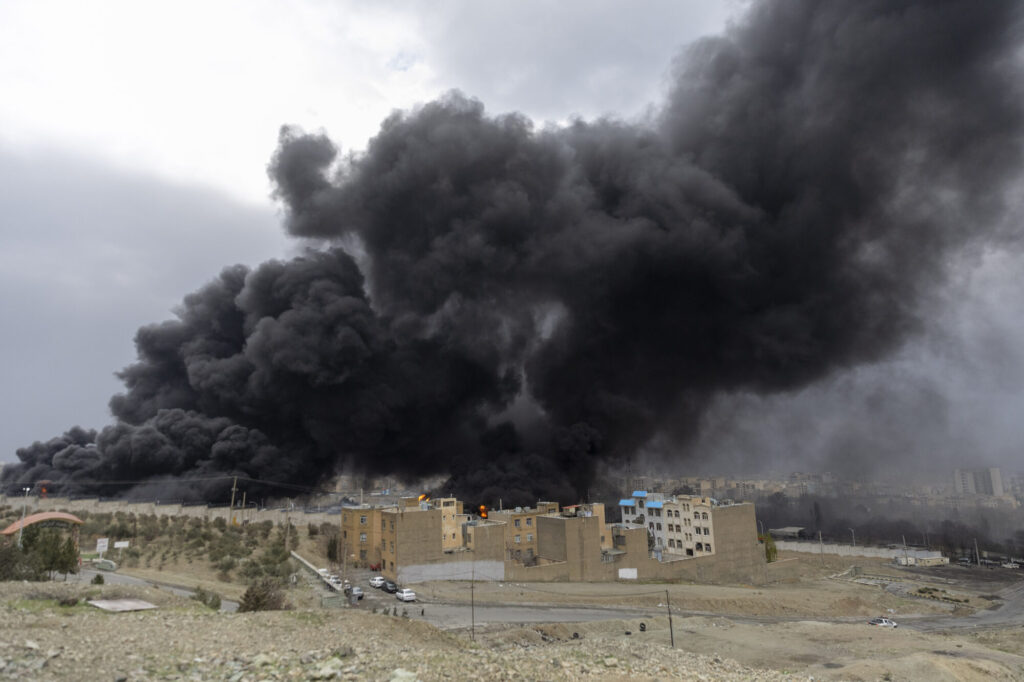
Iran has launched a series of retaliatory strikes against U.S. military positions since the war began on Feb. 28, targeting bases and facilities in several Middle Eastern countries.
Those attacks have included missiles and armed drones, weapons that have repeatedly struck locations hosting American troops.
The attacks have also killed seven U.S. soldiers stationed in Kuwait and Saudi Arabia, according to earlier reporting by The Associated Press.
Beyond military targets, Iranian strikes have also hit diplomatic compounds, hotels and airports across Gulf states, while damaging oil infrastructure in the region, according to reports cited by Reuters.
The strikes form part of Iran’s response to a U.S.–Israeli military campaign aimed at degrading Tehran’s missile capabilities and military infrastructure.
Despite the casualties suffered by U.S. forces, Pentagon officials say the tempo of Iranian attacks has slowed in recent days.
Defense officials attribute the decline partly to American airstrikes targeting Iran’s weapons stockpiles and missile launch systems.
U.S. aircraft and naval forces have been conducting sustained operations against Iranian military installations since the conflict began.
These strikes have focused on destroying missile launchers, drone facilities and weapons depots, limiting Iran’s ability to carry out additional attacks.
Senior military leaders say the conflict has unfolded largely as expected from a strategic perspective.
General Dan Caine, chairman of the Joint Chiefs of Staff, addressed reporters during a Pentagon briefing earlier Tuesday.
Asked whether Iran had proven to be a stronger adversary than anticipated when the U.S. military developed its war plans, Caine suggested that the conflict had not exceeded expectations.
“I think they’re fighting, and I respect that,” Caine said. “But I don’t think they are more formidable than what we thought.”
The general’s remarks indicate that military planners had anticipated significant retaliatory attacks from Iran following the initial strikes by the United States and Israel.
While the Pentagon emphasized that most injuries among U.S. troops have been minor, the casualty figures illustrate the evolving risks of modern warfare in the Middle East.
Missile and drone attacks can generate powerful blast waves capable of causing injuries even when soldiers are shielded inside fortified structures.
In previous conflicts, such as the wars in Iraq and Afghanistan, blast exposure often resulted in traumatic brain injuries, sometimes with symptoms emerging days or weeks after the initial attack.
Because these injuries are not always immediately visible, casualty figures can change as medical assessments continue.
Another factor shaping the casualty count is the widespread deployment of protective infrastructure at U.S. military bases.
Many American installations in the region are equipped with reinforced bunkers and missile defense systems designed to reduce fatalities during attacks.
Those precautions likely contributed to the relatively low number of deaths compared with the number of injured troops.
Still, the injuries underscore the persistent danger facing U.S. forces stationed across the Middle East as the conflict with Iran continues.
The war has triggered escalating tensions across the Gulf region, where numerous countries host U.S. troops and military facilities.
Iranian retaliatory strikes have targeted bases used by American forces while also hitting civilian infrastructure in some areas.
At the same time, the U.S. military has intensified its campaign against Iranian missile capabilities, aiming to reduce Tehran’s capacity to launch further attacks.
Military analysts say the success of those efforts will likely determine whether casualty figures rise in the coming weeks.
For now, Pentagon officials say they remain focused on protecting American personnel and maintaining operational readiness.
The fact that 108 wounded troops have already returned to duty suggests that the majority of injuries were relatively minor, such as shrapnel wounds or concussion symptoms.
However, the eight service members classified as severely injured remain under intensive medical care.
As the conflict continues, the number of wounded troops may rise depending on the scale and frequency of further Iranian attacks.
For American military planners and policymakers, the emerging casualty figures provide an early glimpse into the human cost of a war that shows little sign of ending soon.
AP/Reuters/NBC/ABC





