

(Aljazeera) — A missile strike on an industrial site in central Isfahan killed at least 15 people Saturday, Iranian media reported, as fighting between Iran and Israel intensified with new missile launches and continued airstrikes.
The attack struck a factory producing heating and cooling equipment, where workers were reportedly on duty during the strike. Iran’s semi-official Fars News Agency attributed the strike to joint forces from Israel and the United States.
The latest strike came on the 15th day of a widening conflict that Iranian officials say has caused heavy casualties across the country.
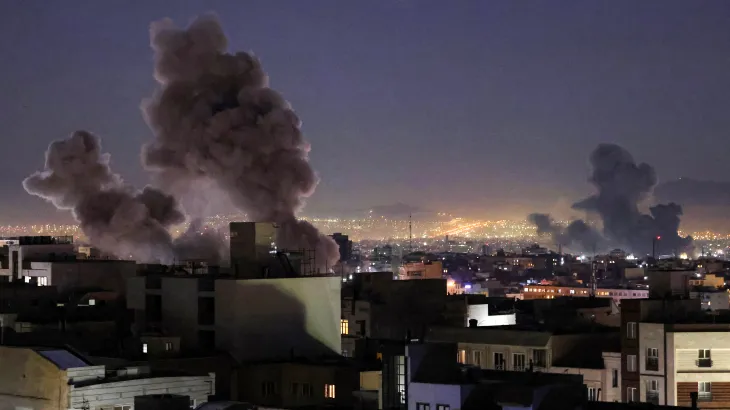
Iran’s Ministry of Health of Iran said the conflict has killed at least 1,444 people and injured more than 18,500 since the attacks began on Feb. 28.
Cities across the country have repeatedly come under fire as Israeli and American forces strike military and strategic targets.
In early March, shelling also damaged Russian Consulate in Isfahan, injuring staff members. Russia condemned the incident, calling it a “blatant violation” of international diplomatic protections.
Iranian officials say the war has also affected historic landmarks and cultural institutions.
The Ministry of Culture of Iran said Saturday that 56 museums and heritage sites have sustained damage since the fighting began.
Among them are Naqsh‑e Jahan Square, a centerpiece of the city built in the 17th century, and the Golestan Palace.
The UNESCO expressed concern over the reported damage, noting that four of Iran’s 29 World Heritage Sites have been affected by the conflict.
Separately, Iran’s military confirmed that Abdullah Jalali‑Nasab was killed in an Israeli strike.
In a statement, the army said the officer had been “martyred while defending the country,” reflecting the government’s description of military casualties during the war.
Earlier Saturday, U.S. forces also carried out strikes near Kharg Island, which handles roughly 90% of Iran’s crude oil exports.
Local officials said oil operations on the island continued normally and reported no casualties from that strike.
President Donald Trump previously warned that the United States could target Iran’s energy infrastructure if Tehran continued interfering with shipping through the Strait of Hormuz.
Prospects for negotiations to end the conflict remain uncertain.
Regional governments have attempted to mediate a ceasefire, but the White House signaled that Washington intends to continue military operations for now.
A senior U.S. official told Reuters that President Trump is focused on pressing ahead with the campaign rather than pursuing talks.
“He’s not interested in that right now, and we’re going to continue with the mission unabated,” the official said.
Iran has also rejected negotiations while strikes continue, according to an Iranian official cited by Reuters.
Iran’s foreign minister Abbas Araghchi criticized the U.S. military presence in the region, saying the American security framework had “proven to be full of holes” and urging neighboring countries to expel what he described as foreign aggressors.
Meanwhile, Israeli Defense Minister Israel Katz said the conflict was entering a “decisive phase” and would continue “as long as necessary.”
Amid the escalating conflict, Iran launched a new wave of missiles toward Israel on Saturday.
Explosions were heard above Jerusalem, according to journalists from Agence France‑Presse.
The Israel Defense Forces said six separate waves of missiles struck areas across the country.
Some of the weapons reportedly carried cluster munition warheads, the military said.
In the southern Israeli city of Eilat, an explosion caused by a cluster munition wounded three people, including a 12-year-old boy, according to The Times of Israel.
The strike in Isfahan underscores how the conflict between Iran, Israel and the United States is increasingly spreading beyond military installations to include industrial facilities and critical infrastructure.
Analysts say both sides are attempting to weaken their opponent’s economic and logistical capacity while maintaining military pressure.
At the same time, the reported damage to cultural heritage sites highlights the broader risks of prolonged conflict in a region rich in historical landmarks.
With missile exchanges intensifying and diplomatic channels stalled, the war shows little sign of easing, raising concerns that the confrontation could expand further across the Middle East.





