

(AP/Punchng) — A series of explosions tore through parts of Maiduguri, Nigeria, on Monday night, killing an undetermined number of people and injuring scores of others in one of the most serious attacks in the northeastern Nigerian city in recent years.
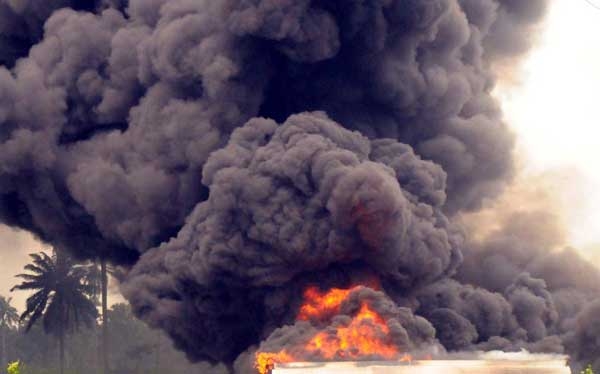
Authorities and emergency officials said the blasts occurred almost simultaneously around 7:02 p.m. near the busy Monday Market, at the Post Office Market, and close to a security post at the University of Maiduguri Teaching Hospital.
The explosions struck at a time when residents were still moving through crowded market areas in the city, which has long served as the epicenter of Nigeria’s battle against Islamist militant groups.
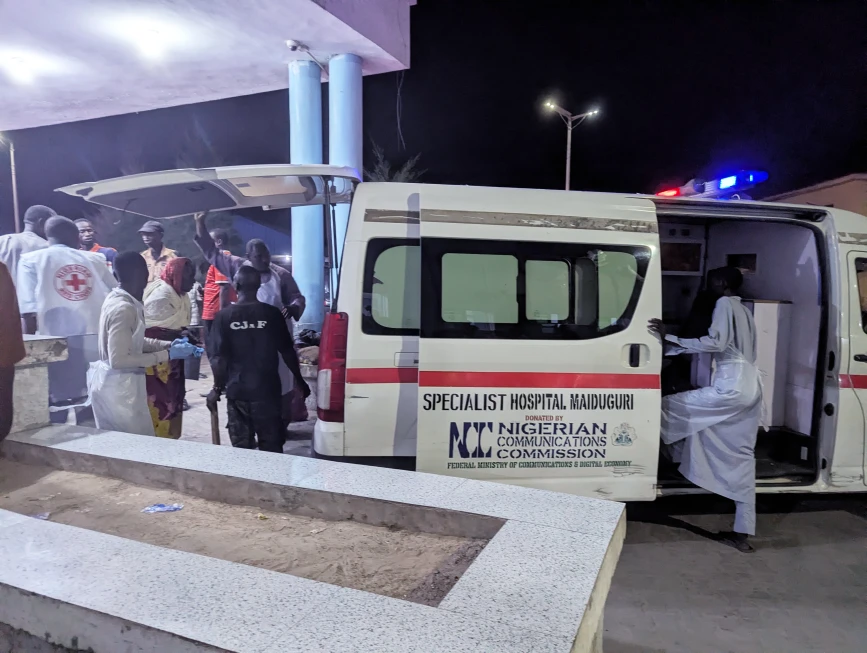
Emergency responders rushed to the scenes shortly after the blasts, while hospitals across the city began receiving a wave of casualties.
Officials said the exact death toll remained unclear as rescue workers continued searching the affected areas and medical teams struggled to treat the injured.
Mohammed Kafaran, head of operations for the Federal Fire Service in Borno State, confirmed that emergency teams were dispatched to the Monday Market district following the explosions.
“Yes, there was a bomb explosion at the Monday Market area around Elkanemi,” Kafaran said while responding to inquiries from journalists. “We have deployed our team there to assess the situation.”
He added that authorities were still evaluating the scale of the damage and the number of casualties.
Officials from the National Emergency Management Agency, commonly known as NEMA, also joined rescue operations.
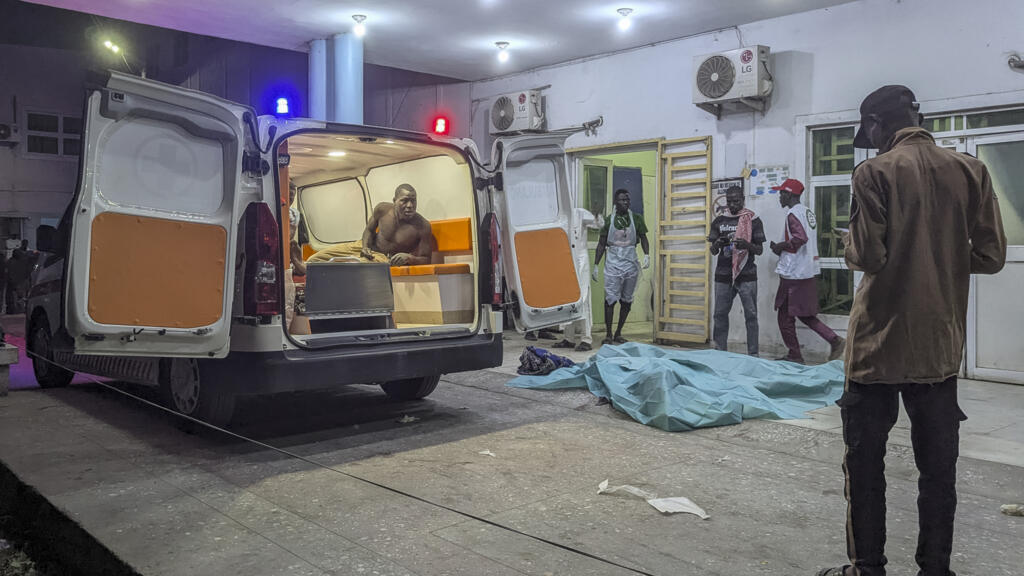
Sirajo Abdullahi, the agency’s head of operations in Maiduguri, told The Associated Press that several people had been killed or injured but that an official casualty figure could not yet be confirmed.
“There are casualties and they are still managing the casualties at the hospital,” Abdullahi said. “We can’t give the actual figure until we count.”
Residents near the explosion sites described moments of panic as the blasts echoed across the city.
One witness told PUNCH Online that the explosions left bodies scattered in the market area while emergency workers scrambled to evacuate survivors.
“There were dead bodies on the ground, and many persons with wounds have been rushed to the State Specialist Hospital in Maiduguri,” the witness said.
Another resident, who declined to be identified, recounted hearing the blast shortly after leaving a nearby post office building.
“I had just left the post office and was on my way when I heard a loud sound,” the resident said.
Bagoni Alkali, another eyewitness, told The Associated Press that he personally transported wounded victims to the hospital.
“Right now, over 200 people have been injured and are receiving care in the accident and emergency department,” Alkali said.
He added that several victims died at the scene immediately after the explosions.
“While I could tell you so many people have died, to be honest, many lost their lives at the scene immediately after the bomb exploded. It’s disheartening,” he said.
Mohammed Hassan, a member of a local volunteer group that assists security forces in the region, said he helped recover bodies from the affected markets.
“I evacuated 10 bodies from the Post Office and Monday Markets,” Hassan said.
“Many victims were rushed to the emergency ward, but some died at the hospital. We’re in dire need of blood,” he added.
Hassan described the incident as one of the most devastating attacks to strike Maiduguri in years.
“This attack’s been one of the deadliest in Maiduguri in years,” he said.
Authorities said no group had immediately claimed responsibility for the blasts.
However, suspicion quickly fell on extremist groups that have carried out numerous attacks in northeastern Nigeria.
The Nigerian military said earlier Monday it had repelled assaults by suspected Islamist militants on the outskirts of Maiduguri during overnight operations.
Those clashes occurred just hours before the explosions in the city.
For more than a decade, Boko Haram and splinter factions have waged an insurgency across northeastern Nigeria.
The conflict has killed tens of thousands of people and displaced millions across the region.
While the insurgency has continued in rural parts of Borno State, major attacks inside Maiduguri itself have become less frequent in recent years following intensified military operations.
The latest explosions may signal a renewed attempt by militants to penetrate urban areas once again.
Borno State Governor Babagana Umara Zulum strongly condemned the explosions in a statement issued Monday night.
“My thoughts and prayers are with the families of the victims and those injured as a result of the blast,” Zulum said.
“The act is utterly condemnable, barbaric and inhumane,” he added.
The governor urged residents to remain calm while authorities investigated the attacks.
He also encouraged citizens to cooperate with security agencies by reporting suspicious activity.
The attacks underscore the fragile security situation that continues to grip parts of northeastern Nigeria despite years of military campaigns against militant groups.
Maiduguri, once the stronghold of Boko Haram’s founder, has served as the central hub for Nigerian military operations against insurgents.
Since the height of the insurgency in the mid-2010s, Nigerian forces supported by regional allies have reclaimed several territories previously controlled by militants.
Yet security experts say extremist groups have adapted their tactics, shifting toward guerrilla warfare and sporadic bombings.
Recent attacks on military bases across the region suggest that militant factions remain capable of launching coordinated operations.
The blasts in Maiduguri could therefore represent both a symbolic and strategic move by insurgents seeking to demonstrate that the conflict is far from over.
Analysts also warn that the continued humanitarian crisis in northeastern Nigeria — including widespread displacement, poverty and limited economic opportunities — may fuel ongoing instability.
Local authorities have struggled to balance security operations with rebuilding efforts aimed at restoring normal life for residents.
Emergency responders remained at the blast sites late Monday night as search operations continued.
Medical teams across Maiduguri were working to stabilize injured victims while authorities sought to determine the exact number of people killed or wounded.
Security agencies have begun reviewing surveillance footage and interviewing witnesses in an effort to determine how the attacks were carried out.
Officials say further details will emerge as investigations progress.
For now, the explosions have once again reminded residents of the lingering threat posed by militant violence in northeastern Nigeria — a region that has endured nearly two decades of conflict.





