

Israeli airstrikes killed at least 10 people across southern Lebanon on Friday as Hezbollah launched drones and rockets into northern Israel, wounding two soldiers in a continued exchange of fire that has persisted without pause since a ceasefire between the two sides took effect April 17 — a truce that has demonstrably failed to halt the bloodshed it was meant to contain.
The deadliest single strike of the day struck the village of Habboush, near the southern city of Nabatiyeh, killing six people including a woman and a child and wounding eight others, Lebanon’s Health Ministry confirmed. The Israeli military had issued an evacuation warning to Habboush residents moments earlier, cautioning that those in proximity to Hezbollah facilities faced danger. The state-run National News Agency confirmed four additional deaths across three separate southern villages struck later in the day.
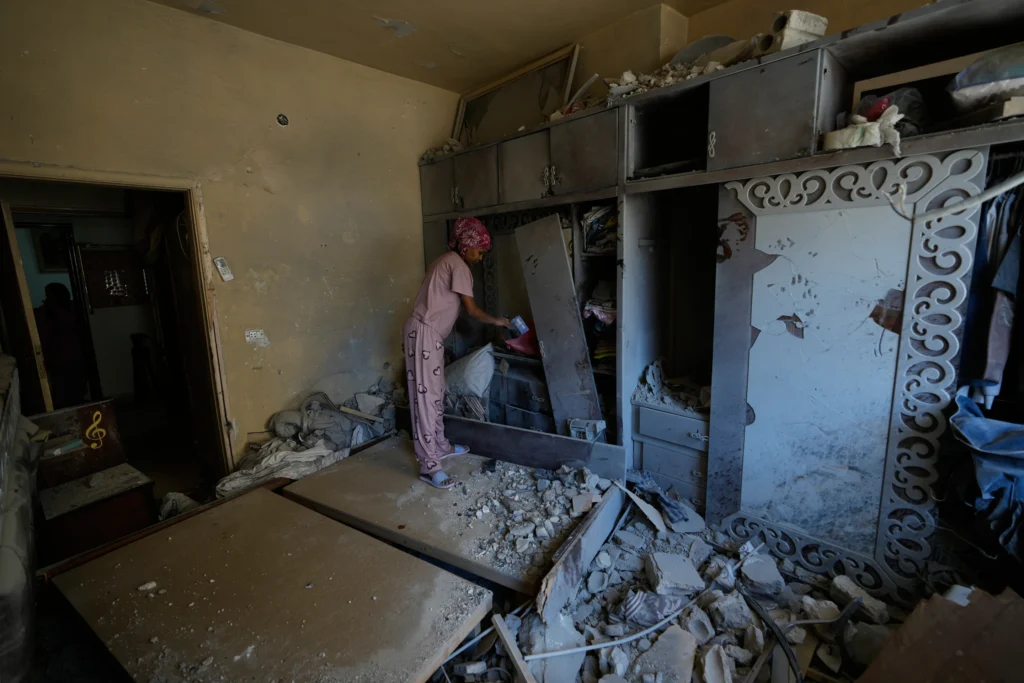
By Friday afternoon, Hezbollah had released six successive statements acknowledging it had launched both drones and rockets at Israeli military positions along the border. The Israeli military confirmed that an explosive drone crossed into northern Israel and landed near the border with Lebanon. Israeli media outlets reported that a separate drone strike in the vicinity of Margaliot ignited a fire, and that two soldiers sustained light wounds in a Hezbollah drone impact in the same general area.
The violence unfolded against the backdrop of an Israeli ground presence that has remained embedded in a strip of Lebanese territory extending roughly 10 kilometers inside the border since the ceasefire was declared, with Israeli forces characterizing the occupation as an essential buffer zone to shield northern Israeli communities from Hezbollah rocket fire.
A Journalist Killed, Another Left in Rubble
The escalating military exchange has claimed civilian lives beyond Friday’s toll, and no death has drawn more immediate international attention than that of Amal Khalil, a veteran correspondent for the Lebanese newspaper Al-Akhbar who was killed by an Israeli strike in southern Lebanon on Wednesday — five days into the ceasefire — while on assignment to document conditions in the post-truce zone.
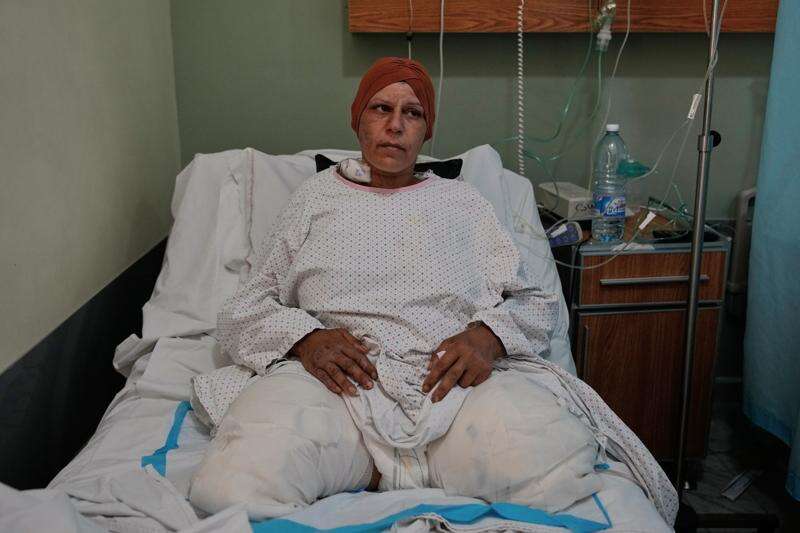
In an interview with the Associated Press conducted Friday from her hospital bed in Beirut, Khalil’s colleague Zeinab Faraj — a freelance photographer and video journalist who survived the same strike — described hours of agony, confusion, and desperate waiting as the two women were trapped in a shop with no rescue forthcoming and Israeli aircraft continuing to circle overhead.
Faraj and Khalil had been driving through the village of al-Tiri, approximately eight kilometers from the Israeli border, when an Israeli strike hit the car traveling ahead of them. Khalil had been holding her phone out the window to capture footage of the post-ceasefire landscape. The women pulled over and took cover on the roadside. A drone remained visible in the sky above them. Roughly an hour later, a second strike hit Khalil’s parked car directly beside them.
Faraj forced open the metal security shutter of a nearby shop and the two women took shelter inside. Khalil, she recalled, was by then crawling — wounded in her nose, head, shoulder, and leg, and suffering burn wounds from the burning vehicle. Despite her injuries, Khalil attempted to reassure her family by phone that both women were safe.
A coordinated effort involving the Lebanese Red Cross, the Lebanese army, the United Nations peacekeeping force UNIFIL, and the Israeli military was initiated to negotiate safe passage for an evacuation. It was slow. As time stretched on and Faraj began to lose consciousness, Khalil drew close.
“When I said I wanted to go to sleep, Amal came closer and hugged me and told me, ‘Zeinab, don’t leave me alone,'” Faraj recounted, speaking with visible difficulty, her face swollen and bruised. “I realized that Amal was not in good condition. The color of her face had changed and I realized that she had some internal bleeding, too.”
Then a third strike hit the building where they were sheltering. Faraj was thrown from the shop by the blast’s force. Khalil was buried inside.
“I was in and out of consciousness, and then I thought my dad had come to get me and I began calling to him, ‘Baba, I’m here, come and help me,'” Faraj said.
Lebanon’s Health Ministry said in a statement that when a Red Cross ambulance finally reached the scene to attempt Khalil’s rescue, Israeli forces opened fire on it, compelling the crew to retreat. The Israeli military denied targeting journalists, denied obstructing rescue operations, and said the incident remained under review, adding that individuals in the village had violated the ceasefire in ways that endangered its troops.
Shortly before midnight, after the Lebanese army, civil defense teams, and the Red Cross received clearance to re-enter the area, Khalil’s body was recovered from the rubble. Faraj had been evacuated hours earlier, unaware until later that her colleague had not been brought out with her.
“If they had gotten to her a bit sooner, Amal would be here today,” Faraj said.
A Pattern of Targeting — and a Social Media Post
Faraj is convinced the two journalists were deliberately targeted. Her belief is grounded in part in something Khalil had disclosed before her death: that during her coverage of the previous Israel-Hezbollah conflict in 2024, she had received threatening messages from a number with an Israeli country code. It remained unclear whether the messages originated from the Israeli military or a private individual. The Israeli army did not respond to an inquiry on the matter.
Days before Khalil was killed, Israeli military spokesperson Avichay Adraee reposted on the platform X a video from Al-Akhbar showing Khalil rescuing a cat from the rubble of a destroyed building. In his post, Adraee characterized Al-Akhbar as “terrorist media speaking on behalf of Hezbollah, the devil,” citing the newspaper’s editorially pro-Hezbollah orientation.
The Committee to Protect Journalists, an international press freedom organization, characterized Adraee’s post as “incitement” and called for an international investigation into Khalil’s killing. In a statement, the organization cited the protections afforded to journalists under international humanitarian law regardless of the editorial positions of their employers. “Under international humanitarian law, journalists, as civilians, are protected from direct and indiscriminate attack, regardless of the positions or affiliation of their media outlets, provided they do not directly participate in hostilities,” the group said. “There is no evidence that Khalil or Faraj were directly participating in hostilities.”
Lebanon’s information ministry confirmed that nine journalists have been killed by Israeli strikes since the current conflict began on March 2.
The War’s Expanding Human Cost
The latest Israel-Hezbollah conflict ignited March 2, when Hezbollah fired a barrage of missiles across the border two days after the United States and Israel launched military operations against Iran. Israel responded with broad aerial bombardment across Lebanon and a ground incursion that established the border strip its forces continue to occupy.
The cumulative toll since March 2 has reached nearly 2,500 people killed in Lebanon, among them 277 women, 177 children, and 100 health workers, according to Lebanon’s health authorities. On the Israeli side, 15 soldiers and three civilians have been killed.
The April 17 ceasefire has not produced the cessation of hostilities its name implies. Israeli forces have conducted repeated strikes on Lebanese villages since the truce took effect, and Hezbollah has maintained a sustained launch cadence of drones and rockets into Israeli territory. Neither side has formally acknowledged that the ceasefire has collapsed, yet both have continued prosecuting violence at a tempo that renders the agreement functionally inoperative.
Journalism, Impunity, and the Rules of War
The killing of Amal Khalil and the near-death of Zeinab Faraj crystallize a dynamic that has defined coverage of this conflict from its opening days: the extreme danger facing journalists attempting to document conditions in southern Lebanon, and the near-total absence of accountability for strikes that kill or wound members of the press.
The sequence of events Faraj described — a first strike, a second strike on the journalists’ car, a third strike on the building where two wounded women were sheltering, and then gunfire on the ambulance attempting their rescue — represents, if accurately recalled, a pattern that the laws of armed conflict are explicitly designed to prohibit. Whether those events unfolded as Faraj describes them, and whether they reflect deliberate targeting, reckless indifference, or tragic operational error, is precisely the question that the Committee to Protect Journalists argued can only be resolved through an independent international investigation.
Israel’s military has consistently denied targeting journalists and maintained that all strikes are conducted against legitimate military objectives. That position is rendered harder to evaluate by the absence of any independent investigative mechanism with access to both the operational records of the Israeli military and the physical evidence on the ground in southern Lebanon.
What is not in dispute is the aggregate toll: nine journalists killed in Lebanese territory since March 2, in a conflict that began less than two months ago. That figure, measured against any historical baseline for press casualties in modern warfare, demands explanation — and, if the international community is serious about the protections it has written into the laws of war, demands accountability.
The Associated Press story





