

(AP) — The president of Uganda, Yoweri Museveni, extended his four-decade hold on power Tuesday after taking the oath of office for another five-year term, as growing attention centers on his son, Muhoozi Kainerugaba, who has emerged as a dominant figure in the country’s political and security landscape.
The 81-year-old leader was sworn in during a ceremony in the Kampala suburb of Kololo, capital of Uganda, where thousands gathered to witness his eighth inauguration. Military displays, including flyovers by fighter jets, underscored the role of the armed forces in a system that analysts say is increasingly shaped by the president’s inner circle.
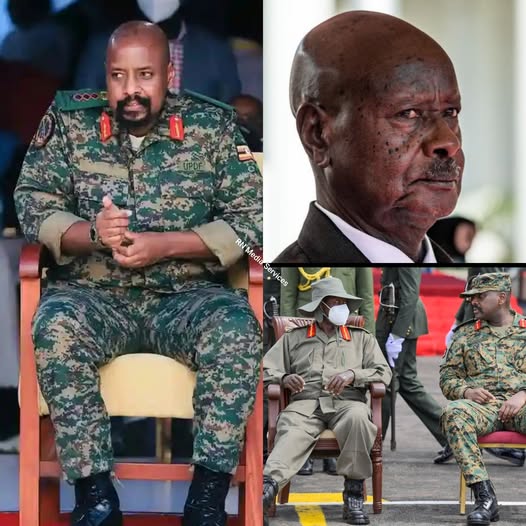
Museveni, who first seized power in 1986, now enters what many observers believe could be his final term. Yet uncertainty surrounds how leadership will transition in a country where he has been the only president for most citizens’ lifetimes.
His son, Kainerugaba, Uganda’s army chief, played a prominent role in organizing the inauguration events, overseeing military preparations and reinforcing his growing visibility in state affairs. The 52-year-old general has publicly declared his intention to succeed his father, signaling ambitions that have shifted from speculation to an increasingly central political reality.
Inside Uganda’s ruling establishment, momentum appears to be building behind Kainerugaba. Anita Among recently told lawmakers that efforts would be made to support his presidential aspirations, reflecting a broader trend among political elites aligning themselves with the general.
While no formal succession plan has been announced, analysts outline two possible paths: a transition shaped through legislative maneuvering within the ruling party or a less conventional transfer of power driven by military influence. An open electoral contest remains uncertain, particularly with strong opposition figures such as Bobi Wine expected to challenge any bid for the presidency.
Kainerugaba’s rise has not been without controversy. Critics have long pointed to what they describe as a coordinated effort to position him for leadership, often referred to in political discourse as a structured succession plan. Both father and son have previously rejected such claims, though recent developments have added weight to those concerns.
Observers note that the general already wields significant authority, particularly in defense and security matters. Some analysts argue that a functional shift in power has already taken place behind the scenes, even as Museveni remains the formal head of state.
Kainerugaba’s leadership style contrasts sharply with that of his father. While Museveni has maintained influence through political alliances and negotiations, his son is seen as more direct and confrontational, including through public statements and actions within the military hierarchy. He has ordered investigations and arrests of senior officers over alleged misconduct, moves that have drawn both praise and criticism.
Museveni’s presidency has been marked by a complex legacy. He is credited with bringing relative stability to Uganda after years of conflict and for maintaining economic growth in key sectors. However, his tenure has also faced criticism over democratic backsliding, including the removal of presidential term and age limits and the sidelining of political opponents.
Recent legislation passed by lawmakers has heightened those concerns. The law imposes strict limits on foreign funding for organizations without government approval, raising alarm among civil society groups and opposition figures who view it as a constraint on political dissent.
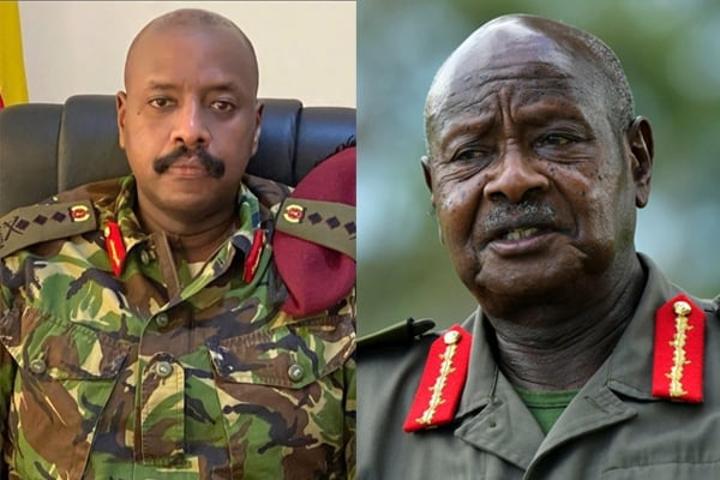
Museveni’s latest inauguration represents more than a continuation of leadership; it signals a critical phase in Uganda’s political evolution. After 40 years in power, the question is no longer whether a transition will occur, but how it will unfold and under what conditions.
The growing prominence of Kainerugaba suggests that Uganda may be moving toward a system where political authority is closely tied to military influence. This raises concerns about the balance between civilian governance and security structures, particularly in a region where such dynamics have historically shaped political outcomes.
The alignment of key political figures behind Kainerugaba points to a consolidation of power that could limit competitive political space. If succession is managed internally within the ruling establishment, it may reduce the likelihood of a fully contested electoral process, potentially reshaping Uganda’s democratic framework.
At the same time, the presence of an organized opposition, led by figures like Bobi Wine, indicates that public demand for political change remains strong. Any transition that appears predetermined could deepen tensions and trigger unrest, especially among younger populations who have only known one leader.
Regionally, Uganda’s stability has been a cornerstone of its role in East Africa, including its contributions to security operations beyond its borders. A smooth transition would likely reinforce that position, while a contested or uncertain process could introduce new risks.
Ultimately, the coming years may define not only Museveni’s legacy but also the direction of Uganda’s political future. Whether the country experiences a managed handover, a competitive election, or a more abrupt shift will shape its institutions and governance for decades to come.





