

An explosion followed by a fire tore through a defense manufacturing facility in central South Korea on Monday, leaving five workers dead and two others injured, emergency officials confirmed.
The blast occurred at a worksite operated by Hanwha Aerospace in the city of Daejeon at approximately 10:59 a.m., prompting a large scale response from fire and rescue teams. Around 100 personnel were deployed to contain the flames, which were fully brought under control shortly after 1 p.m.
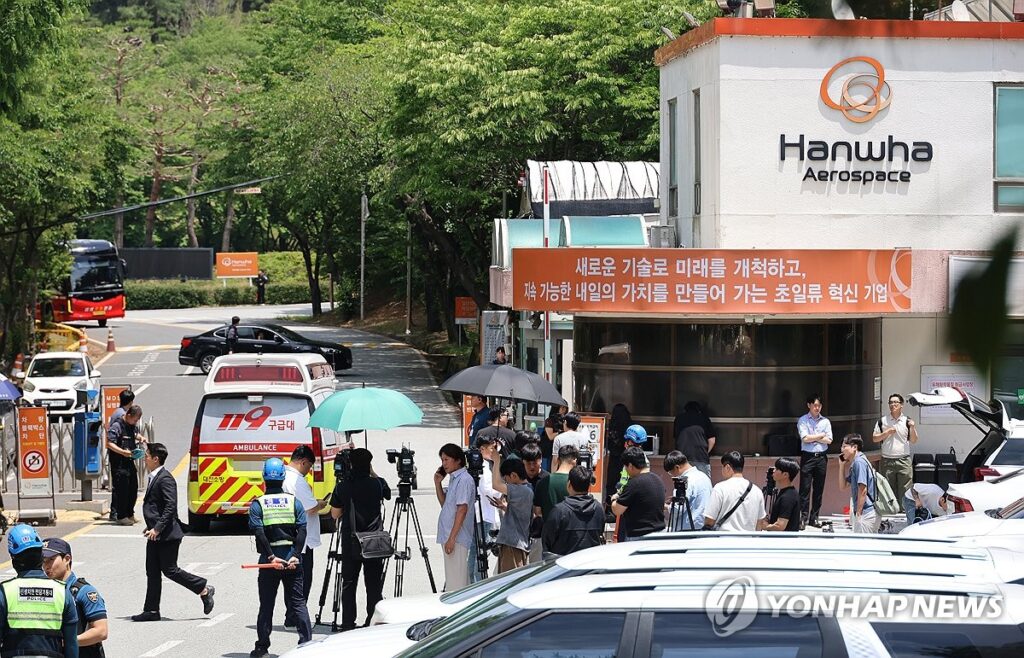
Authorities said all five victims were found at the scene. Two additional workers were hurt, including one who suffered severe burns across the body and remains in critical condition, while the other sustained less serious injuries.
Preliminary information from fire officials indicates the explosion may have occurred during cleaning operations involving explosive materials. Investigators are working to determine the exact sequence of events that led to the blast.
The facility is a key site for Hanwha Aerospace, where large propulsion systems and tactical surface to surface weapons are developed. Officials noted that the complex is classified as a government designated security zone.
The incident marks the latest in a series of deadly accidents at the same company. Similar explosions at the facility in 2018 and 2019 claimed multiple lives, raising ongoing concerns about industrial safety at high risk defense production sites.
The latest explosion highlights the inherent risks associated with handling volatile materials in defense manufacturing, particularly in facilities engaged in propulsion and weapons system development. Even routine procedures such as maintenance or cleaning can pose significant hazards if strict safety protocols are not followed or if materials degrade over time.
Repeated incidents at the same company suggest potential systemic challenges, including oversight gaps, aging infrastructure, or procedural weaknesses. While investigations will focus on immediate causes, the pattern of past accidents is likely to intensify scrutiny from regulators and the public.
The strategic importance of such facilities adds another layer of complexity. As key contributors to national defense capabilities, they operate under pressure to maintain production timelines, which can sometimes conflict with safety priorities if not carefully managed.
This event may prompt broader reviews across South Korea’s defense industry, particularly in facilities dealing with explosive compounds. It also underscores a global issue in military manufacturing, where balancing operational efficiency with worker safety remains an ongoing challenge.
YonhapNewsAgency/AP





