

Russia launched one of the most ferocious aerial assaults of the war on Tuesday, firing 73 missiles including eight Zircon hypersonic weapons and 656 drones at Ukrainian cities overnight and into the morning, killing at least 18 people including children buried under apartment rubble, wounding more than 100 others, and cutting electricity to 140,000 residents in Kyiv as Ukraine’s depleted air defenses struggled to absorb the scale of the attack.
The worst single toll came from Dnipro, where at least 12 people were killed, among them a 3-year-old child and a mother and her 8-year-old son whose bodies were pulled from the ruins of collapsed apartment buildings by emergency crews working through the rubble. A rescuer also died in what appeared to be a deliberate double-tap strike, where Russian forces hit a site a second time to kill first responders. Approximately 50 buildings were damaged in Dnipro alone.
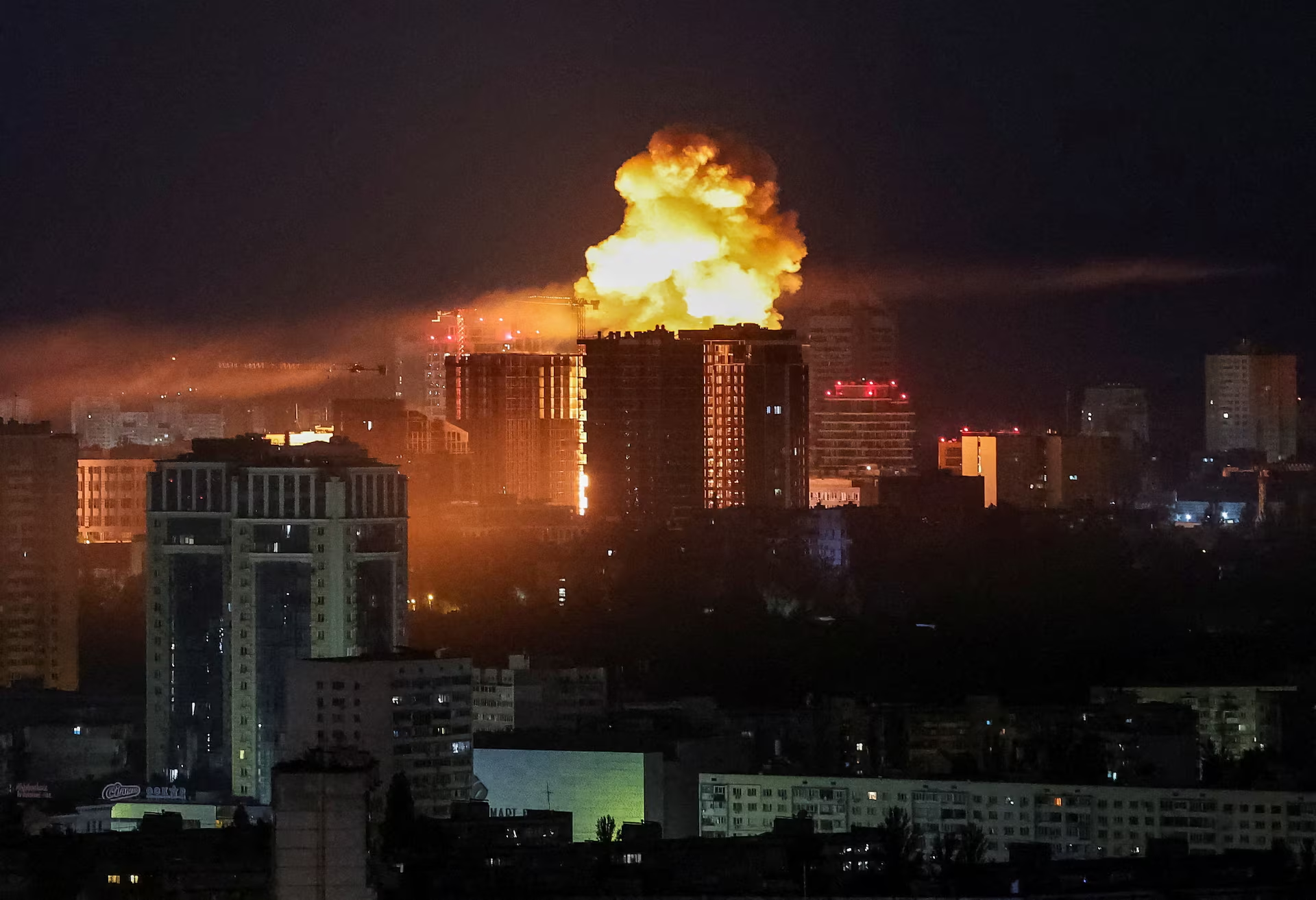
At least six people were killed in Kyiv, where a suspected missile strike caused a partial collapse of a 24-story apartment building, leaving people trapped. Sixty-four people were wounded in the capital, including three children. Poland scrambled military jets to secure its airspace as the attack unfolded across its neighbor’s territory.
The Kremlin had warned last week it intended systematic strikes on Kyiv in retaliation for a Ukrainian drone attack on a dormitory in the Russian-controlled Luhansk region on May 22 that Moscow said killed 21 people. Ukraine denied striking civilians, saying it had targeted an elite drone command unit in the area. Russian President Vladimir Putin said Monday that Ukraine had “opened a new page” in the war with the Starobilsk attack and told officials the Kyiv leadership had committed serious crimes against children.
Russia’s Defense Ministry confirmed the assault Tuesday, describing it as a massive strike with high-precision long-range weapons on military-industrial facilities across seven regions. Moscow maintained it does not target civilians, a claim contradicted by years of attacks that have leveled neighborhoods, killed thousands of civilians, and destroyed hospitals, schools, and apartment buildings across Ukraine.
What Hit and Where
Ukraine’s air force said defenses shot down or neutralized 40 missiles and 602 drones. Thirty ballistic missiles, three cruise missiles, and 33 additional drones struck confirmed locations across at least 38 sites. The eight Zircon hypersonic missiles Russia deployed in Tuesday’s attack would represent the largest single use of that weapon system in the four-plus years of war. The Zircon travels at nine times the speed of sound and has a range of approximately 1,000 kilometers, making it extremely difficult to intercept with existing air defense systems.
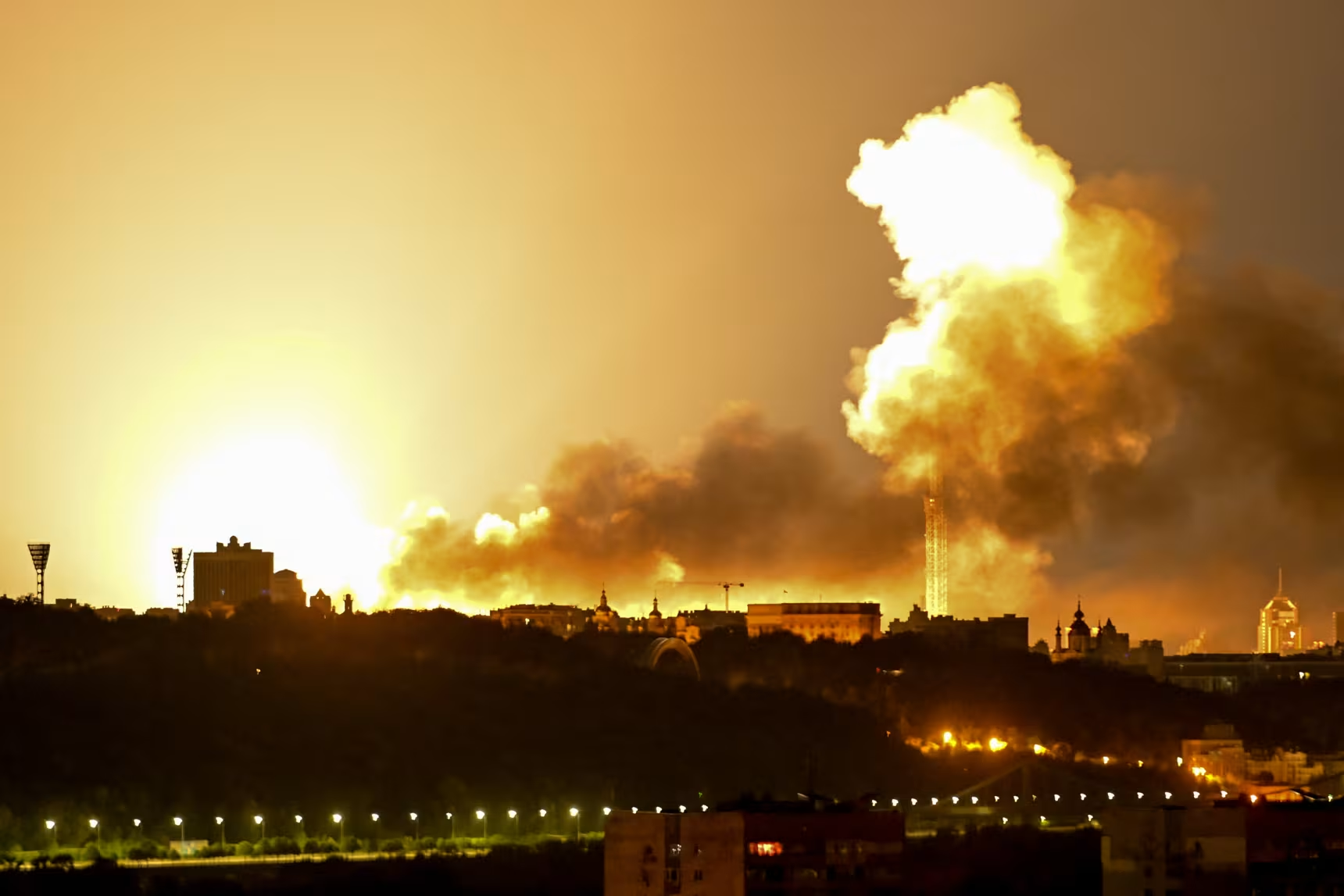
Hits were recorded in Kyiv, Dnipro, Kharkiv, Poltava, Zaporizhzhia, Khmelnytsk, and Sumy. In Kharkiv, at least 14 people were wounded, residential homes, garages, and vehicles were damaged, and people were trapped under the rubble of a four-story apartment block. Debris from drones that were shot down fell across 15 additional locations, generating secondary damage in areas that the primary defense intercepts were meant to protect.
Power company DTEK told Reuters that electricity was cut to 140,000 Kyiv residents. Utility workers restored power to 110,000 by mid-morning. Two of the company’s engineers were injured during the outage response.
Ukrainian military strikes simultaneously hit the Ilsky oil refinery in Russia’s Krasnodar region. The facility, which has a capacity of 138,000 barrels per day and has been struck multiple times this year, caught fire. Ukrainian military officials confirmed they had targeted the refinery, describing it as producing fuel for Russian forces fighting in Ukraine.
The People Inside the Buildings
Thousands of Kyiv residents flooded the city’s subway system during the overnight attack, some carrying mattresses and bags of belongings, sheltering on platforms as defense systems fired above ground. The sound of intercepting explosions reverberated across the city through the night and into the early morning hours.
Iryna Salikova, 37, spent the night in a bathtub with her 3-year-old daughter as windows shattered and a cobblestone flew into her child’s bedroom. “Thank God we’re alive. Today we’re alive, today we’re lucky,” she said.
Olena Dniprovska, 65, and her husband Yevhen, 64, were wounded in their Kyiv apartment. A blast blew the door off and sent glass and debris across the hallway where she had sought safety. “I went out into the corridor with the phone, and before I understood what happened, everything fell on my head, the glass, and the door blew off,” she said, dried blood on her face and a bandage around her chin. “I ran out into the front door and started calling my husband from the room, but he was also blown out by the blast wave.”
Her apartment was destroyed completely. “Now I have nowhere to live, the apartment is completely destroyed, no doors, no windows, no balcony. You can step straight from the room out onto the street,” she said.
Zelenskyy’s Appeal and the Air Defense Crisis
Ukrainian President Volodymyr Zelenskyy called Tuesday’s assault a transparent statement of Russian intent. “A large-scale attack and a completely transparent statement from Russia: if Ukraine is not protected from ballistic and other missile strikes, these strikes will continue,” Zelenskyy said in a post on X.
He appealed directly to Washington for Patriot interceptor missiles, repeating a request he has made repeatedly as Ukraine’s air defense stocks have been depleted. “Assistance from the United States in supplying missiles for Patriot systems is absolutely necessary,” he said, adding that Europe needed its own anti-ballistic defense capability to end the war.
In a letter to Trump and Congress last week, Zelenskyy said ballistic missiles remained Russia’s last major battlefield advantage and urged immediate resupply. Ukraine has been short of interceptors throughout the four-year conflict, and the Iran war has created competing demands on American Patriot missile stocks globally, reducing what can flow to Kyiv.
Russia’s strategy, Western analysts have noted, exploits this shortage deliberately. By saturating Ukrainian air defenses with simultaneous waves of drones and ballistic missiles, Russia forces Ukraine to expend limited interceptors against drones, leaving fewer available for the harder-to-intercept ballistic weapons that cause the most structural damage.
A War Without Diplomatic Progress
The massive attack landed against a diplomatic backdrop that has produced no movement in weeks. U.S.-led peace efforts have stalled as the Trump administration has focused on the Iran war and Middle East negotiations. Zelenskyy accepted an unconditional ceasefire proposal from Trump. Putin refused.
Western officials and analysts say Ukrainian drone strikes have pinned down Russian troops on the front line, disrupted supply chains in Russian-occupied territory, and hit oil facilities deep inside Russia that generate revenue for the war effort. That pressure has made the conflict more visible to ordinary Russians and increased domestic pressure on Putin, even as Russia maintains territorial control over approximately one-fifth of Ukraine including the Donbas, Kherson, Zaporizhzhia, and Crimea.
Putin’s escalation of the air campaign, including the third Oreshnik hypersonic missile strike earlier this month and Tuesday’s mass attack, reflects a strategy of applying maximum civilian pressure to extract political concessions that the battlefield has not delivered.
Hypersonics and the Erosion of Ukraine’s Shield
Tuesday’s deployment of eight Zircon hypersonic missiles, if confirmed as the largest single use of that weapon in the war, is a data point that Western defense planners will examine carefully. Hypersonic weapons are designed specifically to defeat air defense systems that can handle conventional ballistic missiles. Their speed and maneuverability reduce the time available for intercept to seconds, and existing Patriot batteries have limited effectiveness against them at the extreme velocities these weapons reach in terminal flight.
Russia appears to be probing the ceiling of Ukraine’s defenses systematically. The Oreshnik has now been used three times. Zircon use is increasing. Each deployment tests which combinations of weapon types and simultaneous launch volumes can exhaust Ukraine’s intercept capacity within a single attack window, allowing more warheads to reach populated areas.
The civilian impact of that strategy is visible in Tuesday’s body count: 18 dead, more than 100 wounded, a 3-year-old child recovered from rubble, a mother and her 8-year-old son pulled from the same collapse. These are not the incidental casualties of strikes aimed at military targets. They are the predictable consequence of ballistic missiles fired at a city whose air defenses are running out of interceptors.
Zelenskyy’s appeal is specific and urgent because the threat is specific and urgent. Patriot interceptor missiles are not a general request for support. They are the technical answer to the particular weapons Russia is now deploying in the largest numbers the war has seen. Whether Washington provides them in the quantities Kyiv needs, or continues to prioritize Middle East demands on a finite supply, will determine whether the next mass attack produces the same death toll or a worse one.
AP/Reuters/NBC/Euronews




