

The United States military has killed a senior Islamic State figure in a targeted airstrike in northwest Syria, intensifying ongoing efforts to dismantle the militant group’s remaining network years after its territorial defeat.
U.S. Central Command confirmed Wednesday that Ali Husayn al Ulaywi died in the strike, which was carried out Friday as part of a broader campaign aimed at preventing attacks against American interests and allies.
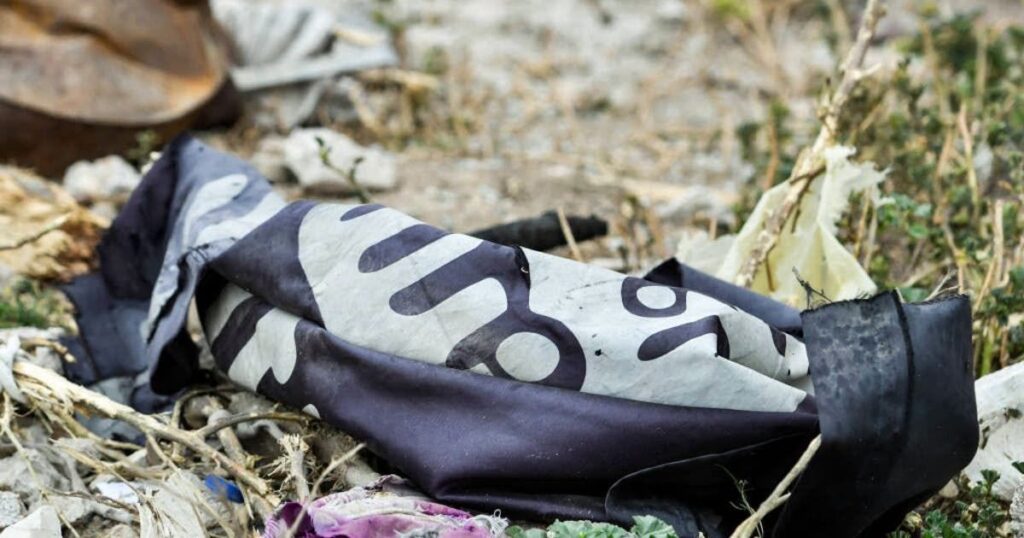
The operation underscores Washington’s continued reliance on precision strikes to counter extremist threats in the region.
Initial accounts from Syrian activists had described an airstrike that hit a motorcycle near the village of Deir Hassan, close to the Turkish border, killing one person. The identity of the target was not immediately known at the time.
The Associated Press later cited Central Command in confirming the individual killed was a senior Islamic State member.
The strike comes as the militant group seeks to reassert itself through scattered attacks despite losing its territorial stronghold in Syria in 2019.
Intelligence assessments indicate that sleeper cells remain active and have recently stepped up operations following the collapse of the Assad family’s long rule in late 2024.
What we know so far is that the airstrike was a precision operation conducted by U.S. forces, resulting in the death of a key Islamic State figure.
Officials have not disclosed further operational details, including how the target was tracked or whether additional militants were present.
The Pentagon has framed the strike as part of a sustained effort to prevent external attacks and maintain pressure on the group’s leadership structure.
What authorities are saying reflects a continued commitment to counterterrorism operations. Central Command commander Adm. Brad Cooper said U.S. forces and regional partners remain focused on eliminating what he described as the remaining elements of the group to ensure its lasting defeat.
He added that the United States will continue to protect its homeland, service members and allied nations across the region. Statements released by Central Command on its official platform echoed that position, emphasizing coordination with local partners.
Why this matters extends beyond the immediate tactical success of the strike. Analysts note that while Islamic State no longer controls territory, its decentralized network allows it to adapt and carry out asymmetric attacks.
The group has entered what it calls a new operational phase in Syria, targeting government forces and attempting to exploit political instability.
France24, citing Reuters, noted that the group has recently claimed attacks in northern Syria, signaling a renewed push to remain relevant.
From a geopolitical and economic perspective, sustained instability in Syria continues to affect regional security and global energy routes.
Although Syria is not a major energy exporter, its proximity to key transit corridors means ongoing conflict can disrupt broader Middle East stability, which in turn influences oil and gas markets.
Continued U.S. military engagement also reflects Washington’s strategic interest in preventing power vacuums that could be filled by rival actors.
The competitive security landscape in the region has grown more complex, with multiple actors including regional governments, international coalitions and non state groups vying for influence.
The persistence of Islamic State cells highlights gaps in governance and security, particularly in areas affected by years of conflict.
Experts say counterterrorism efforts now rely heavily on intelligence sharing, drone surveillance and targeted strikes rather than large scale ground operations.
What happens next will likely involve continued monitoring of Islamic State activity and additional targeted operations as intelligence identifies new threats. The group’s ability to recruit, fund operations and coordinate attacks remains under scrutiny, especially after calls by its spokesman earlier this year urging followers to target Western and Jewish interests worldwide.
Looking ahead, the broader implication is that the fight against Islamic State has entered a prolonged phase defined by containment rather than outright elimination.
While leadership losses can disrupt operations, the group’s decentralized structure allows it to regenerate.
Analysts say long term stability will depend not only on military action but also on political solutions and economic rebuilding in conflict affected regions.
France24/AP





