

In December 2000, a Barcelona sporting director sat at a tennis club with no paper to hand, grabbed a restaurant napkin, and scribbled a few lines in blue ink that would change the history of football. Twenty-five years later, that napkin sold at auction for nearly one million dollars, and the boy whose future it secured is preparing to play in what may be his final World Cup final on Sunday in New Jersey.
The story of how Lionel Messi came to Barcelona is not simply a story about football. It is a story about a child whose body refused to grow, a family that could not afford the medicine to fix it, a club that was nearly bankrupt, and one man who grabbed a napkin rather than let the greatest talent he had ever seen walk out the door.
The Beginning: A Boy Who Could Not Grow
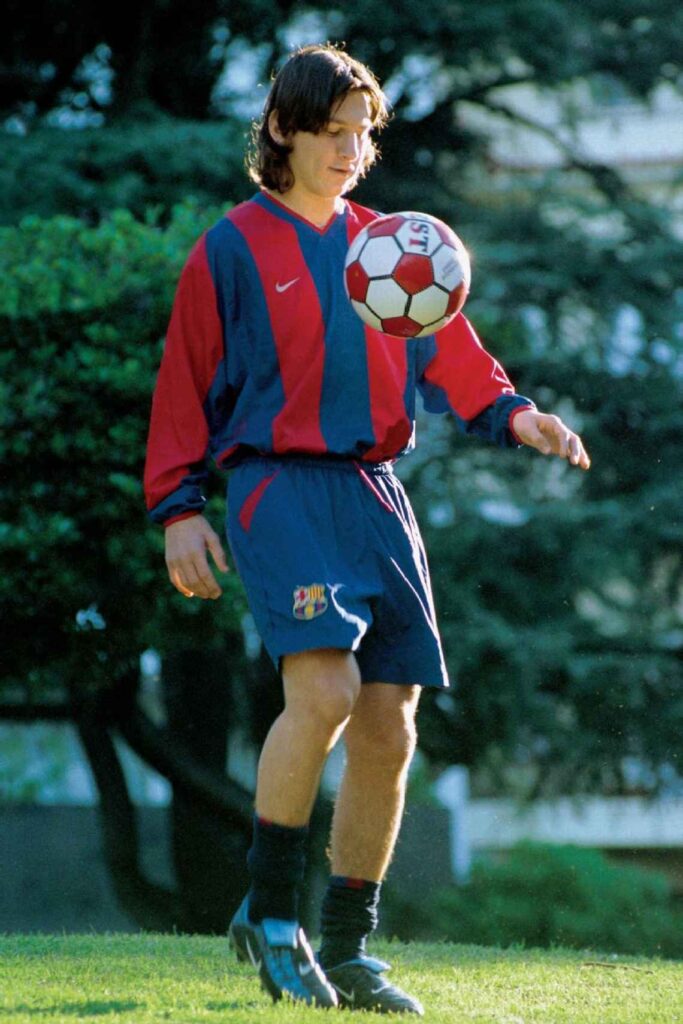
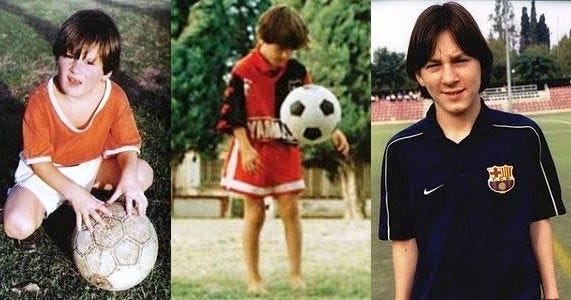
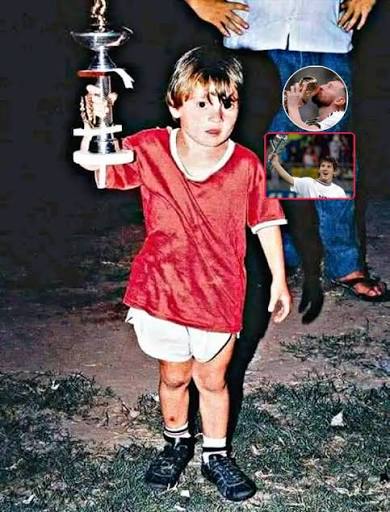
Messi was diagnosed with Growth Hormone Deficiency at age 10 while playing for Newell’s Old Boys in his hometown of Rosario, Argentina. Standing just four feet two inches tall, doctors determined that without treatment he would plateau at an adult height of roughly four feet seven inches.
The synthetic hormone therapy required to allow his bones and muscles to develop normally cost between $900 and $1,500 per month, a sum his family could not sustain.
Argentine clubs that learned of his talent were put off by his condition. River Plate passed. Newell’s Old Boys declined to fund the treatment. The injections were expensive. There was no guarantee they would work. And the boy, for all his extraordinary gifts with a football, was tiny.
What nobody understood yet was that his condition was simultaneously shaping the tools that would eventually make him incomparable.
Medical experts and football analysts who have studied Messi’s development note that the growth delay created an unusually low center of gravity, because his torso developed ahead of his limbs during critical growth phases. That physical characteristic gave him balance and directional change that taller players could not replicate.
His shorter stride length meant he could take more touches per second than most opponents, keeping the ball so close to his foot that defenders found it nearly impossible to steal. The condition that threatened to end his career before it began instead forged the physical foundation for the most distinctive playing style the game has produced.
The injections he administered to his own legs each night during his early years at Barcelona became part of his daily routine. He carried a medical cooler. He administered the hormones quietly, often in La Masia locker rooms or his residence, before his teammates fully understood what he was undergoing. He was so small, and so shy, that his peers initially assumed he was unable to speak and gave him the nickname El Mudo, the mute.
What We Know So Far: The Discovery
News of Messi’s talent did not travel quickly. He was playing for Newell’s youth team in Rosario when Argentine agent Horacio Gaggioli, based in Barcelona, received a call in 1998 from two contacts who ran a football school in the city.
“Messi was 11 when they first called me to speak about him,” Gaggioli told ESPN in the oral history of the transfer. “My idea was to wait a little, until he was 12 or 13, because he was very little at the time. They never hid that he would need injections to aid his growth.”
Gaggioli waited. He watched videos. And he became convinced.
Josep Minguella, a transfer advisor who had worked with Barcelona on previous deals including the signing of Diego Maradona, was equally struck by the footage he received. “When I saw him, I almost couldn’t believe it,” Minguella told ESPN. “He was a very small player, but with an exceptional talent, who headed straight for the goal with the ball glued to his foot.”
By February 2000, Gaggioli had arranged for the Messi family to travel to Barcelona for a trial. Carles Rexach, Barcelona’s sporting director, was away when they arrived and did not see Messi immediately. When he finally watched him play one afternoon on the pitches next to the training ground, the response was immediate and unambiguous.
“A walk of three to four minutes took me 15 minutes because I was stunned watching him,” Rexach told ESPN. “He was the smallest on the pitch by a long way and I could see something very different in him. I got to the bench, sat down and I told the coaches: Sign him. Don’t even think about it. And if anyone asks, tell them it is my decision.”
What Authorities And Insiders Were Saying
Barcelona’s board of directors was not immediately persuaded. The club was in serious financial difficulty, close to what Rexach described to ESPN as bankruptcy. There were directors who worried about Messi’s stature. Others questioned the wisdom of committing resources to fund a 13-year-old’s hormone treatment. The formal signing process stalled through the autumn of 2000.
Messi’s father Jorge grew anxious. The family traveled between Barcelona and Buenos Aires. Real Madrid and Atletico Madrid were mentioned as alternatives. The prospect of losing the player prompted Rexach to act.
“Jorge thought Barcelona were stalling,” Rexach told ESPN. “When I met with him I realised he wasn’t clear on anything. He seemed desperate. He told me, ‘If this is not sorted soon, we are going. I do not see anything happening.’ That was when, thinking on my feet, I decided everything.”
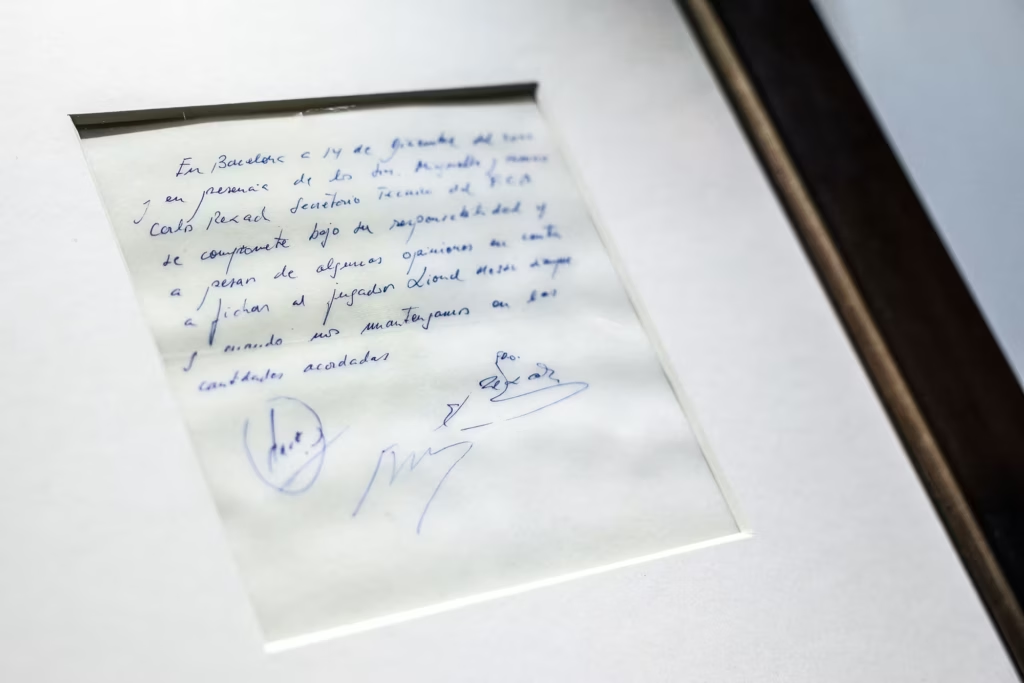
On the evening of December 14, 2000, Rexach met Minguella and Gaggioli at the Pompeia Tennis Club in Barcelona. He asked a waiter for paper. He was given a napkin.
“Why a napkin? Because it was the only thing I had available,” Rexach told ESPN. “I saw the only way to relax Jorge was signing something, giving him some proof.”
What he wrote, in blue ballpoint pen on a 6.5 by 6.5 inch restaurant napkin, read: “In Barcelona, on December 14, 2000, in the presence of Mssrs. Minguella and Horacio, Carles Rexach, technical secretary of FC Barcelona, hereby agrees under his responsibility and against some dissenting opinions to sign the player Lionel Messi, provided that we keep to the amounts agreed.”
All three men signed it. Later that night, Barcelona’s then-president Joan Gaspart confirmed and sealed the arrangement.
Gaggioli told ESPN the napkin was legally valid according to his lawyers. It is now kept in a bank vault in Andorra. In 2024, it was sold at auction by British auction house Bonhams for 762,400 pounds, the equivalent of approximately $965,000, against a starting price of 300,000 pounds, NBC confirmed. The napkin was sold on behalf of Gaggioli himself.
“Yes, it is a paper napkin, but it is the famous napkin that was at the inception of Lionel Messi’s career,” Ian Ehling, head of fine books and manuscripts at Bonhams, said. “It changed the life of Messi, the future of FC Barcelona, and was instrumental in giving some of the most glorious moments of football to billions of fans around the globe.”
Why This Matters
What makes the napkin story more than a charming anecdote is what it reflects about the institutional conditions that nearly prevented Messi from becoming Messi.
An Argentine child with exceptional talent and a treatable medical condition was passed over by multiple clubs because the treatment cost money and the outcome was uncertain. Barcelona nearly missed him for the same reasons. The greatest player in the history of the game came within days of being lost to a bureaucratic stalemate, rescued only by one man’s decision to grab a restaurant napkin and write a commitment in his own name rather than wait for the club’s administration to act.
Barcelona paid for Messi’s hormone treatment. Joan Lacueva, a club official, funded the initial phase. The full cost was reported to be approximately one thousand euros per month, though neither the club nor Messi has ever confirmed the figure. Messi administered the injections himself, into his own legs, every night, for years.
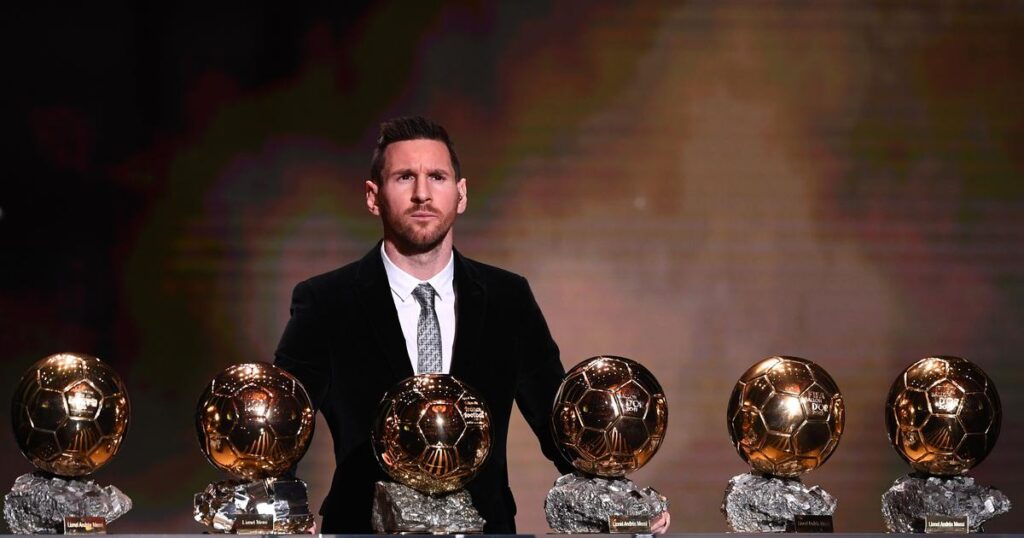
He remained at Barcelona for 17 seasons. He made his first-team debut in 2004, aged 16. He scored 672 goals in 778 appearances, won 10 La Liga titles and four Champions League trophies, and became the club’s all-time leading scorer. He left in 2021 when the club’s financial difficulties, the very same difficulties that had once made the board hesitate to sign a 13-year-old, made his contract renewal impossible.
Two years after Messi left, Lamine Yamal arrived.
The Photograph And The Full Circle
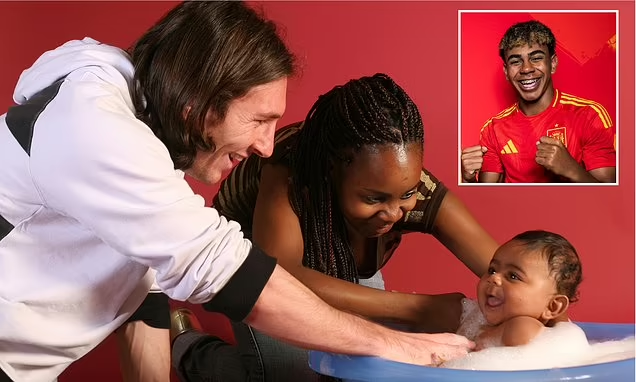
The connection between the two players who will contest Sunday’s World Cup final is not simply a matter of shared football philosophy or shared institutions. In 2007, when Messi was 20 and newly established as a Barcelona first-team regular, photographer Joan Monfort organized a charity shoot for a UNICEF calendar produced in collaboration with the FC Barcelona Foundation. Families in the city of Mataro near Barcelona entered a raffle to have their baby photographed at Camp Nou with a Barcelona first-team player.
Lamine Yamal’s family won the raffle. On the day they arrived, they were paired with Messi by chance.
Monfort told the Associated Press on Friday that he never thought much of the photos until Yamal’s father posted one on social media during the 2024 European Championship, when the teenager led Spain to the title. “Messi is a pretty introverted guy, he’s shy,” Monfort recalled. “He was coming out of the locker room and suddenly he finds himself in another locker room with a plastic tub full of water and a baby in it. He didn’t even know how to hold him at first.”
The photographs show a young Messi with soap-covered hands apparently bathing the infant who would grow up to follow him through La Masia, wear his number at Barcelona, and face him in a World Cup final.
“I have never been a believer or thought that anything was destined to occur, but I am beginning to have my doubts,” Monfort told the Associated Press on Friday. “This is beyond all reasonable explanations.”
Messi, for his part, addressed the photograph and the occasion with characteristic simplicity. “That picture, it was crazy. Him as a baby, and now we are facing each other. What a crazy picture. I just wish him the best of luck,” Messi said in Spanish on Friday.
What Happens Next
Sunday’s World Cup final at MetLife Stadium in East Rutherford, New Jersey, at 3 p.m. Eastern time, will bring together a 39-year-old man who survived a growth hormone disorder, a near-miss with institutional bureaucracy, a napkin contract, and 20 years of the most decorated club career in the sport’s history, against a 19-year-old who was held in that man’s soap-covered hands before he was old enough to walk.
Yamal has spoken about the match with the confidence of someone who has no reason to be intimidated. “I would love to face Messi in a World Cup final,” he told a reporter after Spain’s semifinal victory. That wish is now reality.
Rexach, who grabbed the napkin at the tennis club a quarter century ago, has described his decision as the most important of his career. Messi has described Barcelona as the club that gave him his life. And Monfort, the photographer who almost missed the chance to document the moment two legends first met, put it simply.
“It is better than any film script,” he told the Associated Press.
BBC/ESPN/NBC/AP/CNN




