

FIFA has abandoned its plan to sell a stake in its commercial business after fierce opposition from European football leaders, growing resistance from member federations and mounting criticism from senior officials inside the governing body.
The proposal sought to raise about $4.2 billion by selling a 20 percent stake in a newly created commercial entity valued at $20 billion. The investment was expected to be led by New York based venture capital firm Thrive Capital, founded by Joshua Kushner. Multiple people familiar with the discussions told The New York Post the proposal has now collapsed.
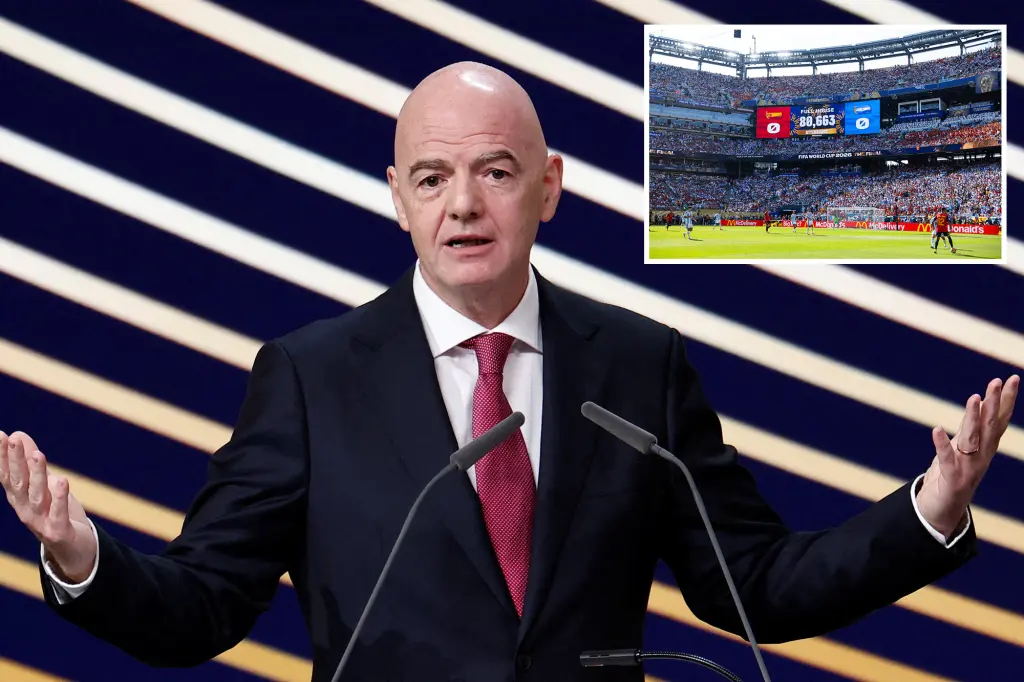
The decision marks a significant setback for FIFA President Gianni Infantino, whose effort to restructure the organisation’s commercial operations triggered one of the most serious internal disputes of his presidency.
The proposed transaction would have transferred FIFA’s commercial assets, including World Cup broadcasting rights, sponsorship agreements, licensing operations and ticket sales, into a separate commercial company while FIFA remained a nonprofit organisation under Swiss law.
Officials familiar with the negotiations said FIFA’s leadership underestimated the level of resistance from Europe, where the world’s leading domestic leagues, clubs and broadcasting markets generate much of international football’s commercial value.
The strongest opposition came from the Union of European Football Associations, whose leaders warned that member nations would refuse to participate in FIFA competitions if the governing body proceeded with plans to introduce private ownership into its commercial operations.
Such a boycott would have placed future FIFA tournaments, including the men’s World Cup, at significant commercial risk because national teams from England, France, Germany, Spain and Italy remain central to global television audiences and sponsorship agreements.
Several people involved in the discussions told The New York Post that the threat fundamentally changed the financial outlook for the proposed investment.
One individual familiar with the negotiations said investors quickly recognised that the commercial risks had become too significant to justify continuing discussions.
Another person close to the negotiations said the proposal had become increasingly difficult to defend as opposition spread across football’s governing bodies.
Sources also said JPMorgan, which advised FIFA on the proposed transaction, no longer expected the investment to proceed. Thrive Capital had also begun discussions about withdrawing from the proposal as resistance intensified.
FIFA maintained publicly that it was not selling football despite the growing controversy.
Instead, officials indicated the organisation would continue managing and commercialising its broadcasting, sponsorship and licensing rights through its existing structure rather than creating a separate commercial enterprise.
People familiar with FIFA’s internal discussions said the organisation may still pursue broader commercial reforms within its nonprofit framework instead of seeking outside investors.
The collapse also reflects broader concerns throughout international football about preserving independent control over the sport’s most valuable commercial assets.
Critics argued that selling a permanent ownership stake in future World Cup revenues could reduce FIFA’s long term financial independence while allowing private investors to benefit from tournaments built over decades by national football associations.
The failed proposal has also sent a clear signal to private investment firms exploring opportunities in global sport that football’s governing institutions remain cautious about opening their commercial operations to outside ownership.
The controversy has widened political divisions inside FIFA just months before the organisation prepares for its next presidential election.
Several confederations have questioned the proposal, while senior officials increasingly voiced concerns about how the initiative was developed and presented to FIFA’s governing bodies.
The New York Post said the proposal ultimately collapsed after coordinated resistance from European football authorities, growing opposition from regional confederations and concerns among investors about the long term viability of the transaction.
What We Know So Far
The proposal quickly evolved into one of the most divisive initiatives of Gianni Infantino’s presidency as opposition expanded beyond Europe and reached FIFA’s own executive leadership.
Football officials from multiple confederations questioned whether selling a permanent stake in FIFA’s commercial rights would protect the sport’s long term interests.
Resistance first emerged in Europe before spreading to other regional governing bodies.
Officials within the Confederation of North, Central America and Caribbean Association Football rejected the proposal during internal discussions. On Friday, the Asian Football Confederation also joined the growing opposition, further reducing support for the investment plan.
The widening resistance effectively eliminated the broad international backing needed for a transaction of that scale.
People familiar with the negotiations told The New York Post that investors also became increasingly concerned about the proposal’s commercial viability as opposition intensified.
Without participation from Europe’s leading national teams and domestic leagues, industry observers believed future FIFA tournaments would become significantly less valuable to broadcasters, sponsors and commercial partners.
That concern substantially weakened the financial case for outside investment.
Despite the collapse of negotiations, FIFA insisted publicly that the organisation was not attempting to sell football itself and maintained that its commercial assets would remain under FIFA’s control.
Officials indicated the governing body would instead continue managing broadcasting, sponsorship, licensing and commercial rights through its existing organisational structure while exploring alternative ways to strengthen commercial operations.
The collapse also underscored the continuing influence of Europe’s football associations, whose clubs, leagues and national teams generate much of the global audience and commercial revenue surrounding the World Cup.
Senior FIFA Executive Says Staff Were Misled
The controversy deepened after FIFA Chief Operating Officer Kevin Lamour publicly criticised the proposal and questioned how it had been developed.
In a statement provided to The Associated Press, Lamour said senior staff had been “deceived” by the lack of transparency surrounding the project and argued that the proposal should not proceed.
“The project that has sparked so much controversy and debate is not a FIFA project,” Lamour said. “It is the project of one person.”
Lamour said months of limited disclosure had created an atmosphere of mistrust inside the organisation.
He described the episode as reflecting “a lack of trust, a lack of transparency, a lack of discernment, a lack of good governance and a serious lack of respect.”
The FIFA executive acknowledged that speaking publicly could jeopardise his own position.
“If that means I lose my job, then so be it,” Lamour said. “At least I’ll sleep well tonight.”
His comments represented one of the strongest public criticisms of Infantino from a senior FIFA executive since the president assumed office in 2016.
Senior Adviser Resigns Over Proposal
The internal fallout intensified when Carlos Cordeiro resigned as one of Infantino’s senior advisers.
Cordeiro, the former president of the United States Soccer Federation and a former Goldman Sachs executive, said he could not support the proposal to sell part of FIFA’s commercial business.
“I cannot stand by while FIFA considers selling a stake in the World Cup,” Cordeiro said in a statement.
He said he played no role in developing the proposal and opposed it entirely.
Cordeiro argued that FIFA already possesses substantial financial resources, including billions of dollars in reserves and no debt, making the proposed transaction unnecessary.
He noted that FIFA generated approximately $15 billion in revenue during the previous four year commercial cycle linked to the men’s World Cup.
“Selling a permanent stake in football’s most valuable asset to raise $4.2 billion makes little sense,” Cordeiro said. “It is mortgaging football’s future without any compelling justification.”
He also encouraged other FIFA officials to express their views publicly, saying decisions of such importance should serve the interests of football rather than financial investors.
The resignations and public criticism have intensified scrutiny of FIFA’s leadership as preparations continue for the organisation’s presidential election scheduled for next year.
What Authorities Are Saying
FIFA has maintained that it never intended to sell football itself, despite the collapse of the investment proposal. Officials said the organisation remains committed to managing its commercial rights internally while examining other ways to strengthen its business operations.
Kevin Lamour, FIFA’s chief operating officer, urged football leaders to carefully consider the future direction of the governing body. In remarks to The Associated Press, he said the controversy demonstrated the need for greater transparency and stronger governance within FIFA.
Carlos Cordeiro, who resigned as a senior adviser to FIFA President Gianni Infantino, said the organisation should reject any proposal that permanently transfers ownership of its most valuable commercial assets. He argued FIFA already possesses sufficient financial resources and does not need outside investment at the expense of future revenues.
Regional football bodies also made their position clear during the debate. European football authorities opposed the proposal from the outset, while officials from Concacaf and the Asian Football Confederation later joined the growing resistance. Their opposition ultimately weakened support for the investment plan and increased pressure on FIFA’s leadership.
Why This Matters
The collapse of the proposal represents more than the failure of a major commercial transaction. It has become a test of how international football intends to balance financial growth with institutional independence.
The World Cup remains the sport’s most valuable commercial property, generating billions of dollars through broadcasting agreements, sponsorships, licensing and ticket sales. Selling a permanent ownership stake would have marked one of the most significant structural changes in FIFA’s history.
The episode also exposed divisions between FIFA’s executive leadership and senior administrators responsible for overseeing the organisation’s daily operations. Public criticism from serving executives is rare within FIFA, making Lamour’s statement particularly significant.
The controversy has also reinforced Europe’s influence over global football governance. European clubs, domestic leagues and national teams continue to generate much of the sport’s commercial value. Any coordinated boycott by those associations would significantly reduce the commercial appeal of FIFA competitions.
For private equity firms and institutional investors, the outcome demonstrates that football’s governing institutions remain politically complex. Commercial value alone may not be enough to overcome opposition from national associations and regional confederations that view the World Cup as a public sporting asset rather than an investment opportunity.
What Happens Next
Attention is now shifting to FIFA’s presidential election scheduled for next year.
The controversy has prompted renewed discussion about Gianni Infantino’s leadership after more than a decade as FIFA president. While he had been widely expected to secure another term, the failed proposal has encouraged some football leaders to explore alternative candidates.
Media reports cited by The New York Post indicate that officials within UEFA have begun informal discussions about supporting a challenger. Paris Saint Germain president Nasser Al Khelaifi has emerged as one of several names attracting interest, although no formal candidacy has been announced.
FIFA has set Nov. 18 as the deadline for presidential candidates to enter the race.
Whether the recent controversy reshapes the election remains uncertain. However, the debate surrounding the proposed commercial restructuring is likely to remain a central issue as member associations evaluate FIFA’s future leadership and governance.
Although the investment proposal has been abandoned, the broader debate over football’s commercial future is unlikely to disappear.
International sports organisations are facing increasing pressure to generate new revenue streams as broadcasting markets evolve and competition for commercial investment intensifies. FIFA’s proposal reflected that wider trend, seeking immediate capital while retaining operational control of its competitions.
The resistance, however, suggests that many football leaders remain cautious about introducing permanent private ownership into the governance of global competitions. Unlike domestic professional leagues, FIFA’s legitimacy depends on balancing commercial success with the interests of more than 200 member associations that expect equal representation regardless of financial strength.
The public criticism from senior FIFA executives may have longer lasting consequences than the failed transaction itself. Internal disagreements that rarely become public have now entered international debate, raising fresh questions about transparency, executive decision making and institutional oversight.
The controversy may also influence how other international sports bodies approach future investment proposals. Organisations considering similar partnerships could face greater demands for consultation with member federations before pursuing structural reforms involving private capital.
For football supporters, the immediate impact is limited because FIFA has confirmed that existing World Cup competitions, broadcasting agreements and commercial operations will continue unchanged. The broader governance debate, however, is likely to shape discussions long after the current proposal has been withdrawn.
Story sources: The New York Post and The Associated Press.





