

The father of a U.S. sailor deployed aboard the USS Abraham Lincoln was taken into federal immigration detention over the weekend, the sailor said in a Facebook post, as the ship remained at sea in the Middle East during a record-setting deployment.
U.S. Border Patrol agents arrested Luis Manuel Aviles Roa, 48, originally from Nicaragua, during a vehicle stop in Key West on Saturday, a Department of Homeland Security spokesperson said Sunday. His son, Joshua Aviles, has served aboard the Lincoln for more than nine months as the carrier logged over 200 consecutive days at sea without a port call, a modern-day record that has drawn scrutiny from Democratic lawmakers.
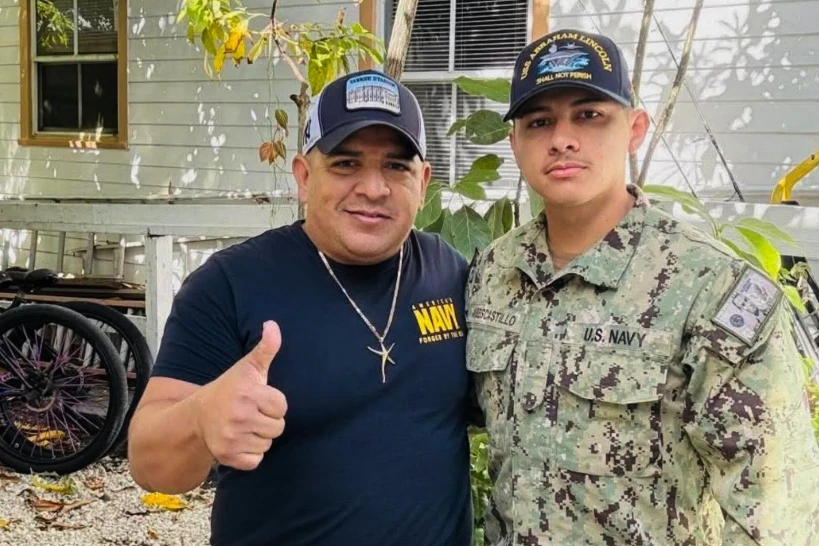
Accounts differed sharply on Aviles’s immigration status. His wife, Argelia Aviles, told the Associated Press that her husband holds a work permit and has lived in the United States for 19 years. Joshua Aviles wrote in his Facebook post that his father carries a driver’s license, Social Security card and employment authorization, and that the family has been pursuing a green card for him through proper immigration channels. The Department of Homeland Security, however, said Aviles Roa entered the country unlawfully and would remain in Immigration and Customs Enforcement custody pending removal proceedings. That direct conflict between the family’s account of his legal status and the government’s characterization had not been resolved as of the latest reporting.
What We Know So Far
Argelia Aviles said her husband, a handyman in Key West, left the house Saturday to take his car to the mechanic when he was arrested. “He dedicates himself only to work so he can put food on the table at home. He is a good father. He loves his children with all his soul,” she said.
Joshua Aviles described learning of his father’s arrest while still aboard the Lincoln. “I’ve been deployed for over nine months, out at sea in the Middle East aboard the USS Abraham Lincoln, fighting for a country that has given me everything,” he wrote, adding that he received the call about his father’s detention Saturday morning. “This is heartbreaking for me. I don’t know how I can mentally continue working 12+ hour days knowing that my dad is somewhere, possibly being treated like a criminal.”
A Homeland Security spokesperson said having a family member in the military does not exempt someone from immigration enforcement. “Having a family member in the military is not a free pass to violate our nation’s laws,” the department said, adding that the Trump administration does not selectively enforce immigration law.
Katherine Delgado, Joshua Aviles’s sister, said her brother joined the military partly in hopes of improving their father’s chances at citizenship and easing his fear of arrest. She said the family has struggled with limited contact during Joshua’s deployment, including weeks without knowing his whereabouts and reports that he was not getting enough food, prompting her to spend hundreds of dollars on care packages, some of which never arrived. Delgado said Joshua is expected home soon following news that the Lincoln would be withdrawn from the Middle East, but that he will return without his father.
Argelia Aviles said the extended deployment had already weighed heavily on her husband, who was looking forward to his son’s return before the ship’s stay at sea stretched well past the original timeline. “He was excited,” she said. “He wanted to hug his son, as he hadn’t seen him for nine months.”
Why This Matters
Aviles Roa’s detention is part of a broader pattern of the Trump administration rolling back informal protections that had shielded immediate family members of active-duty troops from aggressive immigration enforcement. The Associated Press found in what it described as the first accounting of such cases, which the government does not formally track, that at least six family members of service members have been deported and one has self-deported under the current enforcement push. One spouse, held for more than a month in federal detention, was removed from a deportation flight to Brazil only after AP’s reporting on the case.
A program known as military parole-in-place has historically allowed spouses, children and parents of active-duty service members and veterans to pursue legal status from within the country, though not everyone qualifies, including those who overstayed visas or previously sought legal status at the border. Whether Aviles Roa’s situation intersects with that program remains unclear given the conflicting accounts of his legal status.
The case also lands amid intensifying scrutiny of conditions aboard the Lincoln itself, where sailors have described extended workdays, food shortages and deteriorating morale during the ship’s record-breaking deployment. Defense Secretary Pete Hegseth has previously dismissed reports of poor conditions aboard the carrier as completely misrepresented, a characterization that stands in tension with firsthand accounts from sailors and their families, including the Aviles family’s description of Joshua working more than 250 consecutive days without a break.
What Happens Next
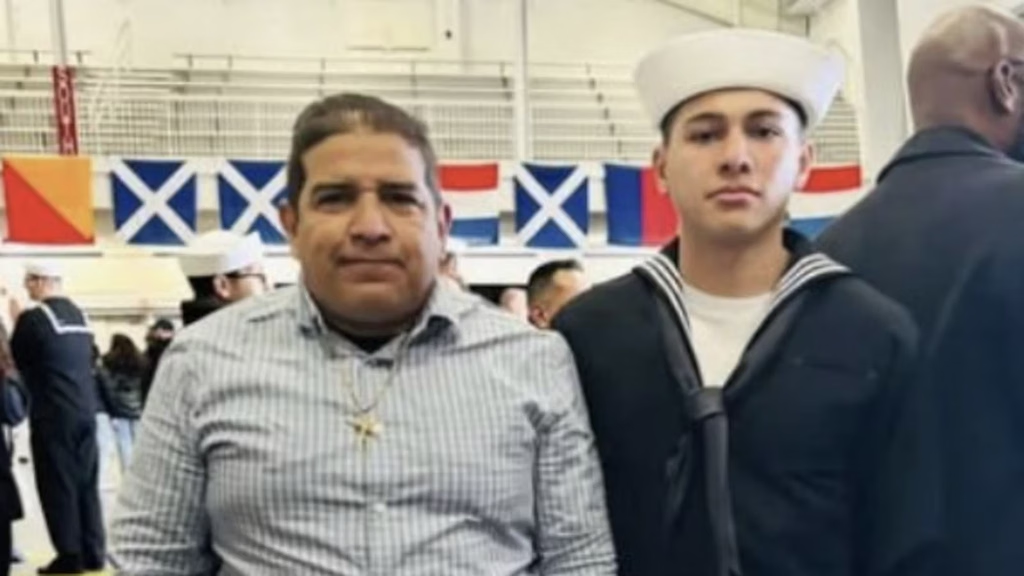
Aviles Roa remains in ICE custody as the government pursues his removal. His family has not indicated whether they plan to challenge the proceedings or provide documentation supporting their claim that he holds legal work authorization and has a pending green card application.
The Lincoln departed the Middle East on Saturday, and Joshua Aviles is expected to return home in the coming weeks, though without his father present given the ongoing detention. The Navy did not immediately respond to requests for comment on either the ship’s conditions or the sailor’s family situation, and the Pentagon referred questions about the Lincoln’s deployment to the Navy directly.
Reporting drawn from the Associated Press, Reuters and The Independent, citing Argelia Aviles, Joshua Aviles’s Facebook posts, Katherine Delgado, and a U.S. Department of Homeland Security spokesperson.




