

Apple changed the name of Lake Ontario to “Lake America” on the web version of Apple Maps for U.S. users Tuesday, following President Donald Trump’s executive order renaming the lake and a similar move by Google days earlier.
Apple confirmed the change reflects an update to the lake’s listing in the U.S. Geographic Names Information System. Users in Canada will continue to see Lake Ontario, while users elsewhere in the world will see both names, an approach Apple previously used after Trump ordered the Gulf of Mexico renamed the Gulf of America earlier in his second term.
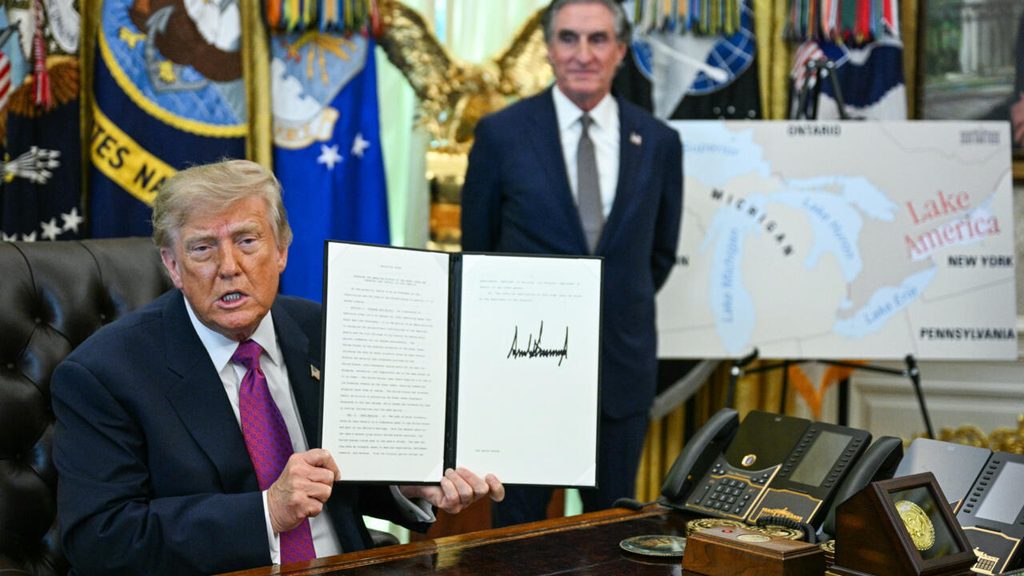
Google changed the lake’s name for U.S. users on Google Maps late Saturday, days after Trump signed the executive order in late August as trade tensions between the U.S. and Canada escalated.
What We Know So Far
Lake Ontario, one of the five Great Lakes, sits along the border between the Canadian province of Ontario and New York state, with about 52 percent of the lake’s surface area located in Canada and the remainder in New York. Trump’s executive order applies only to U.S. federal usage of the lake’s name and does not govern what Canada, international bodies or other organizations call it.
Interior Secretary Doug Burgum said on Fox Business that Trump had personally reached out to Apple to request the change. “I know that the president reached out to Apple directly, so I’m sure that we may be seeing that change coming up soon to Lake America,” Burgum said, speaking the day before Apple confirmed the update.
Within hours of Trump’s order, Canadian Prime Minister Mark Carney and New York Gov. Kathy Hochul both said they would not adopt the new name, noting Lake Ontario’s name has been in use for more than 400 years. A Reuters/Ipsos poll found a majority of Americans opposed both Trump’s move to raise tariffs on Canadian goods and his order renaming the lake.
Not every mapping company followed Apple and Google’s lead. MapQuest publicly refused to change the lake’s name, posting on social media that it would not be changing it when Trump signed the executive order. MapQuest general manager Doug Berger said in a statement that the company took the same approach it had with the Gulf of Mexico renaming, aiming to keep the names users are already familiar with. “Hundreds of thousands of people signaled to us this weekend that we got it right, by downloading our app,” Berger said. Following its public refusal, MapQuest’s app climbed to the top of navigation app rankings and the No. 8 spot among all free apps in the App Store by Sunday night, its highest chart position since the brand launched in 1996.
What Critics Are Saying
The name changes drew sharp criticism online. Democratic social media influencer Harry Sisson called Apple’s decision pathetic, writing on social media that he did not understand why the company would go along with what he described as the change. Progressive media outlet MeidasTouch criticized Google’s earlier decision in similar terms, saying the company had capitulated to Trump.
Why This Matters
The dispute illustrates how U.S. technology companies are increasingly being drawn into geopolitical and political disputes as the Trump administration pressures them to comply with executive orders that international bodies, allied governments and, according to polling, much of the American public have rejected. Apple and Google’s decisions to implement the change despite its lack of international recognition highlight the practical influence the U.S. government can exert over widely used consumer technology platforms, even when the underlying policy change carries no formal international legal standing.
The renaming dispute also unfolds against the backdrop of broader U.S.-Canada tensions, including Trump’s escalating tariffs on Canadian goods and his repeated, dismissed suggestions that Canada become the 51st U.S. state, a notion Canadian leaders have rejected. MapQuest’s contrasting decision, and the resulting boost to its app store rankings, suggests a meaningful segment of American consumers are willing to actively reward companies that decline to implement politically contested changes, a dynamic that could influence how other companies weigh similar requests in the future.
What Happens Next
Apple and Google’s implementation of “Lake America” for U.S. users is expected to remain in place absent further legal or political developments, following the same durable pattern set by the Gulf of Mexico renaming earlier in Trump’s term. Canada has given no indication it will alter its own maps or official usage, meaning the lake will likely continue to carry different names depending on which side of the border, or which mapping platform, a user consults.
Given the public backlash directed at Apple and Google alongside MapQuest’s commercial success from refusing the change, other technology and mapping companies may face similar pressure to clarify their own positions if additional geographic renaming orders follow.
Reporting drawn from Reuters and The Independent





