

A boat carrying migrants from Libya toward the Greek island of Crete took on water and partially sank early Monday, leaving at least one person dead or unresponsive and roughly 20 to 25 others missing, Greek authorities said.
The Greek coast guard said 51 people were rescued from the water near the small island of Gavdos, about 75 kilometers south of Crete, after the vessel began sinking Sunday night. Survivors told authorities that 77 people had been aboard the boat when it started taking on water.
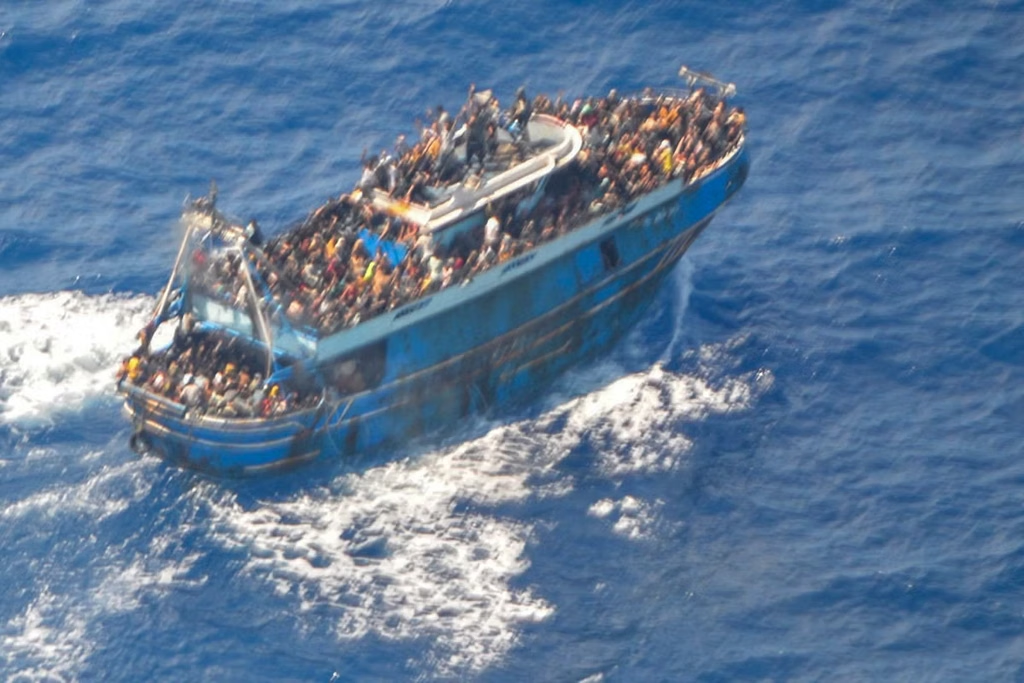
Accounts differed on the fate of the person found in the most serious condition, with one report describing a death and another describing a person found unconscious but not confirmed dead, a discrepancy that had not been resolved as of the latest reporting. Estimates of how many remained missing also varied, with figures ranging from about 20 to 25 people, reflecting the fluid and still developing nature of the search.
What We Know So Far
The rescue operation launched Sunday night involved four vessels already in the area along with two boats operated by the European Border and Coast Guard Agency, known as Frontex, according to Greek City Times, citing Reuters. A Greek coast guard vessel, an additional Frontex vessel, a helicopter and a drone were later dispatched to assist as the search expanded, according to the Deccan Chronicle. Commercial vessels in the area also took part in the search effort.
The rescued survivors were described as foreign nationals, though their specific nationalities had not been released as of the latest reporting. The search for those still missing was ongoing late Sunday night into Monday as crews worked to locate additional survivors in the surrounding waters.
Why This Matters
The crossing from eastern Libya to Crete has become one of the busiest routes for irregular migration into Europe, as arrivals along other Mediterranean routes have broadly declined. The route’s growing use reflects both the difficulty smugglers and migrants face using alternative paths and the significant risks involved in the long open water crossing from North Africa to the southern Greek islands, a journey that leaves little margin for error if a vessel takes on water far from shore.
The direct involvement of Frontex alongside Greek national resources illustrates how thoroughly this crossing has become integrated into the European Union’s broader migration enforcement and rescue infrastructure, even as fatal incidents continue to occur with troubling regularity along the route.
What Happens Next
Search and rescue operations were continuing as of the latest reporting, with authorities working to confirm the final number of people rescued, missing and originally aboard the vessel. Officials have cautioned that all figures related to the incident remain subject to confirmation as the operation proceeds.
Given the route’s increasing use and the scale of Sunday night’s incident, continued scrutiny of migrant crossings toward Crete and the southern Greek islands is likely, along with sustained coordination between Greek authorities and Frontex to respond to similar incidents as they arise.
Reporting drawn from the Deccan Chronicle and Greek City Times via Reuters





