Ukraine struck a Russian oil refinery on Thursday after President Volodymyr Zelenskyy declared that Kyiv was abandoning the energy ceasefire President Donald Trump announced on Sunday, and voiced anger at Trump’s dealings with Moscow.
The strike set fire to a refinery in Russia’s Ryazan region, about 300 kilometers (180 miles) southeast of Moscow, according to the Russian Defense Ministry and Gov. Pavel Malkov. A senior Ukrainian official confirmed Ukraine carried it out.
By walking away from Trump’s demand that Ukraine halt attacks on Russian refineries, and by criticizing the U.S. leader openly, Zelenskyy risks deepening the widest rift between Kyiv and Washington since Russia’s full scale invasion in February 2022.
What We Know So Far
The Ryazan refinery is owned by the state oil company Rosneft and handles nearly 5% of Russia’s refining, helping supply the capital, Reuters said. Malkov wrote on Telegram that a major drone attack caused a fire. Russia’s Astra news outlet posted what it said was a photograph of the blaze. Putin played down the damage, saying Ukrainian strikes on refineries have caused “nothing particularly significant.”
After Trump’s surprise announcement on Sunday that Russia and Ukraine had agreed to stop hitting energy sites, Kyiv paused its attacks on refineries, which Trump blames for pushing up diesel prices worldwide. In the days that followed, Russia launched missile and drone strikes that included power stations and cut electricity to hundreds of thousands of people.
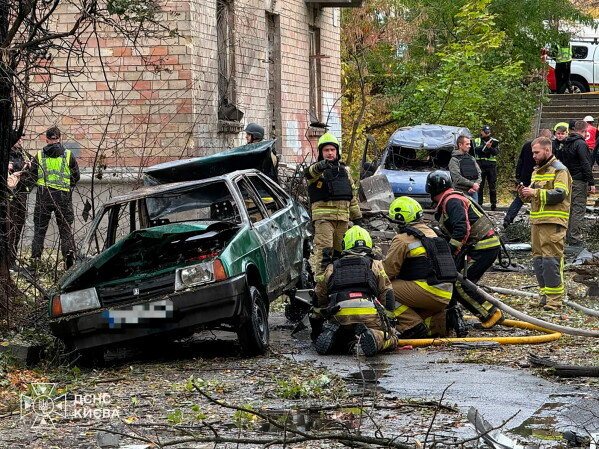
Between midnight and Thursday morning, Russia fired more than 850 drones at Ukraine, Zelenskyy said, hitting 15 regions. Ukraine’s air force said its defenses stopped 536 of them, though impacts were recorded at 31 locations. A Russian drone attack lasting more than 10 hours on the central Kirovohrad region killed three civilians and wounded six, Ukraine’s Emergency Services said.
Zelenskyy also said a Ukrainian missile destroyed six warplanes at an airfield in southwestern Russia that were used to launch glide bombs. Russia’s Defense Ministry said its air defenses shot down 166 Ukrainian drones overnight and that its forces hit two vessels carrying military cargo.
In the Black Sea, rescuers searched for seven missing sailors after drones hit two chemical tankers near Romania’s coast and set them ablaze.
Starlink and Intelligence
Ukraine says it has had a hard few days beyond the energy strikes. Officials say they stopped getting the usual warnings from Western allies about incoming Russian ballistic missiles, which rely on U.S. satellite detectors. Trump has said the United States has not stopped sharing intelligence.
Military grade Starlink terminals also stopped working in Ukraine when mounted on fast moving objects, which hampered drones that use them for guidance. A source in Ukraine’s defense ministry said the terminals now work in motion but only at speeds up to 100 miles per hour (160 kph), which officials say is too slow for mid range attack missions and for interceptor drones that defend against Russian drones.
A Ukrainian official said neither SpaceX nor the Pentagon has explained the slowdown. The Pentagon has not answered questions from the AP. Elon Musk wrote on X that the military version of Starlink, called Starshield, belongs to the U.S. government, and that any limits on speed or use are decided by the U.S. military and “ultimately POTUS.”
British Defence Minister Wes Streeting said he and U.S. Defense Secretary Pete Hegseth welcomed the restoration of Starlink service in Ukraine. “We need President Trump engaged on Ukraine,” he told Fox News.
What Authorities Are Saying
“The block is out. We’re done,” Zelenskyy told the Financial Times in an interview published Thursday. He said the Starlink changes were “not a technical problem, it was the will,” and criticized what he sees as Trump’s admiration for powerful, long ruling leaders.
In a separate interview with Piers Morgan late Wednesday, Zelenskyy said he felt betrayed by Trump’s diesel deal with Putin, the energy ceasefire announcement and the Starlink limits. Asked whether he felt betrayed, he said, “Really, yes, between us.” He said it is painful when Trump “chooses one side, not our side.”
Trump answered in an interview with Newsmax. “Zelenskyy is not a good guy for us to deal with,” he said, adding that he finds Zelenskyy harder to deal with than Putin. He suggested Ukraine should hold an election to replace Zelenskyy. Trump was not asked about Starlink or intelligence sharing.
The Kremlin said Ukraine’s targeting of Russian energy runs counter to U.S. peace efforts. Foreign Minister Sergey Lavrov called the strikes a “direct and crude challenge to President Trump.” Spokesperson Dmitry Peskov said Ukraine never stopped hitting refineries.
EU foreign policy chief Kaja Kallas, asked if the bloc still trusts Trump, said Europe has “a different approach,” which she described as pressing the aggressor and not the victim. Zelenskyy traveled to Brussels for a two day EU summit, with meetings planned with NATO Secretary General Mark Rutte, French President Emmanuel Macron and the leaders of Poland, Denmark and Belgium. A day earlier, he won pledges of more help in London from British Prime Minister Andy Burnham.
Differing Accounts
Kyiv and Moscow give opposite versions of the truce. Zelenskyy says Ukraine went along with it while Russia kept bombing energy sites. Peskov says Ukraine never stopped hitting refineries, and the Kremlin earlier this week said the scope of the ceasefire was never settled. The AP noted that each side’s claims could not be independently verified.
Outlets also differ on how long the war has run, with the AP saying more than 4½ years and Reuters describing nearly five years of Russian bombardment.
Why This Matters
Trump’s public comments on the ceasefire have mostly targeted Ukraine’s refinery strikes, which he said over the weekend “damn well better stop,” even though he described the truce as binding on both sides. Ukraine says the long range drone campaign is its only answer to nearly five years of Russian bombardment, and the strikes have caused fuel shortages inside Russia.
Trump faces pressure over fuel prices with midterm elections less than three weeks away. Diesel has hit record highs since the United States went to war with Iran in February, though Trump says Ukrainian attacks are driving global prices. Ukrainians fear the dispute could cost them on the battlefield, which still depends on U.S. technology.
Russia is also building up. A Reuters analysis of satellite images shows it nearly finished a major base in southern Russia for launching jet powered drones in just six weeks.
What Happens Next
Zelenskyy has said Ukraine’s long range operations will continue, and he told the Financial Times that attacks on Russian refineries will resume. Talks with EU leaders in Brussels will focus on air defense. Whether Washington restores full Starlink speed and the intelligence flow, and how Trump responds to the broken truce, will shape the next phase of the war.
Sources: Reuters and the Associated Press, citing the Financial Times, Piers Morgan’s YouTube show, Newsmax