

KABUL, Afghanistan — A deadly convergence of extreme winter weather has killed at least 61 people and injured more than 110 others across Afghanistan over a three-day period, authorities disclosed Saturday, exposing the devastating fragility of a nation still reeling from earthquakes, decades of conflict and what international agencies characterize as one of the world’s most severe ongoing humanitarian emergencies.
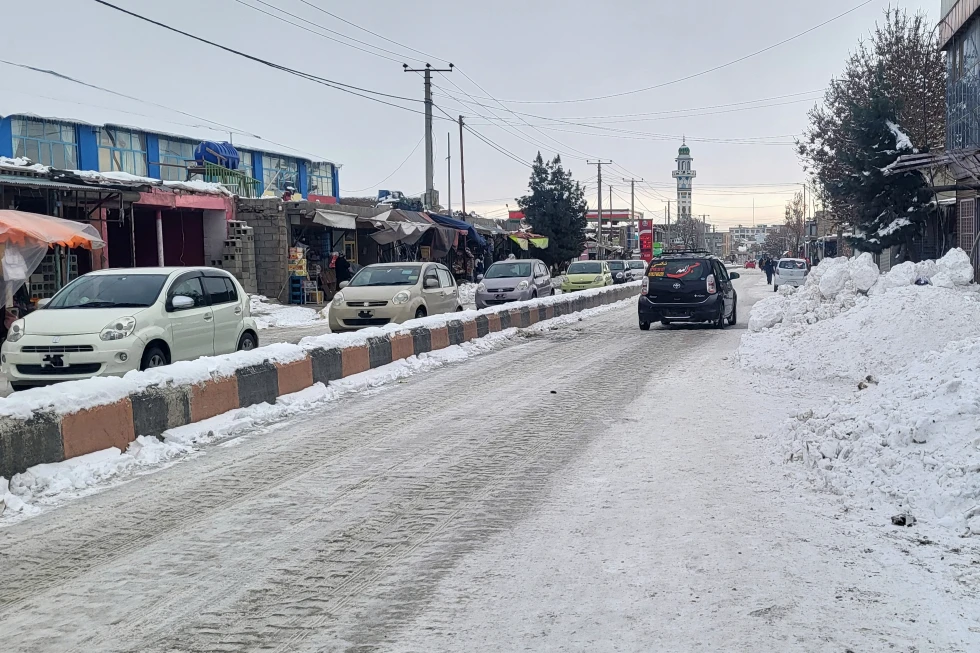
The National Disaster Management Authority revealed through spokesman Yousaf Hammad that the fatalities span 15 of Afghanistan’s 34 provinces, where heavy snowfall and torrential rainfall have demolished 458 homes either completely or partially while killing hundreds of livestock.
Hammad cautioned that casualty figures remain preliminary and could increase substantially as authorities establish contact with isolated villages and complete damage assessments in remote mountainous regions where communication infrastructure has been severed.
The winter onslaught represents the season’s first major precipitation event, breaking a prolonged drought that had threatened agricultural communities but simultaneously unleashing flash floods that overwhelmed vulnerable settlements.
In Herat province’s Kabkan district Thursday, a residential roof collapsed under accumulated snow weight, killing five family members including two children, Herat governor spokesman Mohammad Yousaf Saeedi confirmed. The incident illustrates how the very structures meant to provide shelter have become death traps under the burden of unprecedented snowfall accumulation.
Disaster management officials revealed that most casualties have occurred since Monday as flooding inundated districts across central, northern, southern and western regions, disrupting daily life and severing transportation arteries. The severe weather damaged critical infrastructure throughout affected districts while impacting approximately 1,800 families, compounding hardships in communities already classified as highly vulnerable by international humanitarian organizations. Assessment teams have been dispatched to the worst-affected areas, though surveys remain ongoing to determine comprehensive needs.
The catastrophic weather exposes Afghanistan’s acute vulnerability to extreme climate events, a susceptibility shared with neighboring Pakistan and India but amplified by factors unique to the war-torn nation.
Decades of continuous conflict have decimated infrastructure development, leaving roads, bridges and drainage systems inadequate to handle sudden deluges.
Widespread deforestation driven by poverty and fuel needs has eliminated natural barriers that previously absorbed rainfall and prevented rapid runoff. The intensifying effects of climate change have introduced weather patterns of unprecedented severity, challenging traditional coping mechanisms that sustained Afghan communities for generations.
Perhaps most critically, construction practices in remote areas rely heavily on mud-based materials that offer minimal protection against sudden floods or sustained snowfall. These vernacular building techniques, born of economic necessity and material availability, transform homes into particularly dangerous environments during extreme weather events.
The vulnerability becomes especially pronounced in mountainous terrain where flash flooding can develop with terrifying speed, giving residents virtually no time to evacuate before torrents overwhelm entire settlements.
The current crisis unfolds against a backdrop of compounding disasters that have systematically eroded Afghanistan’s resilience capacity.
The nation’s eastern provinces continue struggling to recover from devastating earthquakes that struck in late August and again in November of the previous year, destroying entire villages and claiming more than 2,200 lives.
Communities displaced by those seismic disasters face particular jeopardy from extreme cold and harsh weather conditions, as temporary shelters provide inadequate insulation against winter temperatures.
UNICEF warned in December that an estimated 270,000 children in earthquake-affected areas face severe risk of life-threatening cold-related diseases. This assessment predated the current winter storm, suggesting actual numbers of children at risk have likely increased substantially. The intersection of earthquake displacement, winter exposure and inadequate shelter creates conditions where vulnerable populations face cascading threats that exponentially increase mortality risks beyond what any single disaster would produce.
The timing of these weather disasters carries profound implications for Afghanistan’s already precarious humanitarian situation. Earlier this month, the United Nations issued a sobering projection that Afghanistan would “remain one of the world’s largest humanitarian crises in 2026,” a designation that places the nation alongside conflict zones and famine-stricken regions requiring massive international intervention.
The assessment came as the UN and humanitarian partners launched a $1.7 billion appeal designed to assist nearly 18 million people identified as facing urgent need throughout the country.
That appeal, announced Tuesday, now appears insufficient to address needs that have expanded dramatically within days of its release. The confluence of earthquake recovery demands, winter storm casualties, infrastructure damage and agricultural losses from livestock deaths creates a humanitarian requirement potentially exceeding initial projections.
International aid agencies face the daunting challenge of delivering assistance to populations increasingly cut off by impassable roads and disrupted communication networks, even as donor fatigue threatens funding streams for protracted crises.
Afghanistan’s vulnerability to seasonal flooding carries grim historical precedent. In 2024, springtime flash floods killed more than 300 people, demonstrating how Afghanistan’s unique combination of topography, climate patterns and infrastructure deficits creates recurring disaster cycles that claim hundreds of lives annually.
Spring snowmelt from mountain ranges combines with seasonal rains to produce torrential flows that overwhelm river systems and inundate valleys where most population centers exist. The predictability of these patterns makes the ongoing loss of life particularly tragic, as early warning systems and preventive infrastructure could theoretically reduce casualties substantially.
Yet implementing such systems requires resources and governmental capacity that Afghanistan’s de facto authorities struggle to marshal. The country’s economic collapse following international military withdrawal eliminated revenue streams that might have funded disaster preparedness programs.
International sanctions and frozen assets have constricted the financial resources available for infrastructure investment. The result is a nation unable to protect its citizens from foreseeable threats despite having detailed knowledge of when and where disasters will likely strike.
The livestock deaths reported by disaster management officials carry implications extending far beyond immediate economic losses. In Afghanistan’s predominantly agricultural economy, livestock represent not merely income sources but critical assets that families depend upon for sustenance, transportation and social standing.
The loss of hundreds of animals decimates household wealth accumulated over generations, pushing families into destitution from which recovery may prove impossible without substantial external assistance.
For communities already operating at subsistence levels, such losses can trigger cascading effects including malnutrition, inability to plant crops, and forced migration to urban areas lacking capacity to absorb displaced populations.
The agricultural sector’s vulnerability to climate shocks creates a vicious cycle where each disaster diminishes the population’s capacity to withstand subsequent events.
Farmers who lose animals and seed stocks cannot plant crops for the coming season, reducing food availability and increasing prices. Higher food costs strain already inadequate family budgets, forcing households to adopt harmful coping mechanisms including removing children from school, reducing meal frequency, and selling remaining productive assets.
These adaptations, while necessary for immediate survival, undermine long-term resilience and development prospects.
International humanitarian organizations now confront the challenge of delivering aid to populations facing multiple simultaneous crises while operating under resource constraints and access limitations.
The $1.7 billion UN appeal represents merely a fraction of Afghanistan’s comprehensive reconstruction needs, focusing instead on preventing mass casualties from starvation, disease and exposure.
Even achieving this limited objective requires sustained international commitment to a country largely absent from global headlines and competing for attention with more recent crises.
The current winter storms underscore how climate change disproportionately impacts nations least equipped to adapt or respond. Afghanistan contributed virtually nothing to global greenhouse gas emissions yet faces catastrophic consequences from shifting weather patterns that include more intense precipitation events, prolonged droughts and unpredictable seasonal transitions.
This inequity raises profound questions about international responsibility for supporting climate adaptation in vulnerable nations, particularly those lacking resources for independent resilience-building efforts.
As assessment teams continue surveying affected districts and establishing communication with isolated communities, the death toll appears likely to rise.
The preliminary nature of current casualty figures, combined with known difficulties accessing remote mountain villages during winter storms, suggests authorities may discover additional victims once roads become passable and communication networks resume functioning.
Each delayed discovery represents not merely a statistical update but a family destroyed, a community diminished and a nation’s capacity to recover further eroded.




