

Democratic Rep. Al Green of Texas was escorted from the House chamber moments after President Donald Trump began delivering his State of the Union address Tuesday night, after the congressman raised a protest sign referencing a recently circulated racist video.
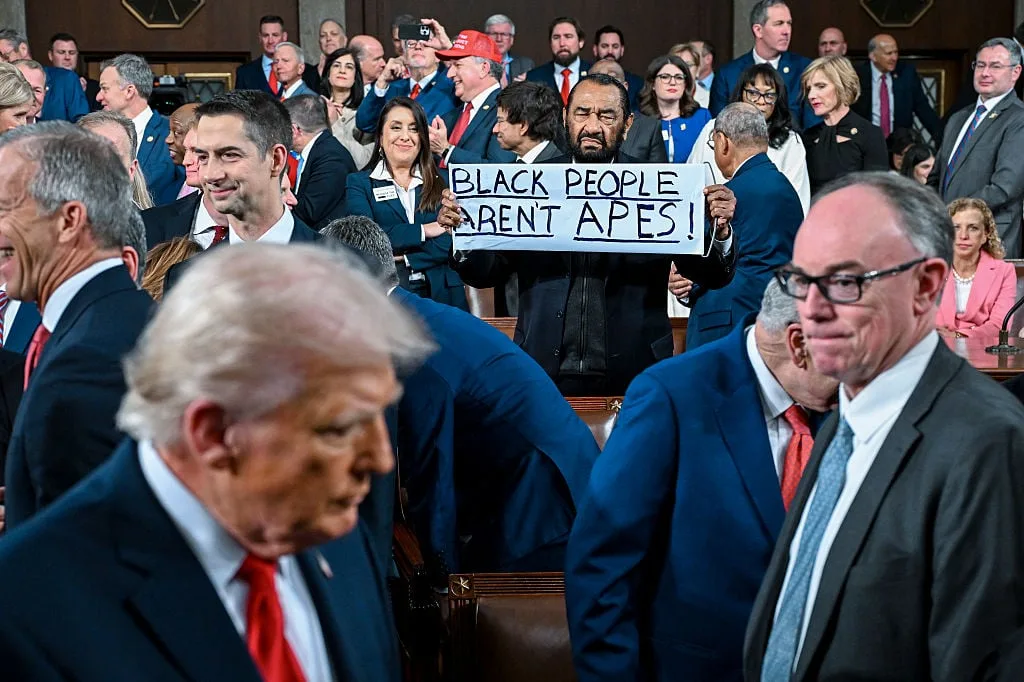
Green stood in the center aisle as the president opened his speech, holding a sign that read, “Black people aren’t apes!” The message alluded to a video Trump had previously shared — and later deleted — that depicted former President Barack Obama and former first lady Michelle Obama as apes in a jungle. CNN disclosed that Trump had shared and then removed the video earlier this month.
House Speaker Mike Johnson ordered Green removed, and Capitol staff escorted the congressman from the chamber as he continued holding the sign aloft. Several Republican lawmakers attempted to block the sign from camera view or reached toward it as Green exited. Rep. Troy Nehls, a Republican from Texas, approached Green during the exchange, and Sen. Markwayne Mullin also moved toward him before staff intervened.
As Green departed, some Republicans chanted “USA! USA!” His seat remained empty for the remainder of the address, marked only by a handwritten cardboard sign bearing his name.
The removal marked the second consecutive year Green has been escorted from a presidential address. During last year’s speech, he was directed out after verbally interrupting the president.
Speaking with reporters outside the chamber Tuesday night, Green dismissed the removal as insignificant. He maintained that he felt compelled to act. “You have to take a stand,” Green said, still holding the sign for photographers. “I am just a person who has done it — but there are many others, I believe, who would.”
Green has long positioned himself among Trump’s most outspoken critics. He was the first member of Congress to initiate impeachment proceedings against Trump in 2017. Representing a predominantly African American district in Texas, Green has frequently focused his legislative efforts on civil rights issues.
The confrontation unfolded as dozens of Democratic lawmakers declined to attend the speech altogether. Those who remained largely sat in silence as Republican members repeatedly rose to applaud the president.
Several Democrats left before the address concluded. Sen. Mark Warner of Virginia wrote on the social media platform Bluesky that he could not remain for what he described as “an hour of Trump’s lies,” departing during the president’s remarks about economic achievements. Rep. Bill Foster of Illinois announced on X that he would exit after hearing what he counted as five “bald-faced lies,” stating he reached that threshold less than an hour into the speech.
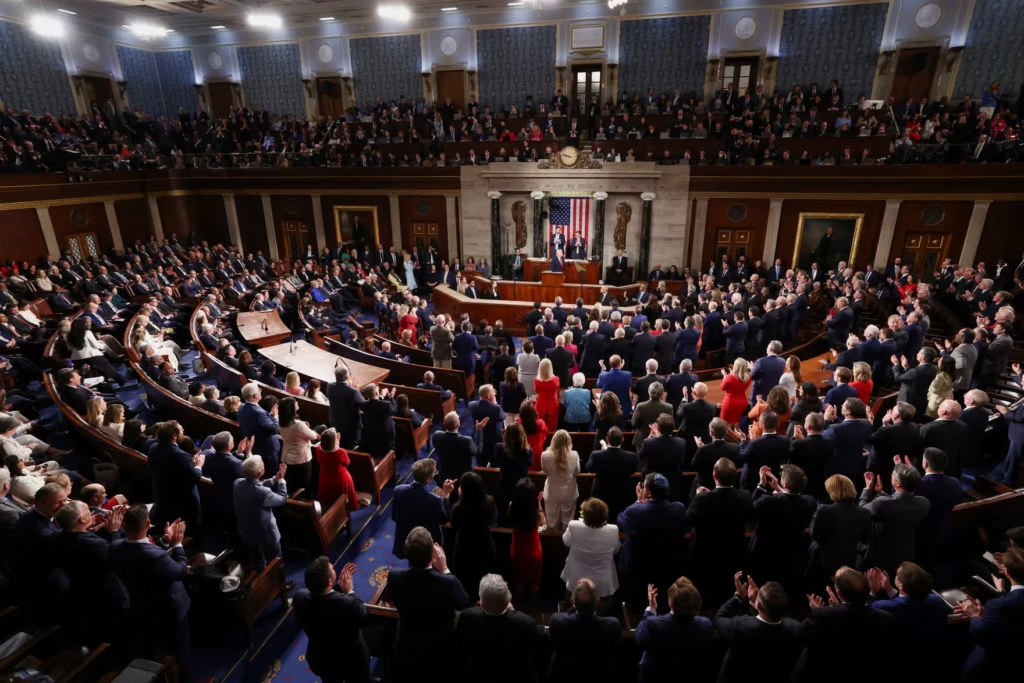
During Trump’s discussion of immigration enforcement, Rep. Rashida Tlaib of Michigan shouted comments referencing the killing of Minneapolis nurse Alex Pretti, who was shot by federal agents. “They saw the videos, Mr. President,” Tlaib called out. Rep. Ilhan Omar of Minnesota also directed remarks toward the president, telling him, “You should be ashamed,” before leaving the chamber alongside Tlaib.
Republican lawmakers, meanwhile, offered sustained applause throughout the address and remained seated in unified support of the president.
The episode underscores deepening partisan divisions as President Donald Trump begins another election year facing heightened scrutiny and mounting political polarization. Green’s protest, though brief, spotlighted racial tensions tied to the viral video controversy and amplified ongoing debates over political rhetoric and its consequences.
While the State of the Union is traditionally a moment of national unity, recent years have seen it transform into a stage for overt partisan demonstrations. Lawmakers from both parties have increasingly used the televised platform to signal dissent, whether through coordinated attire, silent gestures or direct interruptions.
Green’s silent protest reflects a strategic shift from verbal disruption to symbolic messaging. Unlike last year’s vocal outburst, this year’s action relied on visual impact — a sign crafted to address what he and other critics view as racially inflammatory content associated with the president.
The reaction from Republicans — including attempts to obscure the sign and audible chants as Green exited — illustrated how quickly symbolic gestures can escalate into confrontational exchanges inside the chamber.
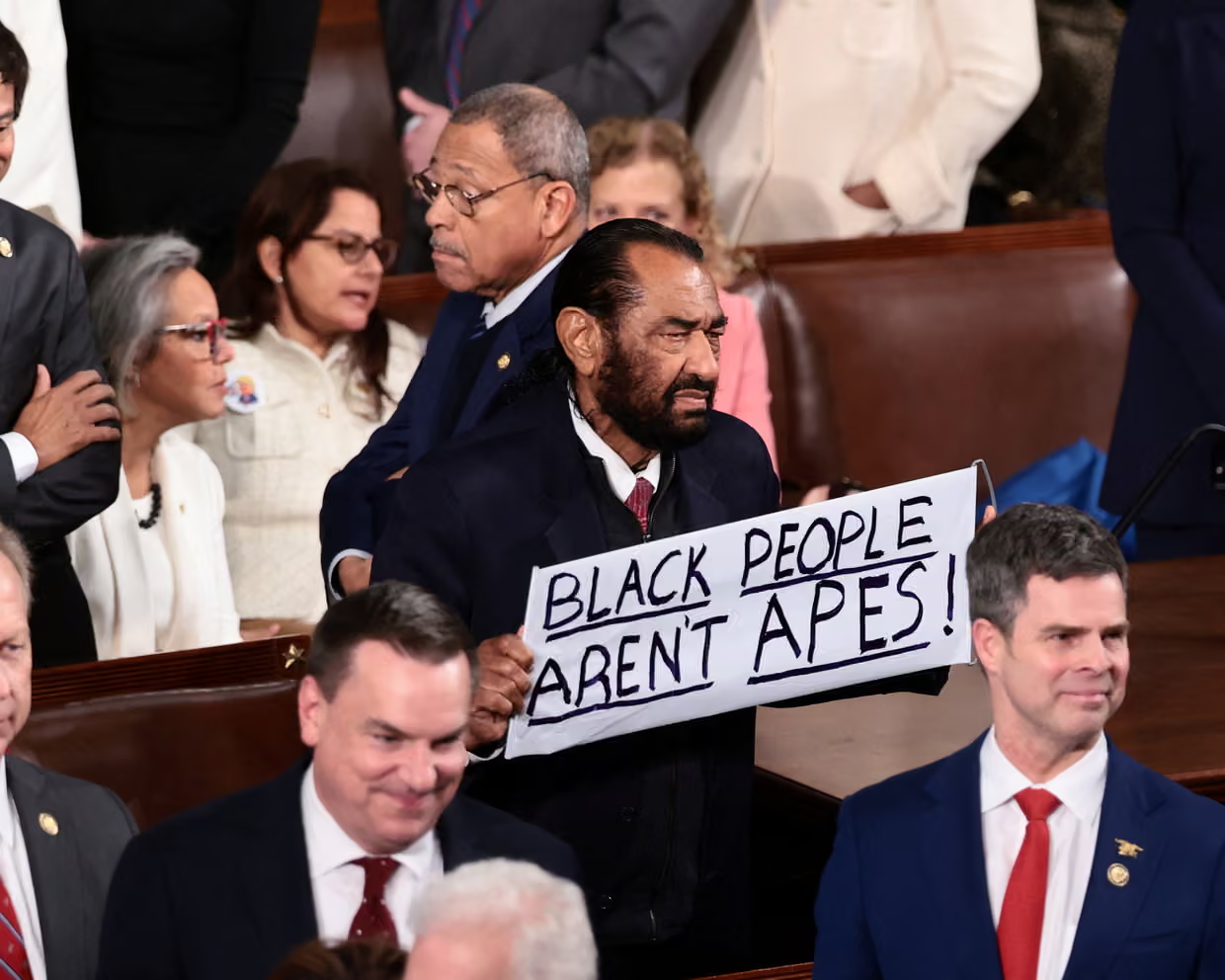
Political analysts note that such moments often resonate beyond the Capitol. Images from presidential addresses circulate widely across television and social media, potentially shaping public perception more than policy proposals delivered in the speech itself. In that sense, Green’s removal may amplify attention to the controversy surrounding the video in ways a quiet boycott might not have achieved.
At the same time, repeated ejections risk reinforcing perceptions of dysfunction within Congress. With partisan hostility intensifying ahead of key legislative battles, including immigration funding and economic policy debates, Tuesday’s incident may further entrench divisions rather than foster dialogue.
Green’s actions also reflect ongoing tensions surrounding race and representation in American politics. As one of the most vocal Black lawmakers in Congress, his protest drew attention to concerns among civil rights advocates about the normalization of racially charged imagery in political discourse.
The State of the Union, constitutionally mandated as a report on the nation’s condition, has evolved into a high-stakes political spectacle. Tuesday night’s events made clear that, in today’s polarized environment, even moments designed to project institutional continuity can quickly become flashpoints.
Whether Green’s protest alters the broader political conversation remains uncertain. But the episode added another vivid chapter to the contentious relationship between President Donald Trump and his Democratic critics — a dynamic that continues to shape the nation’s political landscape.
The Guardian




