

Hamas released all twenty living Israeli hostages Monday in two separate handovers to the Red Cross, completing a critical first phase of the U.S.-backed ceasefire agreement as President Donald Trump arrived at Israel’s parliament to address the nation.
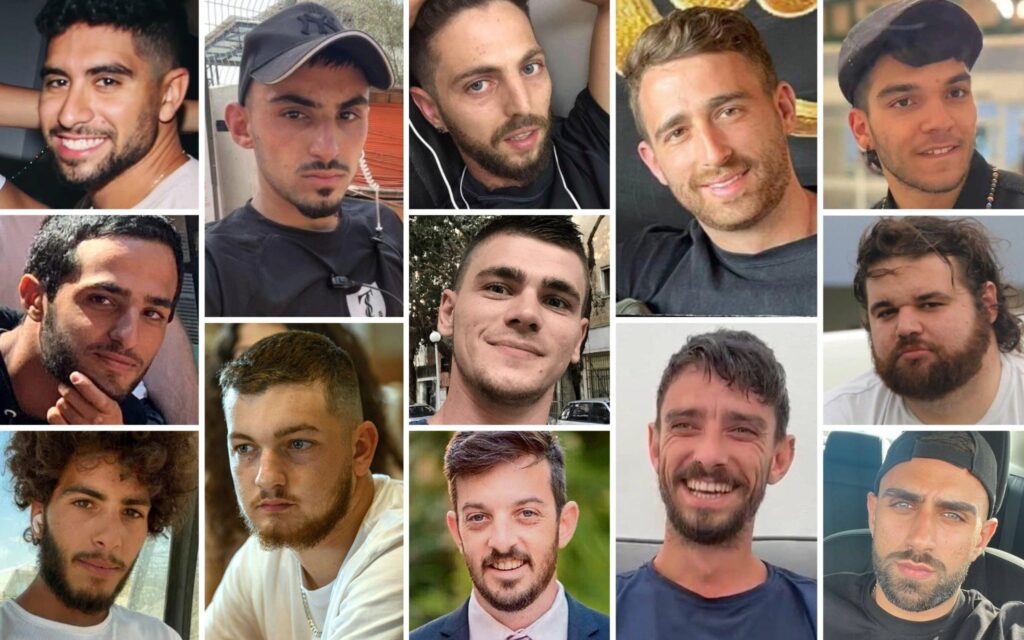
A second group of thirteen Israeli hostages was handed over to the Red Cross following an earlier release of seven hostages, according to Israeli public radio. Hamas confirmed that all living Israeli hostages have now been released, ending more than two years of captivity for the survivors.
All twenty hostages were reported to have been on their feet during the handovers, according to initial accounts. Photos were published of the first group of released hostages as they were transferred to Israeli custody.
As per the terms of the ceasefire agreement, twenty living hostages were due to be handed over Monday, with the bodies of up to twenty-eight deceased hostages also scheduled for release.
Trump’s plane overflew Tel Aviv’s Hostages Square, where thousands had gathered to celebrate the releases. The U.S. president later said the Gaza deal may be “the biggest thing I’ve ever done” as he arrived at the Knesset for a historic address to the Israeli parliament.
British Prime Minister Keir Starmer declared in a post on X that “Today is the first, crucial phase in ending the war in the Middle East.” Speaking from Egypt ahead of Monday’s international summit to advance Trump’s framework, Starmer added: “Now we must deliver lasting peace and a secure future for the whole region. The United Kingdom is providing additional humanitarian aid for civilians in Gaza, and we will lead efforts to accelerate its reconstruction.”
The completion of the living hostage releases marks a pivotal moment in the ceasefire implementation. Hamas held the hostages for more than two years following the October 7, 2023, attack on Israel that killed around twelve hundred people and saw two hundred fifty-one individuals taken captive.
The releases triggered scenes of jubilation in Tel Aviv’s Hostages Square, where families of the captives have maintained a constant presence throughout the ordeal. Emotional reunions were expected at Israeli military facilities as the freed hostages underwent medical evaluations.
In exchange for the hostages, Israel is releasing nearly two thousand Palestinian detainees and convicted prisoners as part of the agreement mediated by the United States, Egypt, Qatar and Turkey.
Trump became only the fourth U.S. president to address the Knesset, following Jimmy Carter in 1979, Bill Clinton in 1994 and George W. Bush in 2008. Israeli Prime Minister Benjamin Netanyahu greeted Trump at the airport with a hero’s welcome as Air Force One arrived.
The president will be awarded Israel’s highest civilian honor later this year, Israeli President Isaac Herzog announced.
World leaders are convening Monday in Sharm el-Sheikh, Egypt, for an international summit to discuss the next phases of the ceasefire agreement and plans for Gaza’s reconstruction and governance. More than twenty heads of state and government are attending the gathering.
The ceasefire agreement’s first phase calls for the release of all surviving hostages, the exchange of Palestinian prisoners, a surge of humanitarian aid into Gaza and a partial withdrawal of Israeli forces from the territory.
However, significant challenges remain in implementing subsequent phases of Trump’s twenty-point plan. Those include determining Gaza’s postwar governance, addressing the future of Hamas, which has rejected Israeli demands to disarm, and resolving questions about Israeli withdrawal from the territory.
Two years of war have reduced Gaza to ruins, with nearly all of its two point two million residents homeless and facing a humanitarian catastrophe. Israeli airstrikes and ground assaults have killed more than sixty-seven thousand Palestinians, according to Gaza health officials.
The conflict has also reshaped the Middle East through spillover confrontations involving Iran, Lebanon’s Hezbollah and Yemen’s Houthis. The ceasefire represents the most significant diplomatic breakthrough since the war began.
U.N. aid officials said Israel had approved delivery of additional emergency supplies to Gaza, where famine conditions persist in parts of the territory. The main U.N. aid agency working in Gaza, UNRWA, urged Israel to allow unhindered humanitarian operations.
Hamas’ armed wing affirmed its commitment to the ceasefire terms and timeline Monday, contingent on Israeli adherence to the agreement. The group said Israel agreed to the deal after failing to free hostages through military operations.
The International Criminal Court issued arrest warrants last year for Netanyahu for alleged war crimes and crimes against humanity, charges Israel denies. Israeli critics of the prime minister, including hostages’ families, have accused him of deliberately prolonging the war to satisfy far-right coalition partners crucial to his political survival.
The successful completion of the first phase hostage releases now sets the stage for more complex negotiations over Gaza’s long-term future and the broader Israeli-Palestinian conflict.




