

SAN FRANCISCO (BN24) — A federal appeals court on Wednesday struck down President Donald Trump’s executive order seeking to end birthright citizenship, ruling the directive unconstitutional and affirming a nationwide block on its enforcement.
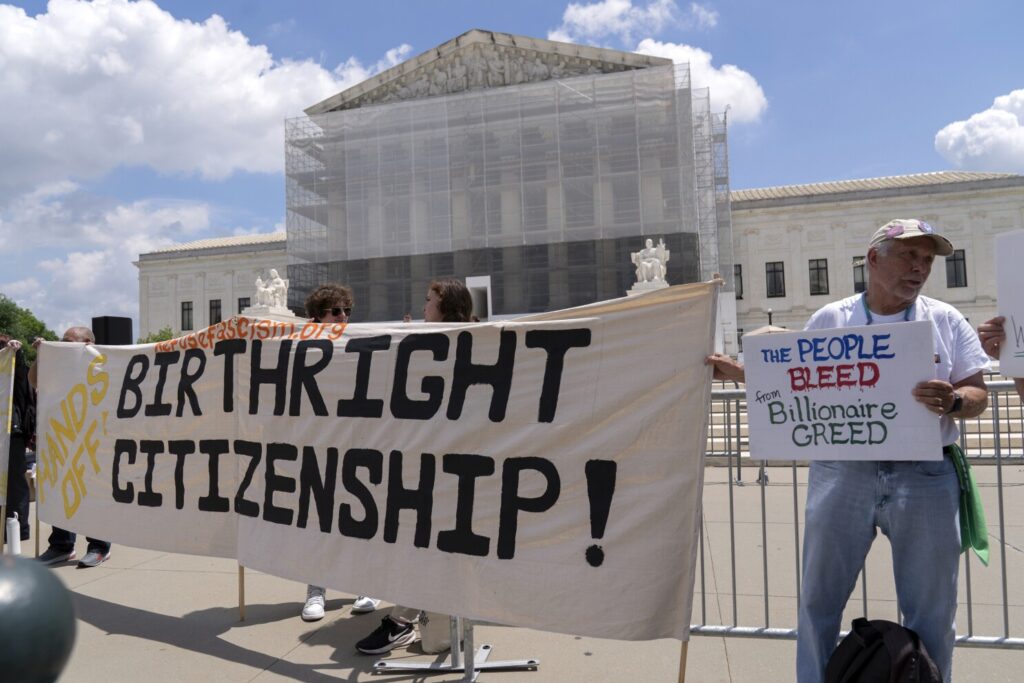
In a 2-1 decision, a panel of the 9th U.S. Circuit Court of Appeals in San Francisco upheld an earlier ruling from a federal judge in Seattle that barred the Trump administration from enforcing the order. The executive action, signed during Trump’s first term, aimed to deny automatic U.S. citizenship to children born on American soil to parents who are either undocumented immigrants or in the country temporarily.
“The district court correctly concluded that the Executive Order’s proposed interpretation, denying citizenship to many persons born in the United States, is unconstitutional. We fully agree,” the court’s majority opinion stated.
Judges Michael Hawkins and Ronald Gould — both appointed by President Bill Clinton — authored the majority opinion, reaffirming U.S. District Judge John C. Coughenour’s initial injunction. Coughenour condemned the order as an effort to circumvent the Constitution for political purposes.
The decision marks the first time an appeals court has ruled on Trump’s attempt to alter the long-standing interpretation of the 14th Amendment, and it moves the issue closer to a potential hearing before the Supreme Court.
The ruling emphasized that the Constitution’s Citizenship Clause, part of the 14th Amendment, guarantees citizenship to “all persons born or naturalized in the United States, and subject to the jurisdiction thereof.” The Supreme Court upheld this standard in an 1898 decision involving a San Francisco-born child of Chinese immigrants.
Despite recent Supreme Court limitations on the use of nationwide injunctions by lower courts, the 9th Circuit found that the broad scope of the order’s impact warranted such an exception. States that filed the lawsuit — including Washington, Arizona, Illinois and Oregon — argued they needed a uniform ruling to avoid having birthright citizenship recognized in some states but not others.
“We conclude that the district court did not abuse its discretion in issuing a universal injunction in order to give the States complete relief,” the majority wrote.
Judge Patrick Bumatay, a Trump appointee, dissented, contending that the states lacked standing to sue. He warned against the increasing use of “universal relief” as a way to bypass judicial norms but did not rule on the constitutionality of the order itself.
Trump’s order argued that children born in the U.S. to non-citizen parents — including those without legal status or those on temporary visas — should not automatically receive citizenship. The Justice Department had claimed that the phrase “subject to the jurisdiction” in the 14th Amendment permits such an interpretation, but courts have repeatedly rejected that view.
At least nine lawsuits challenging Trump’s order have been filed across the country since it was signed. Neither the White House nor the Justice Department responded to requests for comment following the 9th Circuit’s ruling.
With this decision, the courts continue to reaffirm the constitutional protections of birthright citizenship, casting further doubt on Trump’s broader immigration agenda as legal challenges unfold.




