

NAIROBI, Kenya (BN24) — At least 16 people were killed and 400 others injured in violent clashes between demonstrators and police during nationwide protests against President William Ruto’s government, according to rights group Amnesty Kenya.
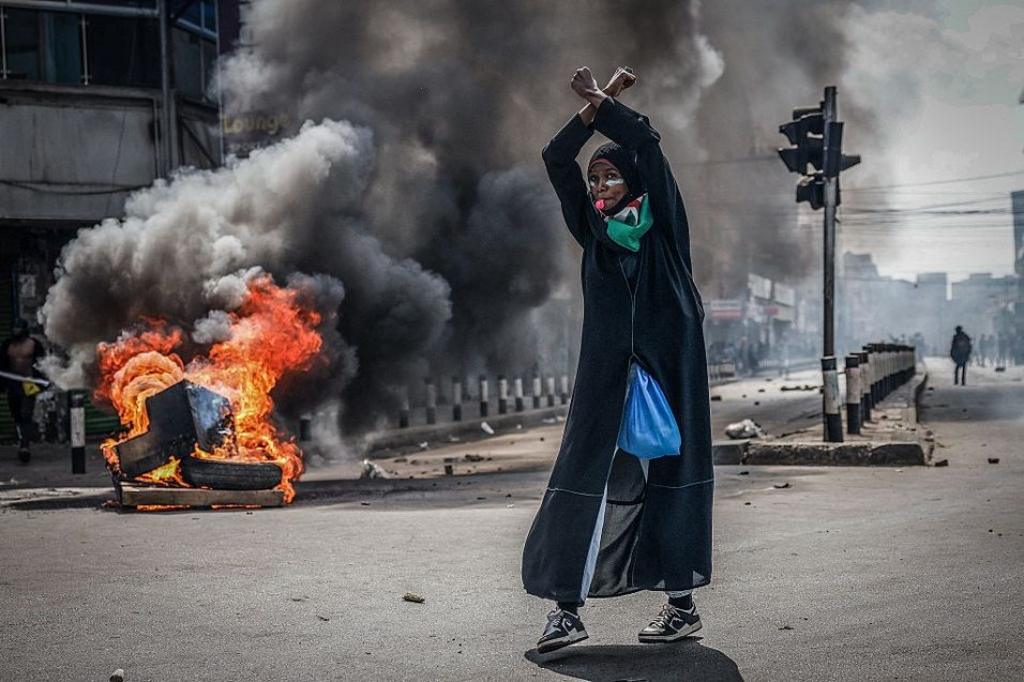
Thousands of protesters flooded the streets on Wednesday, demanding change and chanting anti-government slogans including “Ruto must go,” while waving tree branches to signify a call for peaceful resistance. Despite the symbolism, the protests turned chaotic, with police deploying tear gas, setting up razor wire barricades, and using force to block access to key government sites including State House and Parliament.
The unrest prompted the Ruto administration to issue a directive banning live TV and radio coverage of the demonstrations. However, that media blackout was swiftly overturned by a ruling from Kenya’s High Court in Nairobi.
Speaking from a funeral service in Kilifi County along the coast, President Ruto appealed for calm and national unity amid mounting anger. “Protests should not be to destroy peace in Kenya,” he said. “We do not have another country to go to when things go wrong. It is our responsibility to keep our country safe.”
His absence from State House in Nairobi was conspicuous as protesters attempted to march on the presidential compound, only to be repelled by heavily armed security forces. Similar blockades were set up around Parliament, where memories of deadly protests one year ago remain fresh. At least 60 people died in last year’s unrest after parts of Parliament were set ablaze by demonstrators.
Wednesday’s death toll has not been officially confirmed by the government, but a joint statement from the Kenya Medical Association, the Law Society of Kenya, and the Police Reforms Working Group placed the number at eight deaths. The groups reported that 83 of the 400 injured required specialized medical care, with at least eight people suffering gunshot wounds. Among the wounded were three police officers.
Scenes from Nairobi showed thick clouds of tear gas billowing between buildings as protesters scattered, coughing and shielding their eyes. Downtown streets were largely deserted, with businesses shuttered and the typically bustling city center reduced to silence except for the chants of demonstrators.
The protests, which erupted on the anniversary of last year’s fatal storming of Parliament, carried emotional weight. Outside the legislative building, mourners placed flowers and handwritten notes at the perimeter fence in remembrance of those killed. One woman, draped in the Kenyan flag, held a placard bearing the names of victims from last year’s demonstrations.
“I feel like as a country we’re not going in the right direction,” said Amina Mude, who joined the protests in Nairobi. “Especially when it comes to education and the future of our children. It’s time the leadership started listening to us.”




