

Australia implemented the world’s first nationwide prohibition on social media access for children under 16 when the law took effect at midnight Wednesday, ordering major platforms including TikTok, Instagram, Facebook and YouTube to block young users or face penalties reaching A$49.5 million ($33 million).
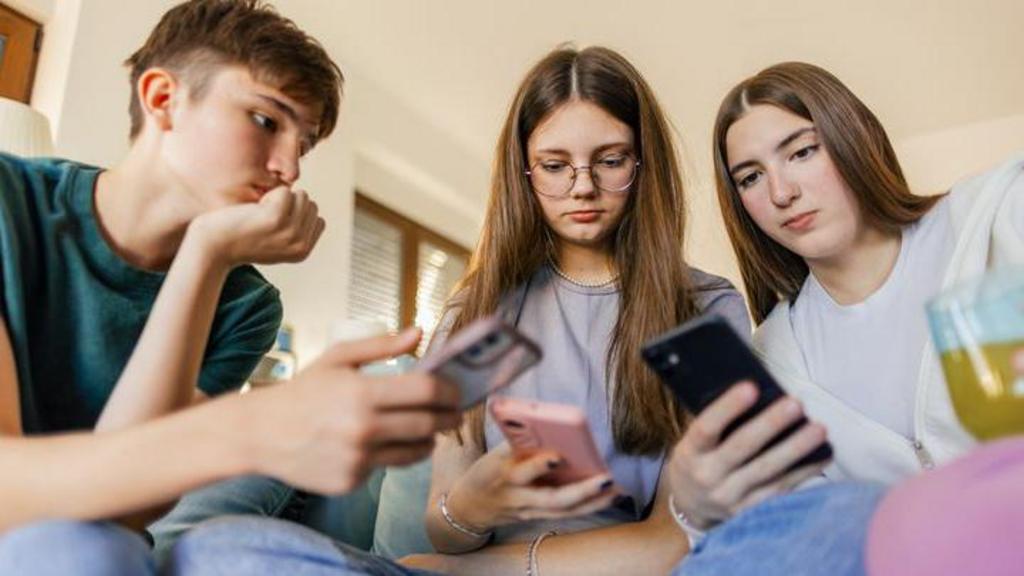
The legislation targets ten of the largest social media platforms and has drawn intense scrutiny from technology companies and free speech advocates while winning praise from parents and child safety groups. Governments across multiple continents are monitoring the rollout closely as concerns intensify about social media’s impact on youth mental health and safety, Reuters reported.
“While Australia is the first to adopt such restrictions, it is unlikely to be the last,” Tama Leaver, a professor of internet studies at Curtin University, said. “Governments around the world are watching how the power of Big Tech was successfully taken on. The social media ban in Australia is very much the canary in the coal mine.”
The implementation marks the beginning of a live experiment that lawmakers globally will study as they consider whether countries can effectively block children from accessing technology woven into modern daily life. The measure closes out a year of intense debate over whether such intervention is feasible and appropriate.
Hours before the ban took effect, two 15-year-olds filed a legal challenge at Australia’s highest court arguing the legislation violates their right to free communication. Noah Jones and Macy Neyland, backed by the Digital Freedom Project, contend that teenagers rely on social media for information and social connection, and blocking access could particularly harm vulnerable youth including those with disabilities, Indigenous teenagers, rural children, and LGBTQ+ adolescents, the BBC reported.
The advocacy group warned that the ban could isolate precisely those young people who benefit most from online communities where they find support unavailable in their immediate physical environments.
Australia’s Communications Minister Anika Wells dismissed the legal challenge during parliamentary remarks, vowing the government would not retreat. “We will not be intimidated by threats. We will not be intimidated by legal challenges. We will not be intimidated by big tech. On behalf of Australian parents, we will stand firm,” she said.
The minister’s defiant tone reflects the government’s characterization of the ban as a “delay” rather than permanent prohibition, framing it as giving children more time to mature before encountering social media’s pressures. Officials describe the approach as a treatment plan rather than cure, acknowledging implementation will likely prove messy while insisting they won’t absolve technology companies of responsibility.
For young Australians accustomed to spending hours daily on platforms, the ban represents an abrupt severance from digital social lives. Paloma, a 12-year-old Sydney resident, told the BBC she feels “sad” and “upset” about losing access to communities she built on Snapchat and TikTok where she spends 30 minutes to two hours daily.
“I am part of several communities on Snapchat and TikTok,” Paloma explained. “I’ve developed good friendships on the apps, with people in the US and New Zealand, who have common interests like gaming, and it makes me feel more connected to the world.”
She regularly discusses her life with a same-age boy in New Jersey whom she knows through gaming and TikTok. “I feel like I can explore my creativity when I am in a community online with people of similar ages,” she said, adding that everyone she knows is “a bit annoyed” about the restrictions. “The government is taking away a part of ourselves.”
The legislation places enforcement responsibility on technology companies themselves, requiring them to take “reasonable steps” to prevent children from accessing accounts. The law advises using multiple age assurance technologies including government identification documents, facial recognition, voice analysis, or bank account verification.
Meta, which owns Instagram, Facebook and Threads, began removing Australian children under 16 from its platforms last week in anticipation of the deadline. A company spokesperson told the BBC that “compliance with the law will be an ongoing and multi-layered process.” Snapchat indicated users can verify age through bank accounts, photo identification or selfies.
Of the ten platforms initially covered, all except Elon Musk’s X have pledged compliance using age inference—estimating a person’s age from their online activity—or age estimation, typically based on selfies. Some may also verify through uploaded identification documents or linked financial account details.
How difficult enforcement proves remains uncertain. Young users could potentially circumvent restrictions through fake profiles, joint accounts with family members, or virtual private networks that mask their location. The government acknowledges the platform list will evolve as new products emerge and young users migrate to alternatives.
The rollout begins an experiment that lawmakers frustrated by what they characterize as the technology industry’s sluggish response to harm minimization will watch intently. Countries from Denmark to Malaysia, and even some U.S. states where platforms are rolling back trust and safety features, have announced plans for similar measures.
The push gained momentum following 2021 leaks of internal Meta documents showing the company knew its products contributed to body image problems and suicidal thoughts among teenagers while publicly denying such connections existed. Those revelations, known as the Facebook Papers, intensified pressure on governments to intervene directly rather than relying on voluntary industry reforms.
For social media businesses, the ban inaugurates an era of structural constraints as user growth stagnates and time spent on platforms contracts, studies indicate. While platforms claim they generate limited advertising revenue from under-16 users, they acknowledge the ban disrupts their pipeline of future customers. Just before implementation, 86 percent of Australians aged 8 to 15 used social media, government figures showed.
The Australian approach represents a fundamental shift in how governments conceive their role in regulating technology platforms. Rather than setting content moderation standards or privacy requirements, the legislation attempts to categorically exclude an entire age demographic from accessing services that have become ubiquitous communication tools for hundreds of millions globally.
Critics question whether such categorical exclusion appropriately balances child protection against rights to information access, free expression, and social connection. The legal challenge filed by Jones and Neyland will test whether Australian constitutional protections for political communication extend to minors’ social media access, potentially setting precedent for how democratic societies weigh competing interests in the digital age.
Technology policy experts note the ban’s success or failure will likely influence regulatory approaches worldwide. If Australia demonstrates that age restrictions can be effectively enforced without catastrophic unintended consequences, other nations may follow rapidly. Conversely, if implementation proves technically unfeasible or generates significant backlash from affected youth and families, governments elsewhere may reconsider similar proposals.
The legislation also raises privacy concerns about the verification methods platforms will deploy. Requiring government identification documents or biometric data like facial scans to prove age creates new datasets that could be misused, hacked, or subjected to government surveillance. Advocacy groups warn that privacy invasions required to enforce age restrictions could harm users of all ages, not just children ostensibly being protected.
As Australian teenagers navigate their first day without legal access to platforms that shaped their social lives, the global technology industry confronts a new reality where democratic governments are willing to fundamentally restructure how young people interact with digital services. Whether other nations replicate Australia’s approach or chart different courses will depend heavily on how the next months unfold down under, making Australia’s 5 million children under 16 unwitting participants in a consequential social experiment.
BBC/Reuters





