

A 13-year-old boy is being hailed by police and emergency officials in Western Australia after swimming for hours through rough seas to summon help for his mother and two younger siblings, a decision authorities say directly led to their rescue after the family was swept far offshore.
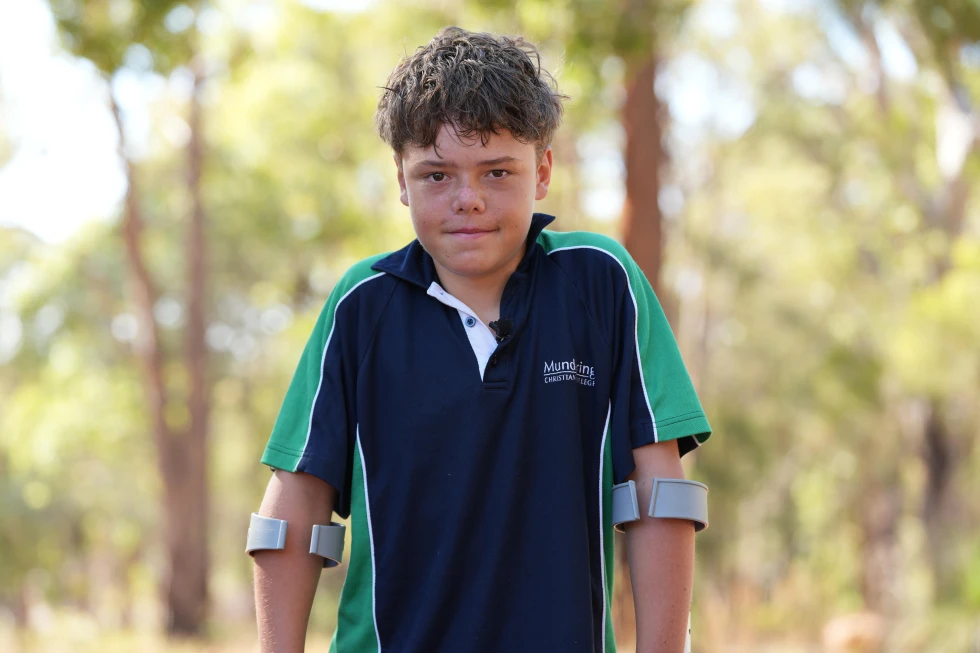
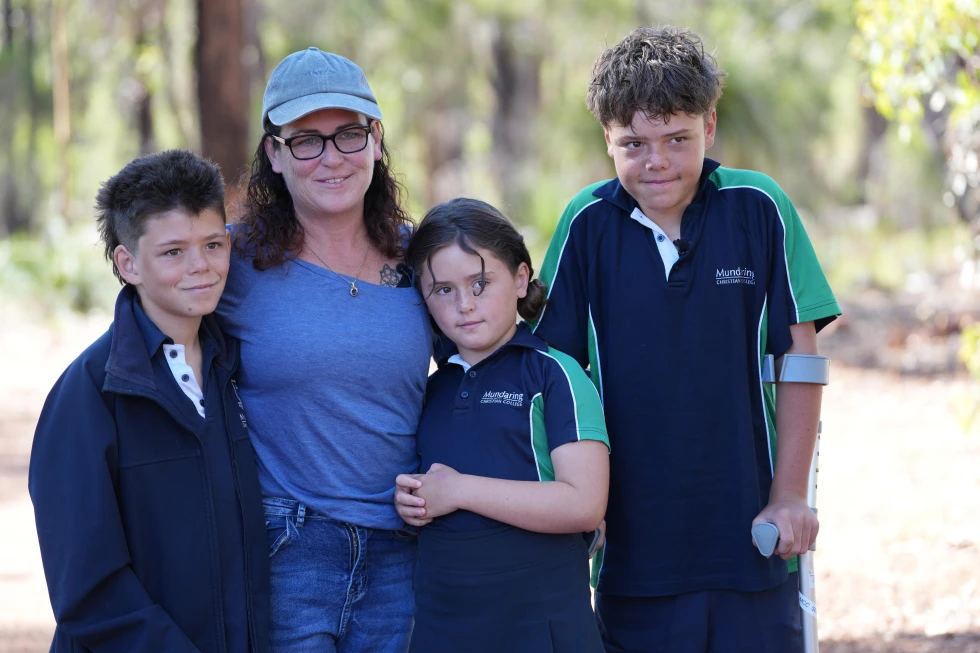
Austin Appelbee, 13, swam approximately 4 kilometers (2.5 miles) to shore on Friday after ocean conditions overwhelmed the family during a coastal outing near Quindalup, south of Perth, police said. His mother, Joanne Appelbee, 47, along with Austin’s brother Beau, 12, and sister Grace, 8, were later found alive after drifting nearly 14 kilometers (9 miles) out to sea.
Western Australia Police said the family had been using kayaks and paddle boards rented from their hotel while on vacation when worsening winds and waves began pulling them away from shore around midday. As conditions deteriorated and their ability to return weakened, Joanne Appelbee made the decision to send her eldest child to seek help.
Austin initially attempted to paddle back on an inflatable kayak, but police said the vessel began taking on water, leaving him with little choice but to continue without it. He removed his life jacket after determining it restricted his movement in the heavy swell and began swimming alone toward land.
Speaking Tuesday, Austin described the ordeal as a battle against exhaustion, fear and cold, saying he focused on maintaining forward momentum despite the dangerous conditions. He estimated the swim lasted about four hours.
“The waves were massive and I didn’t have a life jacket,” Austin said. “I just kept telling myself to keep going.”
He reached shore at about 6 p.m., collapsed on the beach and raised the alarm, triggering an urgent search-and-rescue response.
Police Inspector James Bradley credited the teenager’s determination with saving three lives.
“The actions of the 13-year-old boy cannot be praised highly enough,” Bradley said. “His courage and persistence ultimately ensured his mother and siblings were found alive.”
A police helicopter located Joanne Appelbee and the two younger children at about 8:30 p.m., more than two hours after Austin reached shore. Officers said the three were wearing life jackets and clinging to a paddleboard, having spent up to 10 hours in the water as darkness approached.
Joanne Appelbee later told Australian Broadcasting Corp. that asking her son to swim for help was the most difficult decision she had ever made.
“I couldn’t leave the three of them,” she said. “I said to Austin, ‘Try and get to shore and get some help. This could get really serious really quickly.’”
She said she believed her son was capable of reaching land but became increasingly anxious as daylight faded and rescue had not yet arrived.
As waves grew larger and temperatures dropped, she said the family tried to keep spirits up by singing and joking, treating the situation lightly for as long as possible.
“We kept it positive for the kids,” she told ABC. “But once the sun started to go down, the sea became very rough. That’s when it really hit how dangerous it was.”
By the time rescuers reached them, all three were suffering from cold exposure. Beau had lost sensation in his legs due to prolonged immersion, his mother said, and all were shivering heavily.
Despite the ordeal, police said all four family members were medically assessed and none required hospitalization.
From a broader perspective, maritime safety officials say the incident highlights the rapid changes that can occur in coastal conditions and the risks faced by inexperienced swimmers and paddlers, particularly when winds strengthen offshore. Even relatively short distances can become life-threatening under such circumstances, experts note, as currents and waves sap strength and disorient swimmers.
Authorities also pointed to the importance of emergency decision-making under pressure. While sending a child alone into the ocean would ordinarily be unthinkable, police acknowledged that Joanne Appelbee’s decision reflected a stark calculation in an extreme situation.
Emergency responders emphasized that Austin’s physical conditioning, calm focus and willingness to abandon equipment that hindered his movement were critical factors in his survival. They cautioned, however, that similar attempts could easily end in tragedy and urged the public to avoid entering the water when conditions are unfavorable.
The rescue operation drew praise from local officials and renewed calls for tourists to seek updated marine forecasts and heed warnings when renting watercraft. Western Australia’s coastline, while popular with visitors, is known for strong currents and rapidly shifting weather.
Analysts say the incident also underscores the psychological dimension of survival at sea. Austin’s account of maintaining positive thoughts and focusing on incremental progress aligns with established survival principles used by lifeguards and maritime professionals, who stress the importance of conserving energy and avoiding panic.
For the Appelbee family, the outcome has reframed the experience less as a tale of danger than one of resilience.
“I have three babies,” Joanne Appelbee said. “All three made it. That’s all that matters.”
Police said no further investigation is planned, but officials hope the story will serve as both a reminder of the ocean’s unpredictability and an example of extraordinary bravery under impossible circumstances.
AP




