

At least 30 people were killed Tuesday in coordinated bandit attacks on rural communities in northwestern Katsina State and north-central Kwara State, Nigeria, local officials and residents said, as armed groups renewed deadly assaults that torched homes, destroyed vehicles and forced villagers to flee into surrounding bushlands.
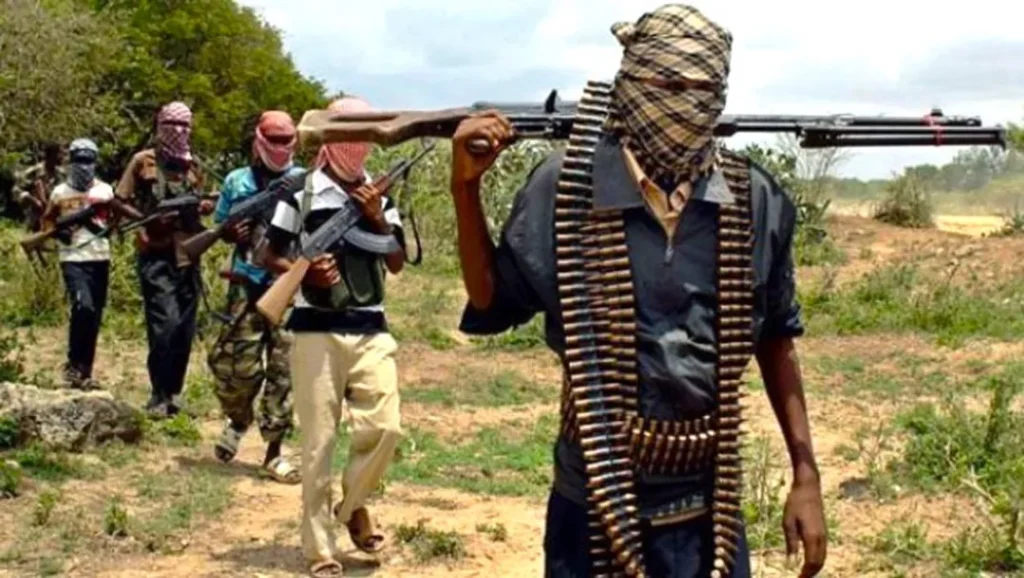
In Katsina State, gunmen killed no fewer than 20 people when they overran Doma community in Tafoki Ward of Faskari Local Government Area, residents and local authorities said. Survivors said the attackers entered the village without resistance, shooting residents and setting fire to houses and vehicles before withdrawing.
Surajo Aliyu, chairman of Faskari Local Government Area, confirmed the attack and described it as the most lethal incident in the area in several months. He said the assault appeared to be retaliatory in nature, though he did not specify what may have triggered it.
“This was a reprisal attack, and it is extremely deadly,” Aliyu said. “We have not witnessed anything of this magnitude here in the past five months.” He said at least 20 people were killed and significant property was destroyed before the attackers fled.
Aliyu said local authorities alerted security agencies as the assault unfolded, but forces were unable to reach the community in time to stop the killings. “We informed the security personnel, but unfortunately they arrived after the bandits had already carried out their heinous acts,” he said.
The bodies of the victims were evacuated from Doma for burial scheduled for Wednesday morning, Aliyu added, extending condolences to the affected families and the wider Katsina community. “We sympathize deeply with the people of Doma, Tafoki Ward, Faskari and the entire Katsina State. These senseless killings must come to an end,” he said.
The attack marked a grim reversal in Faskari, which had experienced relative calm after local authorities entered into a truce with bandit groups about five months ago. Residents said that agreement had reduced large-scale violence until Tuesday’s raid, raising fresh doubts about the durability of such informal arrangements.
Hundreds of kilometers south, violence also erupted in Kwara State, where at least 10 people were killed when armed men attacked Woro and Nuku communities in Kaiama Local Government Area on Tuesday evening. A community leader, who requested anonymity because of security concerns, said the attackers arrived in large numbers around 6 p.m., firing indiscriminately and causing residents to scatter.
“So far, about 10 people have been confirmed dead,” the community leader said. “Many others ran into the bush, and we are still searching for them. Several houses were set ablaze during the attack.”
Residents and local sources said the attackers were believed to be operating from forested areas of Borgu National Park, which stretches across parts of neighboring Niger State and has long been cited by security officials as a hideout for armed groups involved in banditry and kidnapping.
The Kwara State government said Gov. Abdulrahman Abdulrazaq was closely monitoring developments and condemned the killings. In a statement issued late Tuesday, the governor’s chief press secretary, Rafiu Ajakaye, described the attack as a “cowardly expression of frustration” by terrorist cells facing sustained security pressure.
“The governor condemns the attack, which he says reflects the frustration of terrorist elements following ongoing counterterrorism campaigns and the successes recorded so far,” the statement said. The government suggested the timing of the assault was intended to distract security forces and undermine recent gains against kidnapping gangs in the region.
Abdulrazaq offered condolences to families of the victims and residents of Kaiama, assuring them that security agencies had been instructed to intensify operations to prevent further attacks. As of the time of reporting, however, the Kwara State Police Command had not released an official statement detailing casualties or announcing additional deployments to the affected communities.
Similarly, efforts to obtain comment from the Katsina State Police Command were unsuccessful. Calls and messages sent to police spokesperson DSP Abubakar Sadiq were not returned.
The twin attacks underscore Nigeria’s persistent security crisis, particularly in rural areas across the northwest and north-central regions, where armed groups—often referred to locally as bandits—have carried out mass killings, kidnappings and raids on villages for years. Despite repeated military operations, peace deals and community-level negotiations, violence continues to flare with deadly consequences.
Analysts say the renewed attacks highlight the limitations of truces with armed groups that lack centralized command structures. While such agreements can bring temporary relief, they often collapse when splinter factions defect or when disputes arise over perceived betrayals or unmet demands.
In Katsina, residents said Tuesday’s violence shattered a sense of cautious optimism that had taken hold since the truce. “People thought the worst was behind us,” said a resident who fled Doma during the attack and spoke on condition of anonymity. “Now everyone is afraid again.”
The situation in Kwara reflects a broader southward spread of bandit activity, which was once concentrated mainly in the northwest. Security experts say porous borders between states, vast forest reserves and limited state presence have allowed armed groups to move freely and regroup after security operations.
Beyond the immediate death toll, the attacks carry significant humanitarian implications. Villagers displaced by the violence are seeking refuge in neighboring communities, placing additional strain on already limited resources. Burned homes and vehicles also mean many families have lost their livelihoods overnight, deepening poverty in areas that were already struggling.
The federal government has repeatedly pledged to restore security, deploying troops, police and air assets to affected regions. Yet residents and local officials continue to complain about slow response times, inadequate manpower and the challenges of securing remote settlements.
For communities like Doma, Woro and Nuku, Tuesday’s attacks reinforce a grim reality: despite official assurances and periodic lulls in violence, daily life remains precarious. Until security forces can establish a sustained presence and address the underlying drivers of banditry—ranging from poverty and arms proliferation to weak local governance—residents fear the cycle of attacks and reprisals will continue.
As burial preparations begin in Katsina and search efforts continue in Kwara, families are left to mourn loved ones while bracing for what may come next, uncertain whether the calm will return or if more violence lies ahead.




