

Mexican authorities said Friday that bodies and human remains have been discovered in the northwestern state of Sinaloa during an ongoing operation to locate 10 workers who vanished last month from a Canadian-owned gold and silver mine, deepening concerns about cartel violence and security risks facing the mining industry.
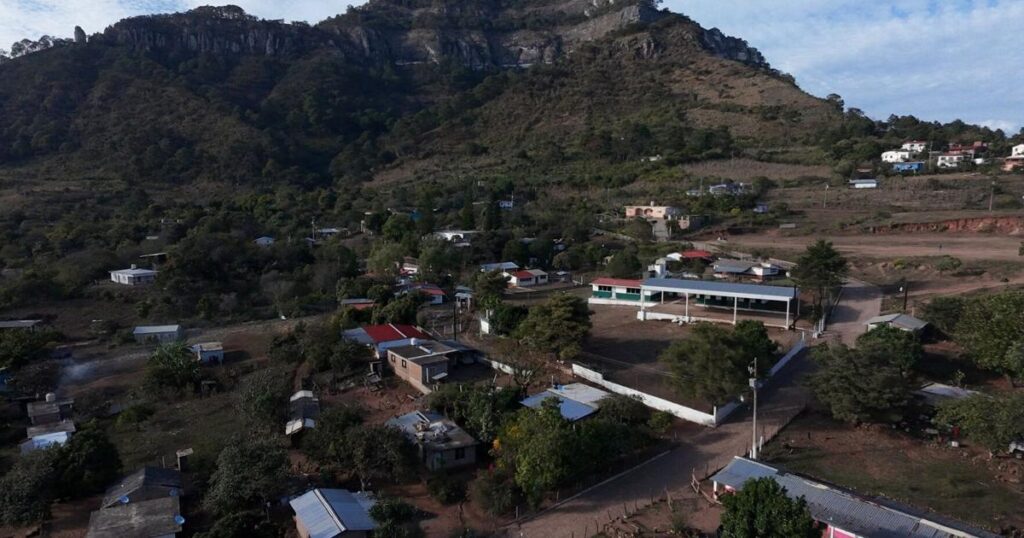
The Mexican Attorney General’s Office confirmed the recovery of remains in an area connected to the search for the missing workers but stopped short of disclosing how many bodies were found. Officials said preliminary indicators suggested that at least one of the bodies matched the physical characteristics of an individual reported missing after the abduction.
Federal prosecutors also announced the detention of four people believed to be linked to the disappearance of the mine workers, signaling what authorities described as a significant development in the investigation.
The Sinaloa state prosecutor’s office said the remains were located in the rural community of El Verde, within the municipality of Concordia, a mountainous zone where the mining operation is based. The region has been the focus of an intensive security operation involving federal and state forces.
In a related action, the Mexican Navy said it dismantled 10 makeshift camps in the same area that intelligence services believe were used by cartel gunmen. Authorities said the camps were destroyed as part of a broader effort to disrupt organized criminal groups operating in the area.
The mountainous terrain around Concordia has become one of several flashpoints in Sinaloa, where a violent struggle between rival factions of the powerful Sinaloa cartel has unfolded for more than a year. The conflict has fueled disappearances, ambushes and forced displacement in rural communities, complicating both civilian life and commercial activity.
The case came to light on Jan. 28, when Vancouver-based Vizsla Silver disclosed that 10 people had been taken from its mining facilities in Sinaloa. The company said the incident was immediately reported to Mexican authorities and that internal crisis management and security teams were activated to support the search.
Vizsla Silver did not immediately respond to requests for comment late Friday. In its earlier statement, the company said it was cooperating fully with authorities while prioritizing the safety of its personnel.
Following the abductions, Mexico’s federal government increased troop deployments to Sinaloa and launched a coordinated operation involving the military, National Guard and investigative agencies. Officials said the goal was to locate the missing workers, secure the mining corridor and weaken cartel influence in the region.
Authorities have not publicly detailed the identities or nationalities of all 10 missing individuals, though the mine is Canadian-owned and employs both local and foreign workers. The Attorney General’s Office said forensic teams are continuing examinations to confirm whether the recovered remains belong to any of those abducted.
The discovery of bodies in the search zone underscores the dangers posed by organized crime to Mexico’s mining sector, which has increasingly drawn the attention of criminal groups seeking to exploit valuable resources or extort companies operating in remote areas.
Mining sites have been targeted by organized crime in previous incidents across Mexico, particularly in states rich in gold, silver and other minerals. Security analysts say cartels view mines as lucrative opportunities, whether through protection rackets, theft of ore or direct control of extraction and transport routes.
In Sinaloa, the stakes are heightened by the ongoing cartel infighting, which has fractured traditional power structures and increased volatility. Experts say rival groups often use kidnappings and attacks on businesses as leverage in territorial disputes or as a means to finance their operations.
While authorities emphasized that the investigation remains active, they acknowledged the challenges posed by the region’s rugged geography and the entrenched presence of armed groups. The Navy said its operations in El Verde were aimed at denying criminal groups safe havens and gathering intelligence tied to the disappearances.
Beyond the immediate search, the case has reignited debate over security guarantees for foreign investment in Mexico, particularly in extractive industries operating far from urban centers. Canada is one of the largest foreign investors in Mexico’s mining sector, with dozens of companies active across the country.
Industry observers note that while mining companies often rely on private security and coordination with local authorities, those measures can prove insufficient in areas where cartel influence is strong and state control is limited.
The Mexican government has sought to reassure investors that it is committed to safeguarding strategic industries, pointing to the troop surge and arrests in Sinaloa as evidence of its resolve. Officials say the investigation into the abductions will continue until the fate of all 10 workers is clarified.
The arrests announced Friday could provide critical leads, but authorities cautioned that the presence of remains does not yet establish how many of the missing workers may be dead or alive. Forensic identification is expected to take time.
As the search continues, families of the missing workers remain in limbo, awaiting definitive answers. Human rights advocates say the case highlights the broader crisis of disappearances in Mexico, where tens of thousands of people have gone missing over the past decade, often in areas dominated by organized crime.
For now, the recovery of bodies in El Verde marks a grim turn in the investigation, reinforcing fears that the abduction of the mine workers may be tied to the violent struggle reshaping Sinaloa — and exposing the human cost of operating businesses in one of Mexico’s most contested regions.
AP




