

DETROIT — Carl Carlton, the funk, soul and R&B vocalist whose infectious 1981 anthem “She’s a Bad Mama Jama (She’s Built, She’s Stacked)” and his cover of “Everlasting Love” made him a fixture on American charts throughout the 1970s and 1980s, has died at age 72.
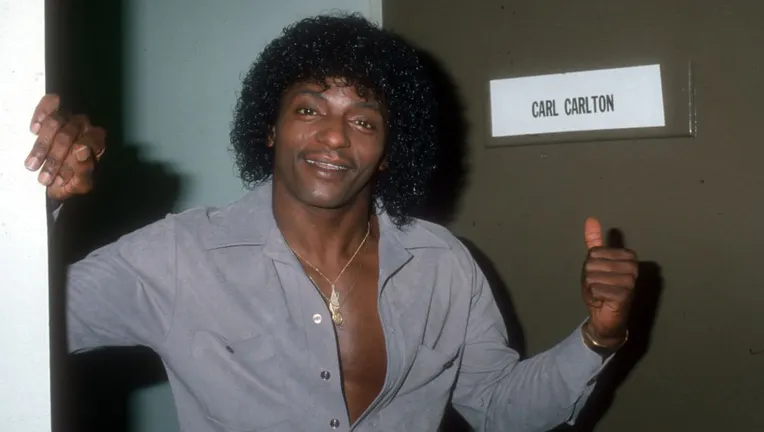
His son, Carlton Hudgens II, confirmed the death Sunday through a social media statement that included a photograph of the singer. “RIP Dad, Legend Carl Carlton singer of She’s a Bad Mama Jama. Long hard fight in life and you will be missed,” the younger Hudgens wrote.
The cause of death was not disclosed. Carlton suffered a stroke in 2019, Soultracks reported.
Born Carlton Hudgens in Detroit in 1953, he initially performed under the stage name “Little Carl” Carlton before shortening it to Carl Carlton. After gaining local attention in Michigan, he relocated to Houston following a signing with the Houston-based Back Beat Records label.
His 1971 single “I Can Feel It” reached the Billboard Soul Singles chart, providing early commercial success. However, his breakthrough arrived with his interpretation of Robert Knight’s “Everlasting Love,” which climbed to number six on the Billboard Hot 100 in 1974 and remained on the chart for 15 weeks.
A decade after his chart debut, Carlton achieved his most enduring commercial triumph with “She’s a Bad Mama Jama (She’s Built, She’s Stacked),” a funky celebration that ascended to number two on the soul chart and number 22 on the Hot 100 after its 1981 release. The single spent 21 weeks on American charts and earned Grammy recognition.
The track appeared on his self-titled 1981 album, which achieved gold certification. Nearly four decades after its initial release, “She’s a Bad Mama Jama” reached number seven on Billboard’s R&B Digital Song sales chart earlier this year, demonstrating its persistent cultural resonance.
Multiple artists have sampled the distinctive groove, including Foxy Brown on “Big Bad Mamma” featuring Dru Hill, Flo Milli on “BGC,” and BigXthaPlug, Ro$ama, and Young Hood on “Meet the 6ixers.” The song gained additional exposure through inclusion in film soundtracks including Miss Congeniality 2 and Fat Albert, and television programs such as Friends.
Carlton maintained an active performance schedule across subsequent decades and made memorable television appearances on American Bandstand and Soul Train. In 2003, he participated in American Soundtrack: Rhythm, Love, and Soul, a television special directed by Barry Glazer that featured Aretha Franklin, Lou Rawls, Mary Wilson, and other music icons. His final recording was the 2010 gospel album God Is Good.
The funk collective Con Funk Shun paid tribute to Carlton in a statement mourning his passing. “With heavy hearts, we mourn the passing of the legendary Carl Carlton,” the group wrote. “His voice, talent, and contributions to soul and R&B music will forever be a part of our lives and the soundtrack of so many memories. Our deepest condolences to his family, friends, and fans around the world. Rest in power, Carl. Your legacy lives on.”
Carlton’s music exemplified the polished funk and soul production that characterized early 1980s R&B, combining infectious rhythms with sophisticated arrangements that appealed to both pop and urban contemporary audiences. “She’s a Bad Mama Jama” particularly captured the era’s aesthetic with its celebratory lyrics, prominent bass line, and horn flourishes that became instantly recognizable.
His success bridged multiple musical eras, from the soul-dominated charts of the early 1970s through the funk and disco explosion of the late 1970s into the synthesizer-driven R&B of the 1980s. This adaptability allowed him to remain relevant as musical tastes evolved, with his signature hit transcending generational boundaries.
The song’s enduring popularity reflects its craftsmanship and universal appeal. Its straightforward appreciation of feminine beauty, delivered with playful confidence rather than objectification, struck a chord that has allowed it to remain in rotation on R&B and funk playlists for more than 40 years. The track’s construction—built around a memorable hook and groove that invited both dancing and singing along—exemplified effective pop songwriting.
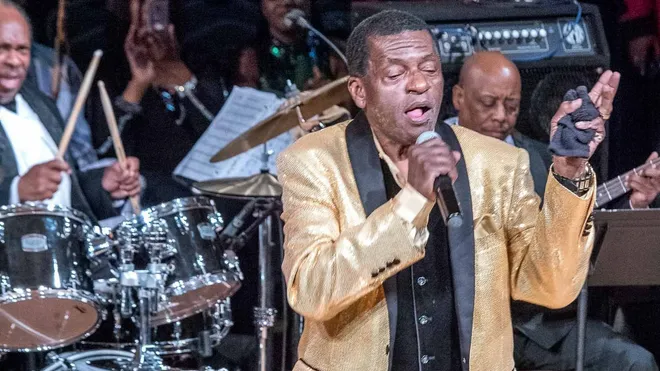
Carlton’s later turn toward gospel music with God Is Good demonstrated the spiritual dimension that often emerges in soul and R&B artists’ careers. This trajectory, common among performers who began in secular music, reflected both personal faith journeys and the deep connections between gospel, soul, and R&B traditions that have shaped Black American music for generations.
His 2019 stroke marked a significant health setback, though details about his condition and recovery in subsequent years remained largely private. The “long hard fight” his son referenced suggests Carlton faced ongoing health challenges in the years leading to his death.
For fans who came of age in the 1970s and 1980s, Carlton’s music provided the soundtrack to countless moments—parties, dances, road trips, and radio listening sessions when his songs dominated urban contemporary formats. His voice, with its smooth delivery and ability to convey both romance and celebration, became familiar to millions.
The sampling of “She’s a Bad Mama Jama” by contemporary hip-hop and R&B artists introduced Carlton’s work to new generations who may not have known the original but recognized its infectious groove. This practice of sampling classic funk and soul tracks has preserved the legacies of artists like Carlton by weaving their musical DNA into modern productions.
Detroit’s rich musical heritage, which produced Motown legends and countless other influential artists, shaped Carlton’s early development even as he later made Houston his professional base. The Motor City’s soul traditions infused his approach to melody, rhythm, and vocal delivery, evident throughout his catalog.
As tributes flow from fellow musicians and fans remembering Carlton’s contributions, his catalog stands as testament to an artist who created music that transcended its moment to become timeless. While “She’s a Bad Mama Jama” remains his calling card, his broader body of work demonstrates consistent craftsmanship and an ear for the grooves that moved audiences across multiple decades.
Carlton joins the ranks of soul and funk pioneers whose music defined an era while continuing to influence contemporary artists. His death marks the loss of another voice from the generation that built the foundation of modern R&B, even as his recordings ensure that voice will continue reaching listeners for years to come.
Rollingstone




