

BANGUI, Central African Republic — Voters in the Central African Republic cast ballots Sunday in presidential and legislative elections with incumbent President Faustin-Archange Touadera seeking a controversial third term after orchestrating the removal of constitutional term limits in a 2023 referendum.
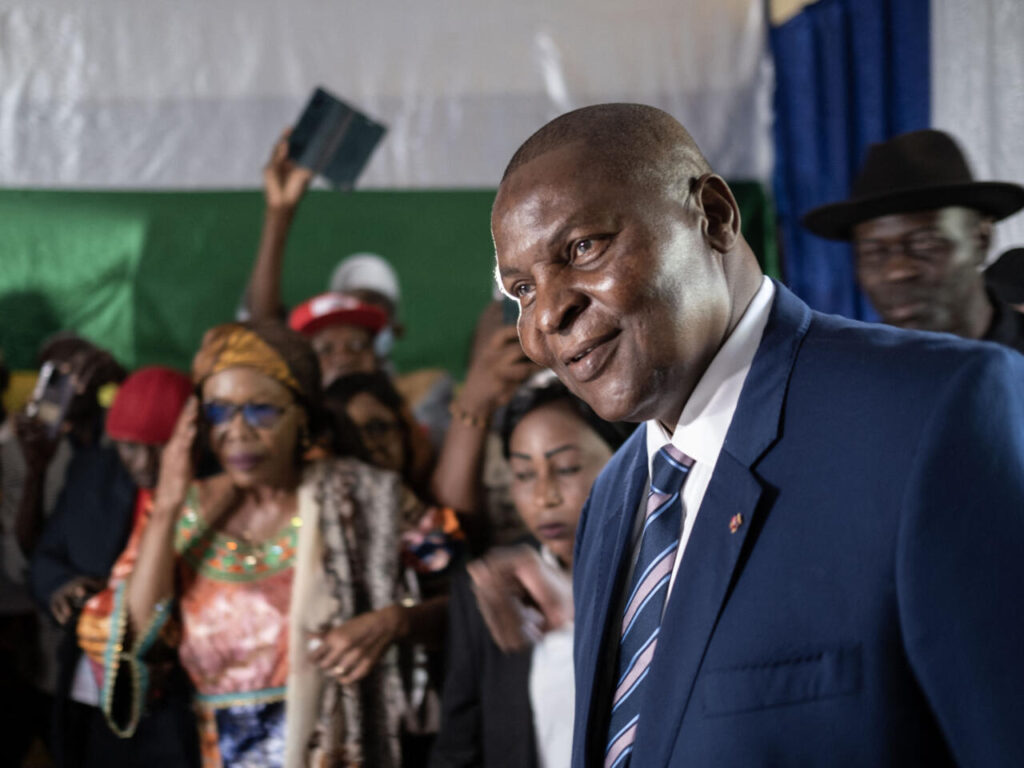
Polling stations opened at 6 a.m. local time (0500 GMT) in the capital Bangui and were scheduled to close at 6 p.m. (1700 GMT), a Reuters witness confirmed. Provisional results are expected by January 5 for elections in which nearly 2.4 million people registered to vote.
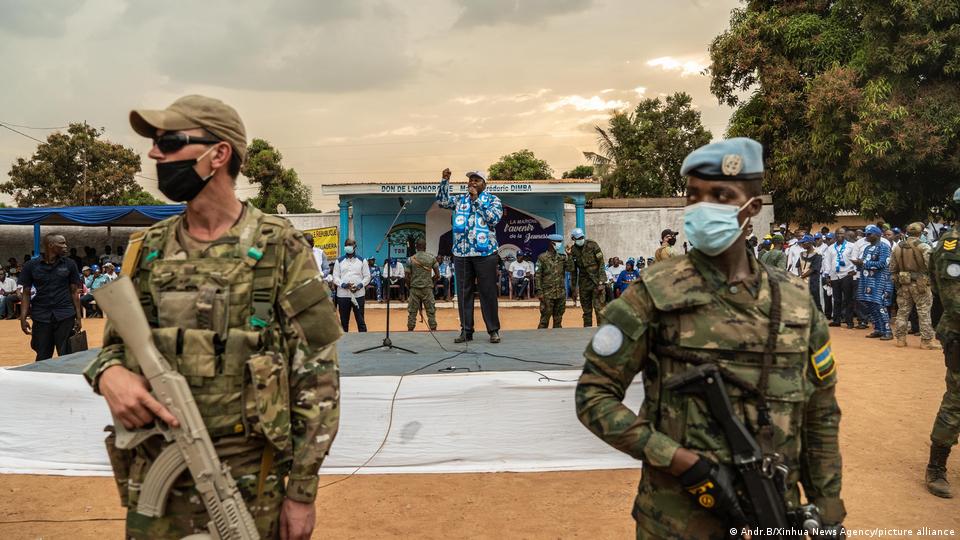
Touadera, 68, widely expected to secure victory, has centered his campaign on security and stability in one of the world’s poorest nations, which has endured years of deadly conflict. His decade in office has been marked by heavy reliance on Russian mercenaries and Rwandan soldiers for security support.
The opposition field comprises six candidates led by former prime ministers Anicet-Georges Dologuele and Henri-Marie Dondra, both of whom survived attempts by Touadera’s supporters to have them disqualified for allegedly holding foreign citizenship, according to Deutsche Welle, citing AP and Reuters.
“They did everything they could to prevent the opposition from campaigning effectively, in order to reduce their chances,” stated Albert Komifea, a teacher voting in the capital Sunday morning. “But the ballot box will confirm that change is now.” Komifea indicated he wanted change without specifying his candidate preference.
The challenges to Dologuele and Dondra’s candidacies “aligned with an apparent pattern of administrative manoeuvring that has disproportionately impeded opposition politicians while favouring the ruling United Hearts Party,” Human Rights Watch stated last month.
Despite remaining on the ballot, both opposition candidates face significant disadvantages given Touadera’s control over state institutions and superior financial resources, analysts say. In a Wednesday Reuters interview, Dondra characterized the playing field as “unbalanced” and stated he had been unable to travel as widely as Touadera to campaign, though he predicted a strong showing.
Over two million voters were expected to cast ballots in the multilevel election to select the president along with national, regional and municipal lawmakers, Deutsche Welle reported. Polling continued until 5 p.m. UTC Sunday.
Touadera, a mathematician, was first elected in 2016 during a deadly civil war. He secured reelection in 2020 despite facing fraud allegations and an attempted overthrow by six rebel groups.
Opponents and critics assert the 68-year-old president aims to maintain his grip on power indefinitely following the 2023 constitutional referendum that eliminated the previous two-term presidential limit.
The Central African Republic became the first country in West and Central Africa to deploy Russia’s Wagner mercenaries in 2018, a decision subsequently replicated by Mali, Burkina Faso and Niger. Two years later, Rwanda deployed troops to shore up Touadera’s government as rebel groups threatened the capital and attempted to disrupt the 2020 elections, ultimately preventing voting at 800 polling stations across the country, representing 14 percent of the total.
During this year’s electoral campaign, mercenaries were deployed alongside police and army forces in Bangui’s streets. Security has constituted a central theme throughout Touadera’s tenure and campaign messaging.
“We have security today. I hope it continues. And for that, President Touadera is best placed to guarantee our security,” stated Beatrice Mokonzapa, a shopkeeper casting her ballot in Bangui, who added that women had “suffered greatly” during the country’s years of conflict but that the situation had improved.
The country has experienced reduced unrest after Touadera signed peace agreements with several rebel groups earlier this year. However, the president acknowledges that security gains remain fragile. Feuds continue between armed groups and the government in some regions, while disarmament and reintegration of rebels remain incomplete. Incursions by combatants from neighboring Sudan fuel insecurity in eastern areas.
A Touadera victory—the expected outcome—would likely further Russia’s interests, as Moscow has traded security assistance for access to resources including gold and diamonds, Reuters reported. Touadera is also offering access to the country’s lithium and uranium reserves to interested parties.
A smooth voting process could reinforce Touadera’s assertion that stability is returning to the country, a claim supported last year when the U.N. Security Council lifted an arms embargo and a separate embargo on diamond exports. In November, the Security Council extended the mandate of its peacekeeping mission, though the United States opposed the decision, calling for a shorter extension and handover of security responsibilities to Bangui.
If no candidate secures more than 50 percent of votes, a presidential runoff will occur on February 15, while legislative runoffs are scheduled for April 5.
Pangea-Risk, a consultancy, wrote in a client note that the risk of post-election unrest was high, as opponents were likely to challenge Touadera’s expected victory.
The election represents another chapter in a pattern increasingly common across Africa where incumbents manipulate constitutional frameworks to extend their rule beyond established term limits. The 2023 referendum removing presidential term restrictions followed similar maneuvers in other African nations where leaders have prioritized power consolidation over democratic norms.
The presence of Russian mercenaries throughout the electoral period raises questions about the legitimacy of a democratic process conducted under the watchful eyes of foreign fighters whose presence serves the incumbent’s interests. While Touadera frames their deployment as necessary security measures, critics view it as intimidation designed to discourage opposition mobilization.
The disqualification attempts against leading opposition candidates—though ultimately unsuccessful—demonstrate the administrative obstacles opposition figures face when challenging entrenched incumbents with control over state institutions. Human Rights Watch’s documentation of these “administrative manoeuvring” tactics highlights systematic efforts to tilt electoral competitions toward predetermined outcomes.
For Russia, a Touadera victory consolidates its strategic foothold in Central Africa, providing access to valuable mineral resources while establishing a sphere of influence that challenges Western interests in the region. The Wagner Group’s deployment in 2018 marked Russia’s expanding military and economic engagement across African nations experiencing governance challenges and security crises.
The reliance on both Russian mercenaries and Rwandan troops illustrates Touadera’s dependence on external military support to maintain control. This dependence raises fundamental questions about sovereignty and whether a government requiring foreign fighters to secure its capital and conduct elections possesses genuine popular legitimacy or governs primarily through externally supplied coercive capacity.
The incomplete rebel disarmament and reintegration processes suggest that peace agreements signed earlier this year remain fragile political arrangements rather than sustainable conflict resolutions. Without addressing underlying grievances that fuel armed opposition, security improvements may prove temporary, potentially unraveling if external military support diminishes or rebel groups reassess their strategic calculations.
For Central African voters, the election presents a constrained choice between an incumbent whose tenure has brought relative stability through controversial foreign military partnerships and opposition candidates who faced systematic obstacles throughout the campaign but promise governance reform and reduced foreign influence.
The outcome will signal whether Central African Republic continues its trajectory toward Russian-supported strongman rule or whether opposition forces can overcome institutional disadvantages to chart a different course. Given Touadera’s control over state resources, media access, and security apparatus, the latter scenario appears unlikely absent unexpected voter mobilization or post-election contestation that forces political compromise.
As results emerge in coming days, international observers will assess whether the electoral process met minimal democratic standards or whether the combination of term limit removal, opposition candidate harassment, and foreign mercenary presence rendered the vote a democratic exercise in name only—a pattern that has become disturbingly familiar across African nations where incumbents prioritize power retention over democratic principles.
Reuters/DeutscheWelle




