

Fast-moving wildfires driven by searing heat and powerful winds tore through central and southern Chile over the weekend, killing at least 18 people, destroying hundreds of homes and forcing tens of thousands to flee, as authorities warned the death toll and damage were likely to climb.
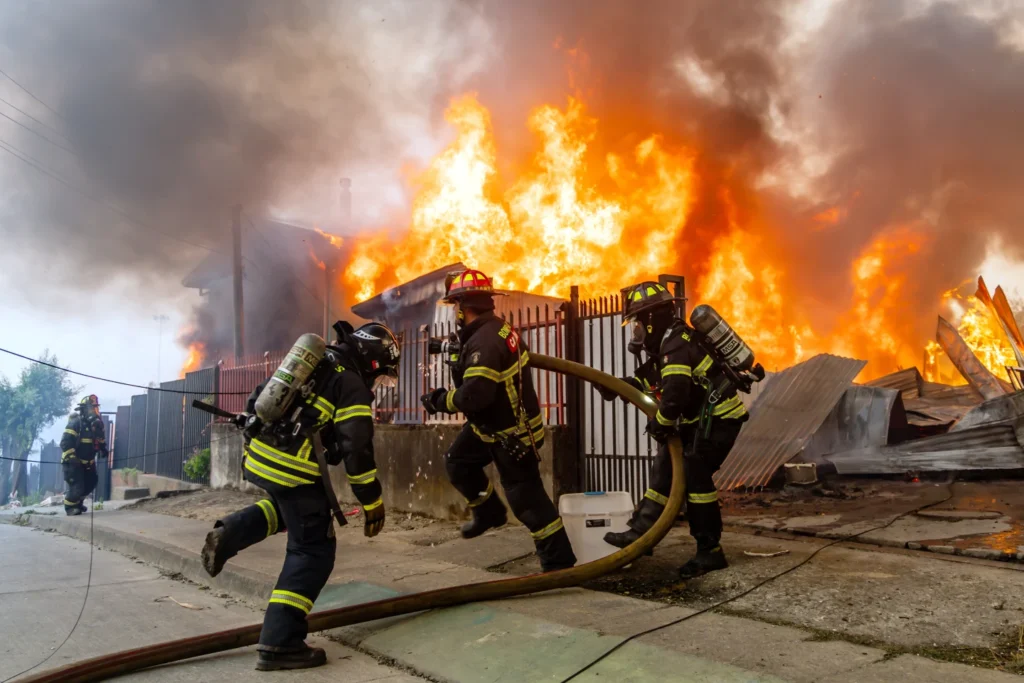
Chilean President Gabriel Boric declared a state of catastrophe in the Biobío and neighboring Ñuble regions, about 500 kilometers (300 miles) south of the capital, Santiago, granting emergency powers that allow closer coordination between civilian agencies and the military to battle the blazes. Fire crews were struggling to contain more than two dozen active fires that had already scorched roughly 8,500 hectares (21,000 acres), Chile’s national forestry agency said.
Speaking at a news conference in Concepción, the largest city in the Biobío region, Boric offered condolences to victims and acknowledged that the initial official count — 18 deaths and about 300 homes destroyed — likely understated the scale of the catastrophe.
“In Biobío alone, the number of affected homes is certainly more than a thousand so far,” Boric said, adding that about 50,000 residents had already been forced to evacuate. “The first priority in these emergencies is always to fight and extinguish the fire. But we must never lose sight of the human tragedy — families who are suffering and have lost everything. These are extremely difficult times.”
The president’s remarks followed growing frustration among local leaders who said communities were left exposed for hours as flames advanced rapidly through populated areas. Rodrigo Vera, mayor of the coastal town of Penco, told a local radio station that entire neighborhoods were burning while emergency assistance appeared slow to arrive.
“I’ve been here for four hours, and a community is burning with no government presence,” Vera said earlier Sunday. “How can a minister do nothing but call me and say the military will arrive at some point?”
Residents described scenes of chaos as fires erupted after midnight, spreading faster than many expected. Temperatures climbed above 38 degrees Celsius (100 degrees Fahrenheit), while gusting winds fanned flames through dry forests and into towns.
“Many people didn’t evacuate because they thought the fire would stop at the forest edge,” said John Guzmán, 55, standing amid the charred remains of homes in Penco as thick smoke turned the sky a hazy orange. “It was completely out of control. No one expected it.”
Much of Penco was engulfed, with cars, a school and a church destroyed. Thousands sought shelter in hastily organized emergency centers. Juan Lagos, 52, said he fled with his children in complete darkness. “We ran with the kids, not knowing where to go,” he said.
Interior Minister Álvaro Elizalde warned that conditions were unlikely to improve in the short term. “The weather outlook for the coming hours is not favorable,” he said, citing forecasts of continued extreme temperatures and winds. Authorities imposed a nighttime curfew in affected areas to prevent looting and keep roads clear for emergency crews.
The scenes of devastation were grim. Charred bodies were found in fields, homes, along roads and inside burned-out vehicles. “There are people who died here, people we knew well,” said Víctor Burboa, 54. “Everyone here knew them.”
Chile’s National Disaster Prevention and Response Service, Senapred, said nearly 20,000 people had been evacuated and at least 250 homes confirmed destroyed, though officials cautioned that assessments were ongoing and figures would likely rise. Reuters, citing Boric after a meeting with mayors in Concepción, also reported at least 18 confirmed deaths as of Sunday evening.
Wildfires are a recurring threat in central and southern Chile during the summer months, typically peaking in February when heat intensifies and drought conditions worsen. The country has endured a prolonged megadrought for more than a decade, leaving vegetation tinder-dry and forests highly vulnerable. In 2024, massive fires along Chile’s central coast killed at least 130 people, marking the deadliest natural disaster since a powerful earthquake struck in 2010.
Neighboring Argentina has also been grappling with destructive wildfires in recent weeks. Blazes in Patagonia, fueled by hot, dry conditions, have consumed thousands of acres of forest, underscoring how extreme weather patterns are straining emergency response systems across the region.
The latest disaster has renewed debate in Chile over preparedness, land management and climate resilience. Scientists and emergency planners have long warned that rising temperatures, prolonged drought and expanding urban development near forested areas are creating a perfect storm for catastrophic fires. As towns push deeper into wildfire-prone zones, evacuation becomes more complex and response times more critical.
Critics say Chile’s fire response system, while improved after previous tragedies, remains heavily focused on suppression rather than prevention. Large monoculture pine and eucalyptus plantations — common in the Biobío region — are particularly flammable and can accelerate the spread of fires toward communities. Calls are growing for stricter land-use planning, expanded buffer zones around towns and greater investment in early warning systems.
The social impact is also significant. Disasters of this scale often hit poorer and rural communities hardest, where housing is more vulnerable and insurance coverage limited. Rebuilding can take years, leaving long-term scars on local economies already strained by inflation and uneven growth.
Regionally, the fires highlight how climate extremes are increasingly a shared challenge across South America. From droughts in Chile to heat waves and wildfires in Argentina, governments are facing mounting pressure to adapt infrastructure, emergency services and environmental policies to a hotter, more volatile future.
As firefighters continue their battle and residents assess what remains, Chile’s leadership faces urgent questions not only about managing the current emergency, but about how to prevent such tragedies from becoming even more frequent.
AP/Reuters




