

WENZHOU, China (BN24) — A Chinese court has sentenced 16 members of a family-run criminal gang to death for their involvement in a sprawling network of scam operations based in Myanmar’s lawless Kokang region, close to the border with China. The gang’s illegal activities, which included cyber fraud, drug trafficking, and human exploitation, spanned nearly a decade and earned them billions of yuan.
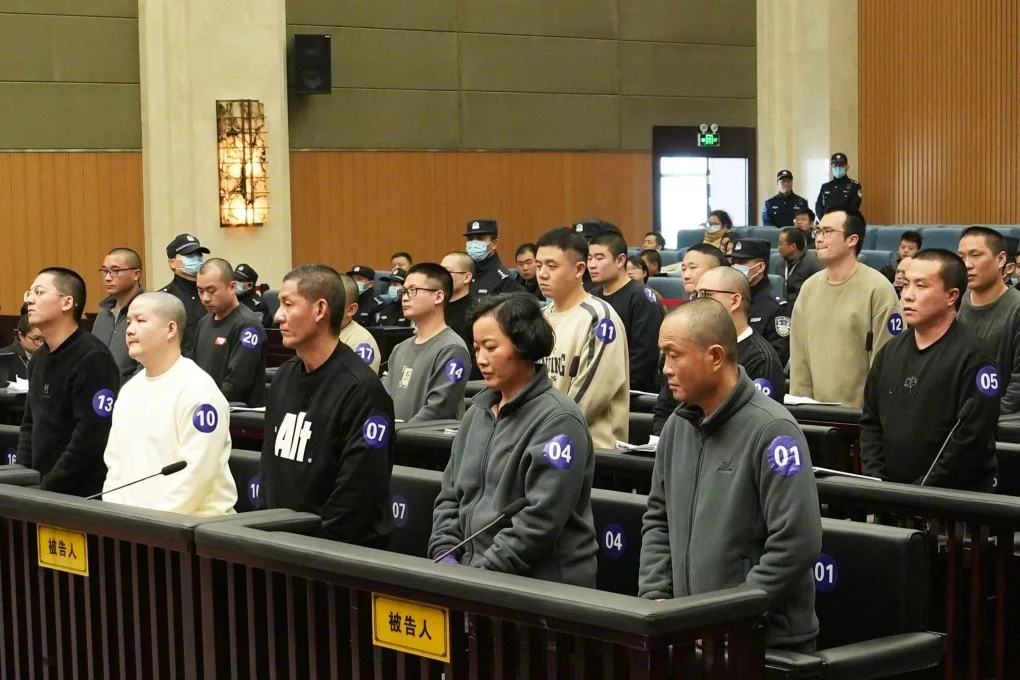
The Wenzhou Intermediate People’s Court, which handed down the sentences on Monday, described the group as a highly organized criminal operation that had been operating since 2015. Its members are accused of setting up and running illegal scam compounds, where they trafficked foreigners, many of whom were Chinese nationals, to force them into committing online fraud. These centers flourished in Myanmar’s remote and lawless borderlands, an area notorious for its lack of law enforcement and a hotbed for illicit industries.
The court also reported that the criminal group was responsible for the deaths of at least 14 individuals, including 10 members of their own network who had tried to escape or disobey the orders of their superiors. In one particularly brutal instance in October 2023, the gang opened fire on individuals attempting to escape the scam compound, preventing them from being transferred back to China.
The gang’s lucrative activities, which included organizing prostitution, operating illegal casinos, and trafficking drugs, contributed to profits exceeding 10 billion yuan (roughly $1.4 billion). Their widespread operations were facilitated by corruption and their exploitation of foreign workers, many of whom were reportedly trafficked and coerced into participating in the illegal business.
In a statement posted on social media, the court confirmed that five of the death sentences would be postponed for two years, granting them a brief reprieve, while 23 other members of the gang were sentenced to prison terms ranging from five years to life.
The case has highlighted the deepening cooperation between China and several Southeast Asian nations, particularly Myanmar, in cracking down on transnational organized crime. In recent months, Beijing has increased its efforts to tackle the growing number of these scam compounds, leading to the repatriation of thousands of Chinese nationals who had been trafficked or coerced into working in the illicit industry.
Authorities in both countries are working together to curb the expansion of these dangerous and illegal operations that have grown to become a multibillion-dollar industry in the region. As the Chinese government seeks to expand its efforts against these criminal networks, the sentencing of the gang members underscores its commitment to addressing the growing threat posed by cross-border crime and exploitation.





