

The Congolese army on Monday declared it had fully reestablished control over the strategic eastern city of Uvira after fighters from the Rwanda-backed AFC/M23 armed group withdrew, ending weeks of rebel dominance in a key lakeside hub near the Burundi border as regional tensions remain high despite a U.S.-brokered peace agreement.
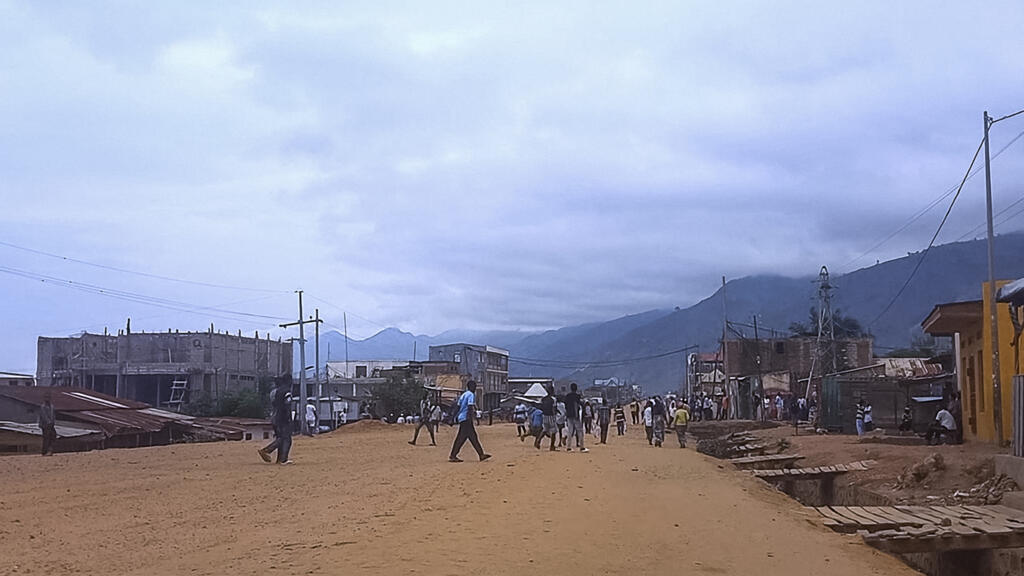
Army spokesperson Mak Hazukay said government forces entered Uvira following the phased departure of AFC/M23 elements, allowing the Armed Forces of the Democratic Republic of the Congo, known by its French acronym FARDC, to resume authority in the city and surrounding areas. The announcement followed days of fluid troop movements and conflicting reports from residents and officials as the balance of power shifted on the ground.
“The Armed Forces of the Democratic Republic of the Congo are continuing their deployment in the city of Uvira and its surroundings in order to consolidate their positions and secure people and their property,” Hazukay said in a statement.
Uvira, home to several hundred thousand people, sits along the northern shore of Lake Tanganyika and serves as a critical commercial and security gateway between eastern Congo and Burundi. The city was seized in early December during a renewed AFC/M23 offensive in South Kivu province, part of a broader push that has redrawn front lines across mineral-rich eastern Congo.
France24 reported that the takeover came shortly after the Democratic Republic of the Congo and Rwanda signed a peace agreement overseen by U.S. President Donald Trump, raising immediate doubts about the deal’s durability. Congo, the United States and United Nations experts have repeatedly accused Rwanda of backing M23, allegations Kigali denies.
On Dec. 17, AFC/M23 announced it would withdraw its troops from Uvira, describing the move as a response to a request from the United States. Despite that declaration, rebel police and military units remained visible in the city for days, maintaining de facto control of key sites, according to local residents and officials.
The group later said it intended to pull out all remaining forces and place the city “under the full and entire responsibility of the international community.” Local sources cited by French and regional media described rebel convoys leaving Uvira over the weekend, signaling that the withdrawal was underway.
By Sunday morning, fighters from the “Wazalendo,” a loose coalition of pro-government militias aligned with Kinshasa, moved into southern neighborhoods of the city. Government sources and residents said elements of the Congolese special forces followed later in the day, restoring an official military presence after more than a month.
Residents described a mix of relief and anxiety as government-aligned fighters arrived. Cheers greeted the returning soldiers, but sporadic gunfire echoed through parts of the city, and several local sources said shops and homes were looted amid the transition.
Hazukay acknowledged the unrest, saying about 20 civilians suspected of looting were arrested. He said FARDC units were continuing their deployment to stabilize the area and prevent further disorder.
On Sunday, South Kivu Governor Jean Jacques Purusi warned that AFC/M23 fighters had repositioned themselves on hills overlooking Uvira and in nearby localities, allowing them to keep the city within firing range. His comments, circulated to the media, underscored lingering security concerns even as government forces moved in.
The Associated Press reported that Congolese soldiers and Wazalendo fighters reentered Uvira on Sunday, about a month after it was seized by M23 rebels, as clashes continued elsewhere in the region despite the U.S.-mediated peace process. The army said it took control of the city after the rebels’ announced withdrawal last month.
“Since yesterday, we have welcomed our soldiers back after more than a month away,” Alain Ramazani, a resident of Uvira, told The Associated Press by phone. He said government troops were patrolling alongside Wazalendo fighters.
Still, uncertainty persisted. Ghislain Kabamba, director of the Observatory for Human Rights, Justice and Local Governance for Social Cohesion in Congo, said sporadic gunfire continued on Monday morning, with no clear indication of who was responsible. Uvira, he said, has been flooded with weapons during weeks of fighting.
M23’s capture of Uvira followed a rapid offensive that, according to Congo’s government spokesperson Patrick Muyaya, has left more than 1,500 people dead and displaced roughly 300,000 civilians. The city had been the Congolese government’s last major stronghold in South Kivu province after the provincial capital, Bukavu, fell to rebels in February, allowing M23 to consolidate a broad corridor of influence across eastern Congo.
The rebel advance toward Uvira also brought the conflict dangerously close to Burundi, which has maintained troops in eastern Congo for years. Regional analysts warned the city’s fall raised the risk of a wider spillover involving neighboring states.
The seizure occurred days after Congolese President Félix Tshisekedi and Rwandan leader Paul Kagame met with President Donald Trump in Washington to reaffirm a U.S.-brokered peace deal aimed at de-escalating years of fighting. Despite those diplomatic efforts, violence has continued across multiple fronts.
According to the United Nations, M23 has expanded dramatically, growing from a few hundred fighters in 2021 to roughly 6,500 today. More than 100 armed groups are operating in eastern Congo, competing for control of territory and lucrative mineral resources. The conflict has produced one of the world’s largest humanitarian crises, with more than 7 million people displaced, the U.N. refugee agency says.
While the Congolese army’s return to Uvira marks a symbolic victory for Kinshasa, analysts caution that control of the city remains fragile. The reported repositioning of AFC/M23 fighters on surrounding high ground suggests the withdrawal may be tactical rather than a definitive retreat. Such maneuvers have been seen repeatedly in eastern Congo, where armed groups cede urban centers only to maintain leverage from nearby rural or elevated positions.
The continued involvement of Wazalendo militias also complicates the security picture. Though aligned with the government, these groups operate autonomously and have been accused by rights organizations of abuses, raising concerns that their presence could undermine civilian protection and complicate command-and-control efforts by FARDC.
Diplomatically, the events in Uvira test the credibility of the U.S.-brokered peace framework. The rebels’ claim that their withdrawal was prompted by a U.S. request suggests Washington retains some leverage, but the persistence of clashes elsewhere indicates that agreements at the presidential level have yet to translate into sustained calm on the ground.
For residents, the immediate priority is security and accountability. The looting reported during the transition highlights the risk that power vacuums — even brief ones — can deepen civilian suffering. Whether FARDC can consolidate control, restrain allied militias, and prevent a renewed rebel incursion will likely shape not only Uvira’s fate but the broader trajectory of the conflict in South Kivu.
AP/France24




