

Cuba announced Sunday that 32 of its citizens serving in armed forces and intelligence agencies were killed during the U.S. military operation that extracted Venezuelan President Nicolás Maduro from his Caracas compound Saturday, marking the heaviest Cuban military casualties in a single engagement in decades and dramatically escalating diplomatic tensions between Havana and Washington.
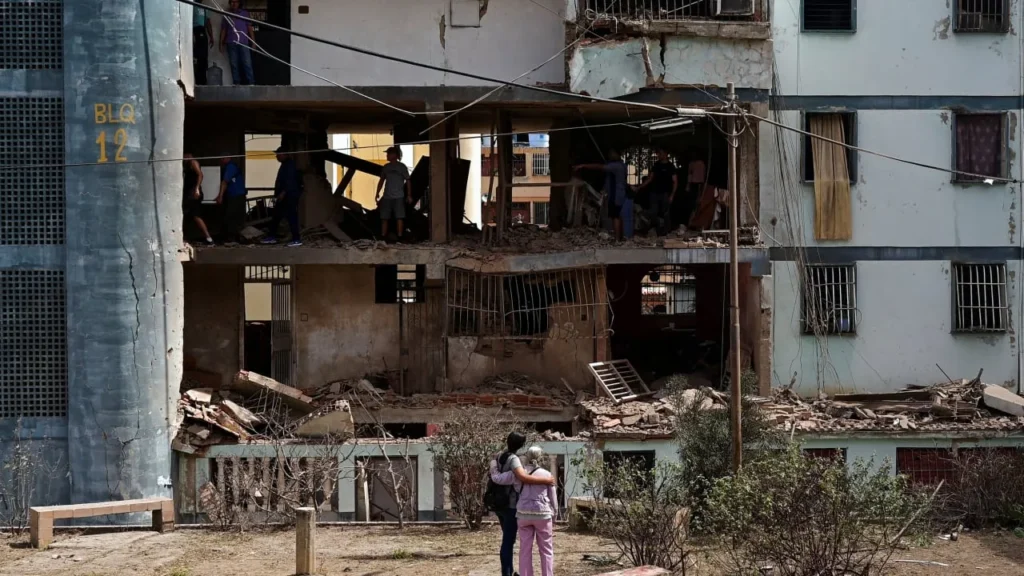
The Cuban government declared two days of national mourning January 5 and 6 honoring the dead, with funeral arrangements to be announced as remains are repatriated. The substantial casualty count suggested that Cuban security personnel provided more extensive protection for Maduro than previously understood publicly, with dozens of Cuban operatives apparently positioned throughout the Venezuelan president’s residential compound or nearby military facilities when U.S. Delta Force operators launched their predawn assault.
The Cuban government statement provided limited operational details but confirmed all deceased were members of Cuba’s armed forces and intelligence agencies deployed to Venezuela. “True to their responsibilities concerning security and defense, our compatriots fulfilled their duty with dignity and heroism and fell, after fierce resistance, in direct combat against the attackers or as a result of bombings on the facilities,” the official declaration stated, according to Reuters.
Cuba has provided security assistance to Maduro since he assumed power in 2013 following Hugo Chávez’s death, though the extent of Cuban military and intelligence presence in Venezuela has remained largely opaque to outside observers. The revelation that at least 32 Cuban personnel died during the raid provided unprecedented confirmation of Cuba’s substantial security footprint protecting the Venezuelan president, raising questions about how many additional Cubans may serve in Venezuela and whether their presence constituted military deployment that exceeded traditional security cooperation between allied nations.
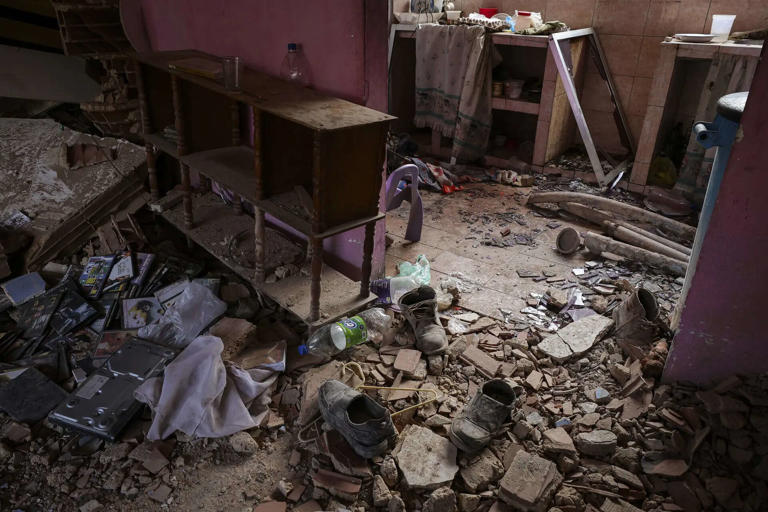
The statement’s reference to deaths occurring both “in direct combat against the attackers” and “as a result of bombings on the facilities” suggested that casualties resulted from multiple engagements across Caracas rather than exclusively at Maduro’s residential compound. U.S. forces conducted strikes against Venezuelan air defense installations and military facilities to suppress threats to extraction helicopters, potentially killing Cuban advisors stationed at those locations in addition to personnel directly defending the president.
It remained unclear Sunday evening how many Cubans were guarding Maduro when they died and how many may have perished at other military facilities struck during the operation. The Cuban government has not disclosed the total number of military and intelligence personnel it maintains in Venezuela, though estimates by regional analysts have ranged from several hundred to several thousand Cubans providing security, intelligence, and military advisory services to the Maduro government.
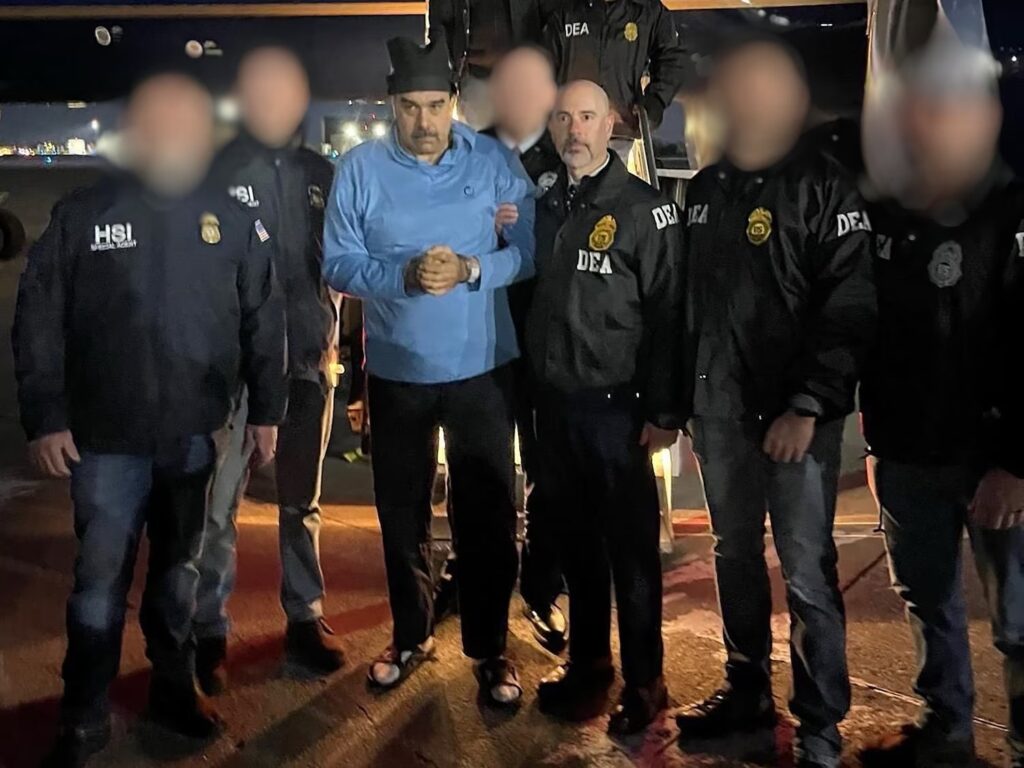
Maduro, 63, and his wife Cilia Flores were seized by U.S. forces in the Venezuelan capital Saturday and flown to the United States aboard military aircraft. Maduro is being held at a New York detention center awaiting Monday court appearance on federal narco-terrorism charges that prosecutors filed in the Southern District of New York in 2020. The Venezuelan leader has consistently denied criminal involvement, characterizing the charges as politically motivated pretexts for regime change.
According to CNBC, Cuba’s presidential office announced the casualties Monday via Facebook, describing the U.S. operation as a “criminal act of aggression and state terrorism.” The strongly worded condemnation reflected Havana’s fury over American military action that killed dozens of Cuban personnel while deposing Cuba’s most important regional ally, whose petroleum shipments and financial support have sustained Cuba’s struggling economy through recent years of severe economic crisis.
The Cubans killed were performing missions on behalf of the Cuban Armed Forces and interior ministry, the presidential office stated. The interior ministry reference suggested that at least some casualties were intelligence operatives from Cuba’s powerful security apparatus rather than conventional military personnel, indicating the sophisticated nature of Cuban support for Maduro’s protection that extended beyond physical security to include counterintelligence and surveillance activities.
“Faithful to their responsibilities with security and defense, our compatriots fulfilled their duty with dignity and heroically and fell, after ferocious resistance, into direct combat against the attackers or as a result of the bombings of the facilities,” the statement declared according to Facebook’s translation, employing martial language emphasizing Cuban personnel’s valor while portraying them as victims of American aggression rather than foreign fighters killed while protecting another nation’s authoritarian leader.
The Cuban government promised to pay tribute to the dead, though specific commemoration plans beyond the two-day mourning period were not immediately announced. The deaths represent Cuba’s most significant military losses since the 1980s, when Cuban forces fighting in Angola and Ethiopia sustained casualties during Cold War-era proxy conflicts. The scope of losses will likely trigger domestic political repercussions in Cuba, where families of the dead will demand explanations about why their relatives died in Venezuela rather than defending Cuban territory.
The casualties underscore the risks Cuba has accepted by providing extensive military support to Maduro’s government, transforming what Havana characterizes as fraternal socialist solidarity into tangible military commitments that placed Cuban personnel in harm’s way. The relationship between Cuba and Venezuela deepened dramatically during Chávez’s presidency, with Cuba sending thousands of doctors, teachers, and security advisors to Venezuela in exchange for discounted petroleum that became Cuba’s economic lifeline after Soviet subsidies ended.
The U.S. strikes came after weeks of military buildup in the Caribbean region and explicit threats by President Donald Trump against Maduro. Trump had repeatedly indicated that military action against Venezuela remained under consideration if diplomatic and economic pressure failed to dislodge Maduro from power, though the timing and scope of Saturday’s operation apparently caught Venezuelan and Cuban forces by surprise despite the visible American military presence offshore.
Following the raid’s successful completion, Trump announced at his Mar-a-Lago resort that the United States would temporarily “run” Venezuela “until such time as we can do a safe, proper and judicious transition” to new leadership. The declaration of direct American governance over a sovereign nation triggered international condemnation and raised questions about the occupation’s legal basis, duration, and whether U.S. military forces would deploy throughout Venezuelan territory to enforce Washington’s authority.
Secretary of State Marco Rubio elaborated on U.S. intentions during Sunday morning television appearances, stating that Washington would leverage its oil blockade on Venezuela and regional military buildup to achieve policy objectives. “We want Venezuela to move in a certain direction,” Rubio told NBC’s “Meet the Press” host Kristen Welker, suggesting the administration would maintain pressure until Venezuela’s political and economic systems aligned with American preferences.
Appearing separately on ABC’s “This Week with George Stephanopoulos,” Rubio characterized U.S. actions as establishing a “quarantine” on Venezuelan oil exports that would prevent economic recovery until conditions satisfying both American national interests and Venezuelan people’s interests were met. “That means their economy will not be able to move forward until the conditions that are in the national interest of the United States and the interests of the Venezuelan people are met, and that’s what we intend to do,” Rubio stated, framing the oil blockade as leverage compelling Venezuelan cooperation with U.S. governance plans.
The U.S. has seized multiple oil tankers associated with Venezuela in recent months while deploying aircraft carriers, warships, and advanced fighter aircraft to the Caribbean in the most substantial American military presence in the region since the Cold War. The maritime blockade has effectively prevented Venezuela from exporting petroleum to most international markets, devastating government revenues and accelerating the economic collapse that has driven millions of Venezuelans to emigrate.
For Cuba, the deaths of 32 military and intelligence personnel represent not just human tragedy but strategic disaster. The loss of Maduro as Venezuela’s president threatens Cuba’s access to petroleum and financial support that have sustained the island’s economy despite decades of American sanctions. Without Venezuelan subsidies, Cuba faces severe fuel shortages, electrical grid failures, and economic contraction that could trigger domestic instability threatening the Communist Party’s grip on power.
The Cuban casualties also exposed vulnerabilities in Havana’s military capabilities. Despite reportedly fierce resistance, Cuban forces proved unable to prevent U.S. operators from capturing Maduro and extracting him from Venezuelan territory. The operational failure will likely prompt Cuban military leaders to reassess their force projection capabilities and question whether deploying personnel to protect foreign leaders serves Cuban national interests when those missions place personnel at risk of combat with vastly superior American military power.
The announcement of Cuban casualties complicates the already fraught relationship between Havana and Washington. The Trump administration has maintained hardline policies toward Cuba including tightened sanctions and restrictions on travel and remittances, reversing Obama-era normalization efforts. The deaths of dozens of Cubans in a U.S. military operation will intensify Cuban government rhetoric portraying America as an imperialist aggressor while potentially generating domestic pressure on the Biden administration’s potential successors to respond to what Havana characterizes as an act of war.
International law experts will debate whether Cuban forces in Venezuela constituted legitimate military targets. If Cuban personnel were formally integrated into Venezuelan security services under bilateral defense agreements, their targeting during a raid on Venezuelan soil presents different legal questions than if they served as foreign combatants without formal status under Venezuelan military command. The circumstances of their deployment and the legal authorities governing their presence will influence whether their deaths constitute lawful combat casualties or violations of international humanitarian law.
The two-day mourning period declared by Cuba will feature state-organized commemorations portraying the dead as heroes who sacrificed their lives defending socialist principles against American imperialism. The Cuban government will likely use the funerals to rally domestic support and reinforce narratives about American aggression that have justified Cuba’s authoritarian political system for six decades. However, families of the deceased may privately question why their relatives died in Venezuela rather than Cuba, potentially creating social tensions the government will need to manage carefully.
For Venezuela, the revelation of extensive Cuban security presence raises questions about Maduro’s reliance on foreign forces rather than Venezuelan military and intelligence services to ensure his personal security. While Venezuelan armed forces nominally protected the president, the substantial Cuban casualties suggest that Maduro trusted Cuban personnel more than his own security services, perhaps recognizing that Venezuelan military officers might be susceptible to American inducements to facilitate his capture or removal.
The casualties represent a grim milestone in the long history of Cuban military internationalism, which previously saw Cuban forces fight in Angola, Ethiopia, and other Cold War battlefields in support of socialist movements. However, those earlier deployments involved thousands of Cuban troops engaged in conventional warfare, whereas the Venezuela mission apparently involved smaller numbers of security and intelligence personnel providing protection and advisory services. The shift from large-scale military expeditions to focused security missions reflected Cuba’s diminished resources and changing strategic priorities in the post-Soviet era.
The deaths will complicate any future negotiations between the United States and Cuba regarding Venezuela’s governance. Havana cannot easily forgive or forget that American forces killed dozens of Cuban military and intelligence personnel, creating blood debt that will influence Cuban positions in regional diplomacy for years. The Trump administration’s declared intention to govern Venezuela temporarily suggests that Washington will need to navigate relationships with multiple Latin American nations including Cuba, whose cooperation or opposition could significantly affect U.S. success in stabilizing Venezuela and establishing successor governance.
For Latin America broadly, the casualties underscore the risks of military cooperation with Venezuela that could entangle regional militaries in conflicts with the United States. Several Latin American nations maintain security relationships with Venezuela, though none approach the depth of Cuban involvement. The deaths of 32 Cubans serving in Venezuela will prompt military planners throughout the region to reassess whether such commitments serve national interests or create unnecessary risks of confrontation with American military power.
The incident may also influence Cuban decisions about future military cooperation agreements. If deploying personnel to protect allied leaders places those forces at risk of catastrophic losses when American interests conflict with those regimes, Cuba may reconsider whether such commitments merit the strategic and human costs. However, Havana’s limited options for regional allies and desperate need for Venezuelan support before Maduro’s capture will make such recalculations difficult, potentially locking Cuba into supporting whatever government emerges in Venezuela regardless of risks.
The full story of how 32 Cubans died during Operation Absolute Resolve will likely remain classified for years, with neither U.S. nor Cuban governments eager to disclose details that might reveal capabilities, tactics, or intelligence sources. However, the casualty count itself provides stark evidence that the raid involved substantial combat rather than token resistance, with Cuban forces apparently fighting determined defensive actions that inflicted time delays and potential complications on U.S. operations even if they ultimately proved unable to prevent Maduro’s capture.
Reuters/CNBC




