

Authorities in Cyprus have identified a body recovered last month from a beach along the island’s southern coast as Vladislav Baumgertner, the former chief executive of Russia’s largest potash producer, whose high-profile detention in Belarus more than a decade ago once rattled global fertilizer markets.
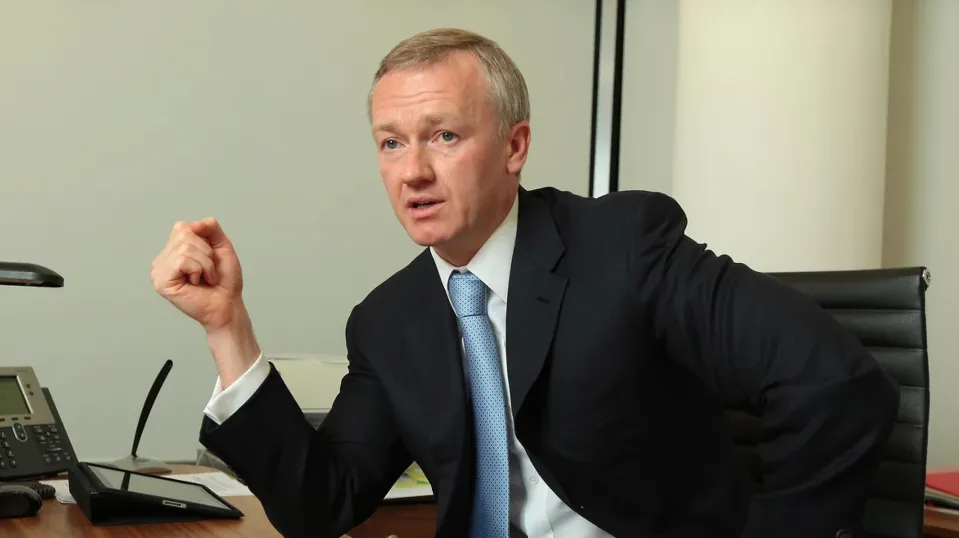
Police operating within the British Sovereign Base Areas on Cyprus said Wednesday that DNA testing confirmed the remains belonged to Baumgertner, 53, who had been reported missing from his home in the coastal city of Limassol on Jan. 7. His body was discovered roughly a week later on Avdimou beach, an area that falls within one of the two military bases Britain retained after Cyprus gained independence from colonial rule in 1960.
Investigators said inquiries into the circumstances and cause of death remain underway. Baumgertner’s family has been formally notified, British base police said, adding that no conclusions have yet been reached regarding whether foul play was involved.
Avdimou lies inside the Western Sovereign Base Area, one of two enclaves where British authorities maintain separate police forces and courts independent of the Republic of Cyprus. Deaths occurring within the bases are handled under British jurisdiction, though cooperation with Cypriot authorities is routine.
Baumgertner had been living in Cyprus for several years and was part of a sizable Russian expatriate community centered in Limassol, a Mediterranean port city that has become a hub for Russian businesses, professionals and retirees. Local media said he had been residing in an apartment above his place of business at the time he disappeared.
While his death has drawn attention locally, Baumgertner’s name is best known internationally for his dramatic arrest in Belarus in 2013, an episode that exposed deep political and economic rifts in the global potash industry.
At the time, Baumgertner was the chief executive of Uralkali, Russia’s dominant potash producer and one of the world’s largest suppliers of the fertilizer ingredient. Belarusian authorities placed him under house arrest in September 2013 during a visit to Minsk, accusing him of abusing his office in a way that damaged the Belarusian economy.
The detention followed a bitter dispute between Uralkali and its Belarusian trading partner, the state-owned Belarusian Potash Co. For years, the two companies had marketed potash exports through a joint venture that controlled roughly a quarter of global supply, giving the partnership significant influence over international prices.
That arrangement unraveled after Uralkali withdrew from the venture, accusing authorities in Minsk of allowing Belarusian Potash Co. to bypass the joint structure and sell independently. The move effectively collapsed the cartel-like alliance and sparked fears of a price war in fertilizer markets already sensitive to shifts in supply.
Belarusian President Alexander Lukashenko publicly accused Uralkali and Baumgertner of deliberately undermining Belarus’s economic interests. Belarusian investigators said Baumgertner’s actions as CEO had caused financial harm to the country, a claim that analysts at the time widely interpreted as political retaliation for Uralkali’s decision to abandon the joint venture.
Baumgertner was held under house arrest for about two months before being released and extradited to Russia. Russian prosecutors later opened their own criminal case against him on abuse-of-office charges, though the matter gradually faded from public view as Uralkali’s corporate leadership changed and global potash markets stabilized.
The episode nonetheless marked one of the most striking instances of a senior Western-educated Russian business executive being detained abroad amid an international commercial dispute. It also underscored the degree to which geopolitics and state interests can intersect with commodity markets, particularly in sectors dominated by a handful of major producers.
Following his release, Baumgertner largely retreated from the public spotlight. His move to Cyprus mirrored a broader trend among Russian business figures who relocated to the island nation in the past two decades, drawn by its favorable tax regime, strategic location and established Russian-speaking community.
Cyprus has long served as a financial and logistical bridge between Russia and Europe, though that role has come under increasing scrutiny in recent years amid tighter European Union regulations and sanctions linked to Russia’s war in Ukraine. Even so, Limassol remains home to thousands of Russian nationals and dual citizens.
The discovery of Baumgertner’s body has raised questions about his final days, though officials cautioned against speculation while the investigation continues. Authorities have not disclosed whether signs of injury were found or whether environmental factors, such as currents or weather conditions, may have played a role.
British base police said forensic examinations are ongoing and that findings will be shared once conclusions are reached. Under procedures governing deaths within the sovereign base areas, any inquest would be conducted through the bases’ own judicial system.
From a broader perspective, Baumgertner’s death closes a chapter on a figure whose career became emblematic of the volatile intersection of business, politics and state power in the post-Soviet space. Once seen as a key player in shaping global fertilizer markets, he later became a symbol of how swiftly fortunes can change when corporate strategy collides with national interests.
For Cyprus, the case also highlights the unique legal and administrative complexities that arise from the presence of British military bases on the island, remnants of colonial history that continue to operate with their own jurisdiction more than six decades after independence.
As investigators work to determine how Baumgertner died, attention remains focused on the unanswered questions surrounding his disappearance and the circumstances that led him from a quiet life in Limassol to a fatal end on a remote stretch of beach.
TheIndependent




