

DHARAMSHALA, India (BN24) — The Dalai Lama announced Wednesday he will reincarnate, pledging that the centuries-old Tibetan Buddhist institution will continue after his death — a decision that defies Beijing’s insistence it alone can approve his successor.
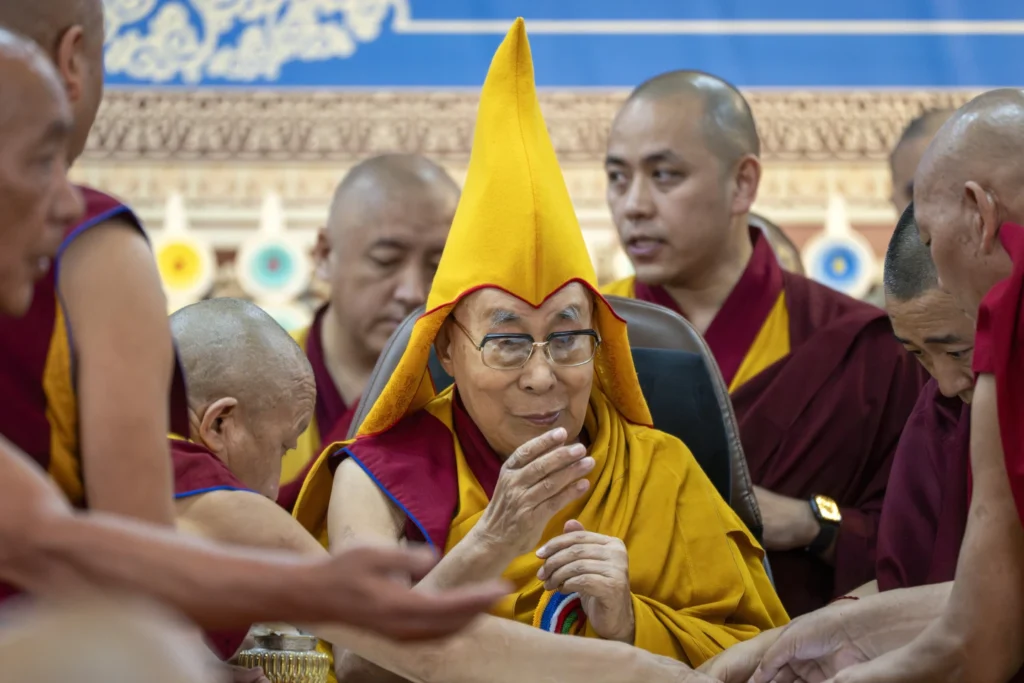
Speaking at a ceremony marking prayer celebrations ahead of his 90th birthday, the Nobel Peace Prize laureate said his reincarnation should be recognized strictly in accordance with Buddhist tradition and explicitly warned China to stay out of the process.
“The search for my successor must be carried out in accordance with past tradition,” the Dalai Lama declared in a recorded statement broadcast to thousands of Buddhist monks gathered in Dharamshala. “No one else has any authority to interfere in this matter.”
The announcement ends years of speculation that began when he previously suggested he might be the last Dalai Lama. The decision holds deep political and spiritual stakes. For millions of Tibetan Buddhists, the Dalai Lama is the earthly embodiment of Chenrezig, the Buddha of compassion. For Tibetans who reject Beijing’s rule, his succession is a powerful symbol of cultural survival.
China, which has long claimed authority to name the next Dalai Lama, is expected to react sharply. Beijing has said the next incarnation must be found in Tibetan areas under its control — a move that would allow Communist officials to exert influence over the future spiritual leader.
Many observers expect rival Dalai Lamas to emerge: one chosen by Beijing, another by senior monks loyal to the current Dalai Lama.
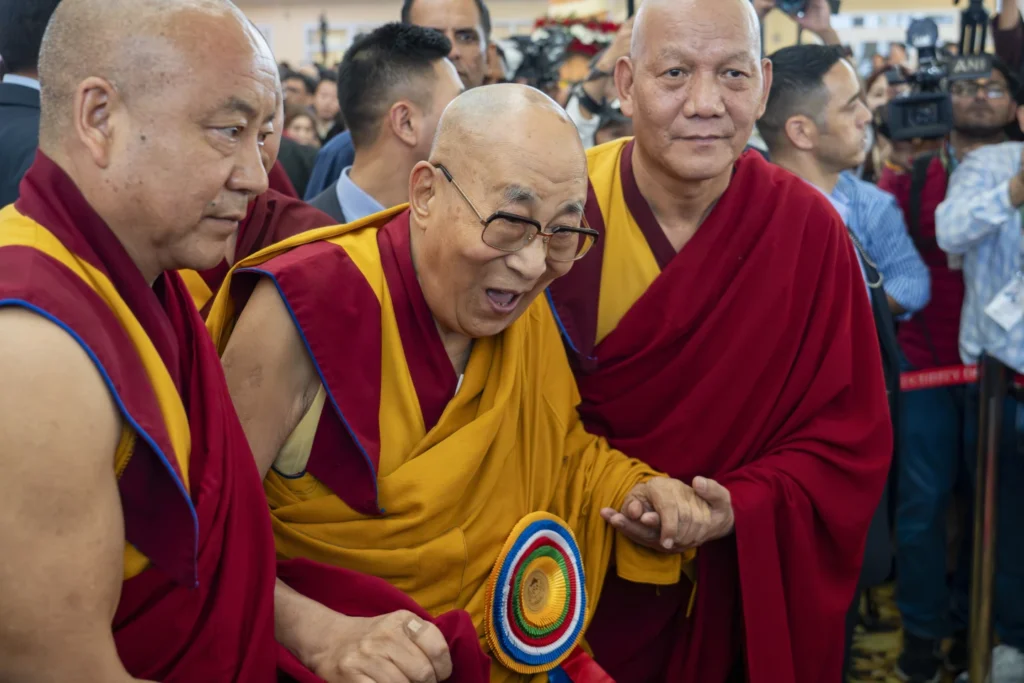
Centuries of Tradition
Born Tenzin Gyatso, the 14th Dalai Lama was recognized as the reincarnation of his predecessor in 1940. He fled Tibet for India after Chinese troops crushed an uprising in Lhasa in 1959 and has lived in exile ever since.
Tibetan Buddhists believe the Dalai Lama chooses the body into which he reincarnates. This process has continued over 14 incarnations since the institution’s founding in 1587. The Dalai Lama has repeatedly said he expects his next incarnation will be born outside China.
The process, he said Wednesday, will be overseen solely by the Gaden Phodrang Trust, the nonprofit he established in 2015 to administer spiritual and institutional affairs.
An Appeal from Tibetans in Exile
Penpa Tsering, president of the Tibetan government-in-exile, said the Dalai Lama agreed to reincarnate in response to a global outpouring of pleas from Tibetan Buddhists.
“Tibetans from all over the world made an earnest request with single-minded devotion that the position of the Dalai Lama should continue for the benefit of all sentient beings,” Tsering said at a press conference. “In response to this overwhelming supplication, His Holiness has shown infinite compassion and finally agreed to accept our appeal.”
Tsering warned China not to politicize or interfere in the reincarnation process. “We strongly condemn the People’s Republic of China’s usage of the reincarnation subject for their political gain and will never accept it,” he said.
A Process Rooted in Spiritual Signs
Traditionally, the search for a Dalai Lama’s reincarnation begins only after the incumbent’s death. Senior lamas interpret visions and spiritual signs to guide them, a process that can take years. The child identified as the reincarnation is then carefully educated to assume leadership.
By announcing his plans now, the Dalai Lama has underlined his determination to protect the integrity of Tibetan Buddhism and resist China’s attempts to shape its future.
AP




