

DAMASCUS, Syria (BN24) — The death toll from a rare and deadly attack on a Greek Orthodox church near Damascus has climbed to 25, Syrian state media reported Monday, marking one of the worst assaults on a religious site in years and highlighting growing concerns about Islamist extremist sleeper cells in the war-battered country.
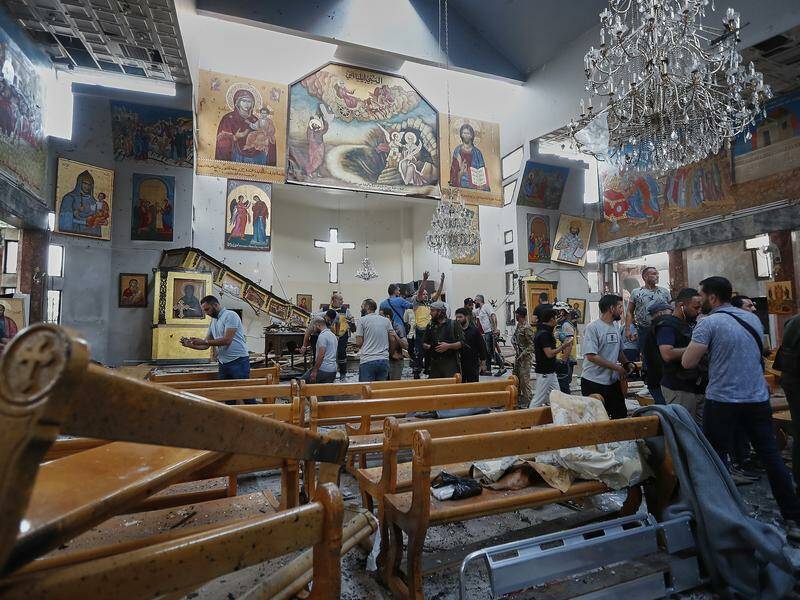
The bombing occurred during Sunday morning’s Divine Liturgy at Mar Elias Greek Orthodox Church in Dweil’a, a suburb of Damascus. The Syrian Interior Ministry said a gunman opened fire on congregants before detonating an explosive vest, leaving dozens dead and at least 63 others wounded. According to church officials, approximately 350 worshippers were attending the service at the time.
“This was a deliberate act of terror,” Father Fadi Ghattas told The Associated Press, adding that many of the wounded included women and children gathered for a major feast day in the Orthodox Christian calendar.
The attack drew swift international condemnation. The United States, the European Union, and several Middle Eastern governments denounced the bombing as a terrorist atrocity targeting Syria’s vulnerable minority communities.
No group has yet claimed responsibility, but Syrian authorities immediately pointed to the Islamic State group, whose cells remain active in parts of the country despite the formal collapse of its so-called caliphate. Syria’s Interior Minister accused IS militants of exploiting the country’s instability to reignite sectarian violence.
The violence comes at a precarious moment for Syria, which has been under de facto Islamist rule since President Bashar Assad was ousted in December by a rapid insurgency that fractured the country’s power structure.
His successor, President Ahmad al-Sharaa, has struggled to consolidate control and has made appeals to non-Sunni minority groups, including Christians and Alawites, promising security and inclusion in a new political order. Sunday’s attack threatens to undermine those efforts by stoking fear among minorities already uneasy under a dominant Islamist leadership.
“Sleeper cells of extremist groups are the most serious threat facing Syria right now,” said a Damascus-based security analyst who requested anonymity due to safety concerns. “Their strategy is to destabilize the capital and weaken public confidence in the government’s ability to protect its citizens.”
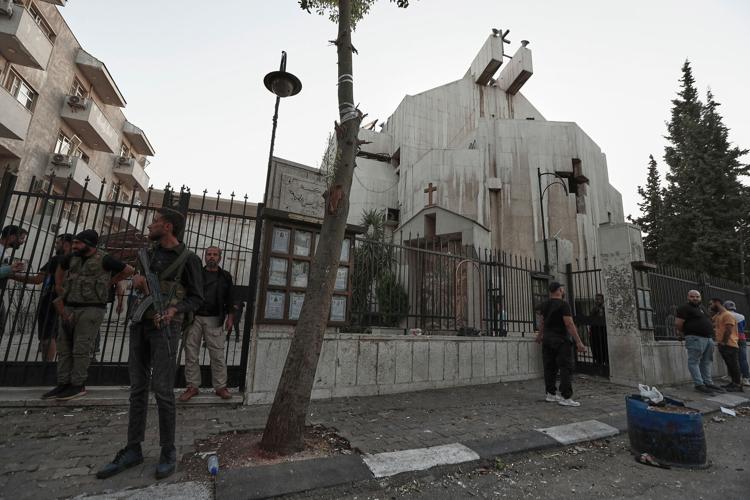
Although church attacks were once common during the height of Syria’s civil war, Sunday’s bombing is the first such incident targeting a Christian site in years, underscoring a shift in violence from front-line clashes to urban terrorism. The targeting of Mar Elias, a centuries-old religious site, also carries deep symbolic weight for Syria’s Christian communities, who fear erasure amid growing Islamization of political life.
The Syrian Health Ministry confirmed the casualty figures late Monday and said medical teams remain overwhelmed, with many of the wounded requiring intensive care. Eyewitnesses described scenes of chaos and carnage, with bodies scattered inside the church and survivors frantically searching for loved ones.
Calls for a transparent investigation and for greater protections for religious minorities have intensified. While Syria’s transitional government has pledged to bring those responsible to justice, experts say that sectarian and extremist violence is likely to continue unless there is a broader regional strategy to dismantle jihadist networks operating covertly within the country.
As the investigation unfolds, President al-Sharaa faces growing pressure from both domestic and international actors to prove that his government can maintain stability and protect all communities in post-Assad Syria.
For now, the people of Dweil’a mourn yet another tragedy, as churches across Damascus toll their bells in remembrance of those lost in the latest chapter of Syria’s ongoing turmoil.




