

BELFAST, Northern Ireland (BN24) — More than five decades after British paratroopers opened fire on unarmed civil rights marchers on Bloody Sunday, a former soldier identified only as Soldier F has gone on trial in Belfast, accused of murder and attempted murder in one of the darkest chapters of Northern Ireland’s conflict.
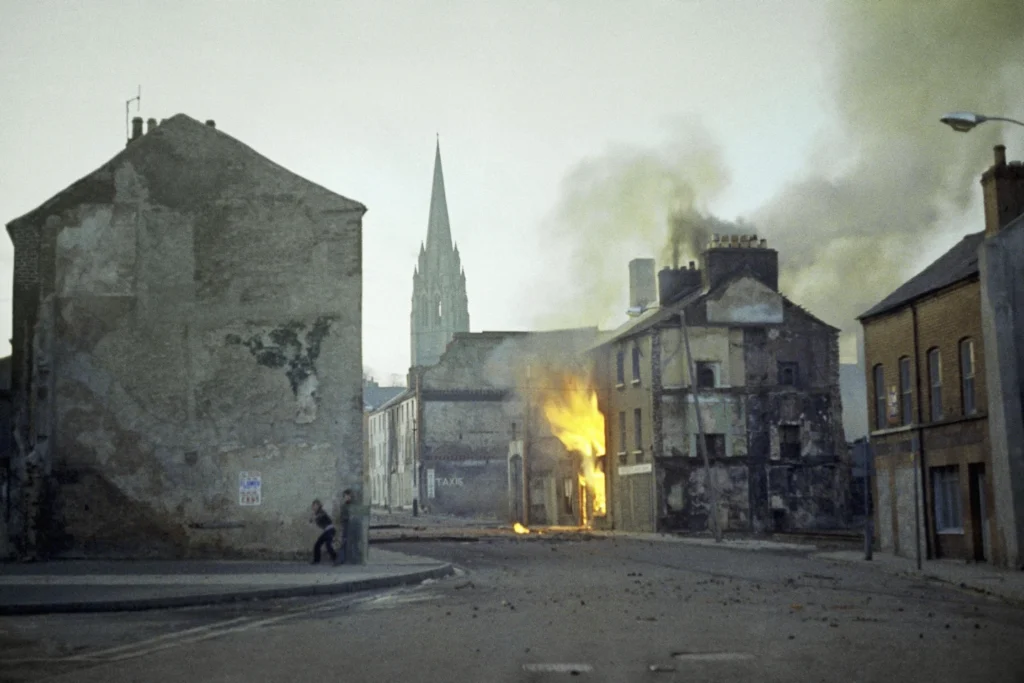
The case marks the first time any member of the British Army has faced a criminal court for the killings on Jan. 30, 1972, in Londonderry, when soldiers shot dead 13 unarmed demonstrators and wounded 15 more during a march against internment without trial. The massacre, which became a defining moment of “The Troubles,” fueled decades of sectarian violence between Irish nationalists and unionists.
Soldier F, shielded from public view behind floor-to-ceiling curtains in Belfast Crown Court, is charged with the murders of James Wray and William McKinney and the attempted murders of five others: Joseph Friel, Michael Quinn, Joe Mahon, Patrick O’Donnell and another unidentified victim. He has pleaded not guilty.
Families’ decades-long fight for justice
For 53 years, victims’ families have sought accountability, challenging the initial British government claims that soldiers fired only in response to threats from gunmen and bombers. That narrative was dismantled by the 2010 Saville Inquiry, which concluded that soldiers shot fleeing civilians and lied about their actions for decades. Then–Prime Minister David Cameron issued an unprecedented apology, calling the killings “unjustified and unjustifiable.”
Despite the findings, prosecutions were slow to materialize. After years of investigation, prosecutors in 2019 announced charges against Soldier F alone, citing insufficient evidence against 16 other soldiers and two suspected members of the Official Irish Republican Army. The case was later dropped in 2021, but reinstated after a successful appeal by relatives of the victims.
Tony Doherty, whose father Patrick was among those killed, said the trial represents the fulfillment of a decades-long struggle. “We have waited 53 long years for justice and, hopefully, we will see a measure of it through this trial,” Doherty said.
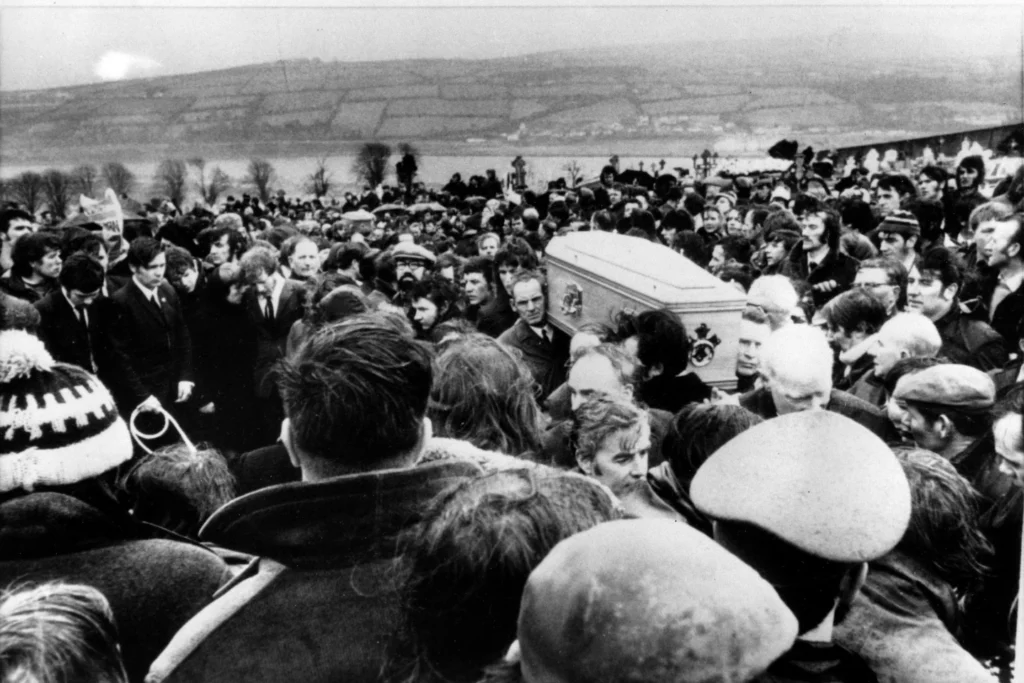
Symbol of Northern Ireland’s past and present
The proceedings come a quarter century after the Good Friday Agreement largely ended the conflict, but Bloody Sunday continues to cast a shadow over Northern Ireland. Families of the victims argue the trial is long overdue, while veterans’ groups claim former soldiers are being unfairly pursued decades after their service.
Derry councilor Shaun Harkin of the People Before Profit party said the case extends beyond one soldier. “The British government has sought to protect its parachute regiment killers for decades through lies, cover-up, delay and evasion,” Harkin said. “Soldier F pulled the trigger on Bloody Sunday and should be held to account, but so should the government and military leaders who gave the orders.”
The trial is expected to be closely watched, both as a test of accountability and as a measure of whether victims’ families will finally see justice after more than half a century.
Source: Associated Press




