

The Recording Academy has named legendary Afrobeat pioneer Fela Anikulapo-Kuti as the first African artist to receive a posthumous Grammy Lifetime Achievement Award, a historic recognition that places one of Africa’s most influential cultural figures firmly within the highest ranks of global music honor.
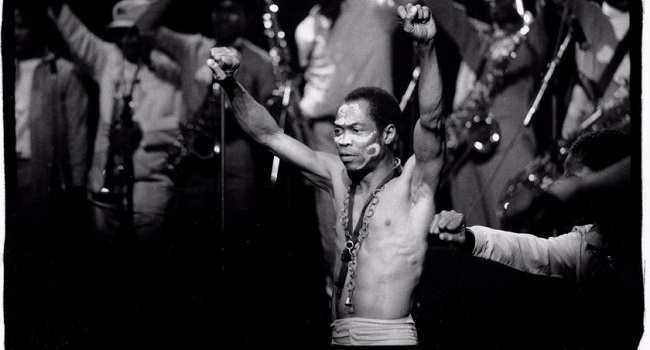
The Academy announced that Fela will be among the recipients honored in 2026, nearly three decades after his death in 1997 at the age of 58. The award will be presented during the Special Merit Awards Ceremony on Saturday, Jan. 31, at the Wilshire Ebell Theatre in Los Angeles, one day before the 68th annual Grammy Awards.
Fela joins an elite group of 2026 honorees that includes Whitney Houston, Carlos Santana, Chaka Khan, Cher and Paul Simon — a list that underscores the breadth of his influence far beyond the African continent and across generations of popular music.
The announcement was greeted with widespread celebration in Nigeria and across the international music community, where Fela is revered not only as the architect of Afrobeat but also as a fearless political voice who challenged power through rhythm, language and performance.
In a statement accompanying the announcement, the Recording Academy cited Fela’s enduring cultural reach and the continued exploration of his work across multiple artistic platforms. The Academy pointed to projects such as Fela Kuti: Fear No Man, a 12-part podcast series that became The New Yorker’s top-ranked podcast of 2025, as well as the Tony Award-winning Broadway production Fela!, which ran from 2008 to 2010.
“Fela’s influence spans generations,” the Academy said, noting that his music and ideas have inspired artists including Beyoncé, Paul McCartney and Thom Yorke, while also laying the groundwork for the modern Afrobeats movement that now dominates global charts.
The Academy also emphasized the political force embedded in Fela’s artistry, describing him as “a titanic sociopolitical voice” whose revolutionary Afrobeat sound repeatedly placed him in confrontation with Nigeria’s military rulers. Those clashes culminated in violent crackdowns, including a notorious raid in which soldiers burned down his communal residence and cultural hub, the Kalakuta Republic.
Fela’s son, Seun Kuti, who now leads the iconic Egypt 80 band founded by his father, described the award as a landmark moment for Afrobeat and for politically engaged music worldwide. Seun said, however, that he would be unable to attend the ceremony in person because of travel restrictions.
“We are all proud as a family,” Seun said. “It is just a shame that I can’t be there physically to join my family to accept the honour because of travel restrictions.”
Seun added that he had been barred from traveling due to remarks he previously made, but said the recognition transcended personal circumstances. “Nevertheless, the family is proud. It’s a good day for African music, Afrobeat culture, and resistance music,” he said.
The award will be formally received on Fela’s behalf by his children Yeni, Femi and Kunle Kuti, all of whom have played central roles in preserving and expanding his legacy. Through institutions such as the New Afrika Shrine in Lagos and various cultural initiatives rooted in the ideals of the former Kalakuta Republic, the Kuti family has continued to promote Fela’s music, philosophy and political vision.
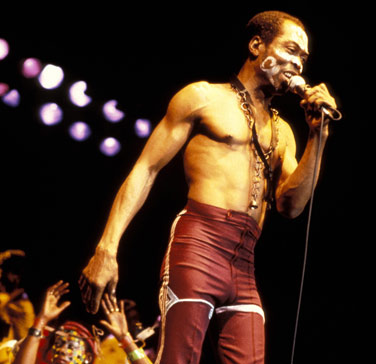
Seun Kuti has recently drawn attention for a public exchange with Nigerian pop star Wizkid over debates about musical greatness and legacy. Speaking in the context of his father’s Grammy recognition, Seun used the moment to call for unity rather than rivalry within the music industry.
“The term ‘greatest’ has a lot to do with comparison,” he said. “My point has always been: don’t compare. Our artists and culture should breed cooperation, not pitch people against each other. Fela is great, and that is the truth.”
Fela is being honored for creating Afrobeat, a genre that fused West African highlife, jazz, funk and traditional rhythms into a sound that was both danceable and confrontational. Through songs that often stretched beyond 10 minutes, he used music as a platform to attack military dictatorship, corruption, police brutality and economic inequality, often singing in pidgin English to reach a broad audience.
In recognizing his “inestimable contributions” to global music, the Recording Academy acknowledged that Fela’s sonic and ideological blueprint directly influenced the contemporary Afrobeats movement, which has propelled African artists to unprecedented global visibility.
The Lifetime Achievement Award follows another major Grammy-related honor for Fela. In 2025, his 1976 album Zombie — a scathing critique of Nigeria’s military — was inducted into the Grammy Hall of Fame, further cementing his status as one of the most consequential musicians of the 20th century.
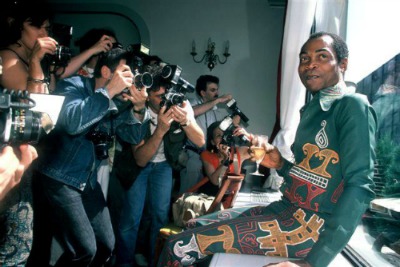
As Grammy weekend approaches, organizers have also planned a special live band tribute in Los Angeles to celebrate Fela’s music, political courage and enduring groove, drawing musicians and fans from across the world.
The renewed attention to Fela’s legacy has extended beyond the music industry. Recently, former U.S. President Barack Obama paid tribute to the Nigerian icon through Fela Kuti: Fear No Man, the podcast series chronicling Fela’s life, art and activism. Obama announced the project in a video shared on social media, describing Fela as “a musical genius from Nigeria” whose work blended funk, jazz and soul into a revolutionary sound.
Produced by Higher Ground, the media company Obama co-founded with his wife, Michelle, the podcast combines rare archival recordings with contemporary interviews featuring artists and cultural figures such as Paul McCartney, Questlove, Santigold, Burna Boy, David Byrne and Ayo Edebiri. Members of the Kuti family, including Yeni, Femi and Mádé, also appear, offering personal reflections.
“It’s a beautiful show about a unique figure in musical history who mixed art with activism,” Obama said, drawing parallels between Fela’s work and the broader power of art to challenge injustice.
Fela’s posthumous Grammy recognition represents more than an individual accolade; it marks a symbolic shift in how African music is situated within global institutions long criticized for overlooking non-Western innovation. During his lifetime, Fela openly rejected Western validation and sharply criticized the same power structures that now honor him, making the award both celebratory and historically ironic.
The decision also reflects the Recording Academy’s evolving engagement with global music, particularly as Afrobeats reshapes the international pop landscape. By formally recognizing Fela, the Academy acknowledges that today’s global African music boom did not emerge in isolation but was built on decades of artistic resistance and experimentation.
For African artists, the award carries profound cultural weight. It affirms that music rooted in local struggle and political defiance can achieve universal resonance without sacrificing authenticity. For younger generations discovering Fela through podcasts, Broadway adaptations and digital platforms, the honor reinforces his relevance in contemporary debates about power, justice and artistic freedom.
Nearly 30 years after his death, Fela Anikulapo-Kuti remains what he always was: impossible to ignore, impossible to contain — and now, officially, impossible to exclude from the highest canon of global music history.
Credit: Channelstvng




