

A fifth U.S. service member has died from injuries sustained during the opening phase of Operation Epic Fury, U.S. Central Command confirmed Monday, as President Donald Trump continues to press forward with military operations against Iran despite mounting political concerns at home.
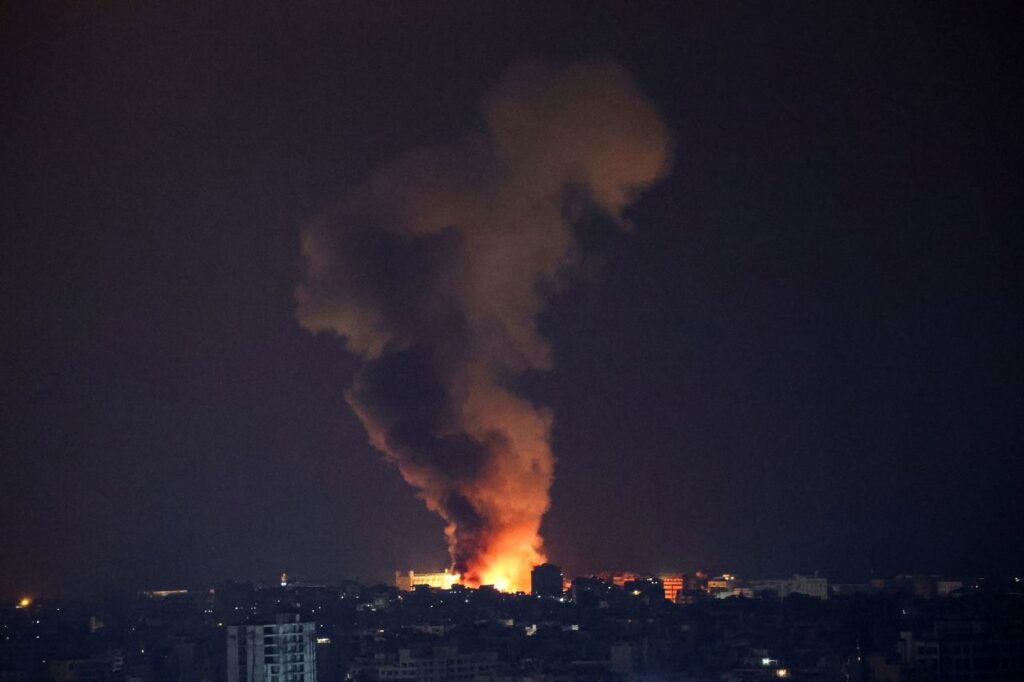
The service member, who was wounded during the initial wave of U.S.-Israeli strikes launched Saturday, died Monday, according to a statement from Central Command. Four other American troops have been killed since the campaign began, marking the first combat fatalities of Trump’s renewed presidency.
Military officials did not release the identity of the fallen service member, pending notification of next of kin. The announcement came as U.S. forces remain engaged in what Trump has described as a sustained operation aimed at crippling Iran’s military and political leadership.
The expanding conflict has already reshaped the political landscape in Washington.
According to Reuters, Trump moved ahead with the strikes despite private warnings from senior aides that escalation could spiral and present political risks for Republicans in the November midterm elections. Two senior White House officials and a Republican close to the administration indicated that advisers cautioned the president about the unpredictability of retaliation and the potential domestic fallout.
White House press secretary Karoline Leavitt defended the operation, saying Trump carried out a decision long contemplated by presidents of both parties. “The President’s decision to launch Operation Epic Fury is one that presidents of both parties have contemplated for more than fifty years, but none had the courage to execute,” Leavitt said. She added that the administration’s focus remains ensuring the operation’s success in coordination with the Pentagon and other agencies.
Trump has signaled the campaign could last four to five weeks, acknowledging in weekend interviews that additional American casualties are possible. “Sadly, there will likely be more before it ends,” he said earlier, framing the conflict as a necessary assertion of U.S. strength.
A Reuters/Ipsos poll conducted Sunday found that roughly one in four Americans supported the strikes that killed Iran’s leader. About half of respondents — including a quarter of Republicans — said they believe Trump is too willing to use military force. The survey concluded before the U.S. military confirmed the first American fatalities.
Privately, some White House aides had urged Trump to maintain a focus on domestic issues such as healthcare costs and inflation in the lead-up to the midterms, echoing themes from his recent State of the Union address. The rapid shift from economic messaging to sustained military engagement has complicated that strategy.
Rob Godfrey, a Republican strategist quoted by Reuters, described the transition as abrupt, noting that aligning economic priorities with an overseas conflict would pose a messaging challenge. Other advisers suggested the electoral impact may unfold gradually, shaped by the duration of the war, the scale of Iranian retaliation, the number of American casualties and fluctuations in fuel prices.
Political operatives within the Republican Party are examining how a prolonged conflict might affect competitive congressional districts, particularly in the House of Representatives, where Republicans hold a narrow majority. According to Reuters, internal modeling shows that even modest voter skepticism in swing districts could influence tightly contested races.
Lawmakers such as Colorado Rep. Gabe Evans, Wisconsin Rep. Derrick Van Orden and Pennsylvania Rep. Rob Bresnahan could face scrutiny over war powers votes and constituent concerns about an expanding conflict, particularly in areas where voters prioritize economic stability.
A senior Republican operative cited by Reuters argued that foreign policy victories often carry limited electoral benefit, while prolonged or costly military engagements can generate political backlash. “Unless this operation goes bad, voters, especially for the midterms, don’t care about foreign policy,” the operative said.
The administration’s calculus reflects competing pressures. Trump campaigned on an “America First” platform that included pledges to avoid prolonged overseas wars. At the same time, he has increasingly framed decisive military action as evidence of strong leadership.
An informal adviser told Reuters that the greater electoral risk may lie not with independent voters but with elements of Trump’s MAGA base, many of whom embraced a non-interventionist stance during the 2024 campaign. Lower turnout among those voters in a midterm environment could narrow Republican margins.
A February Reuters/Ipsos poll showed 58% of Americans disapproved of Trump’s job performance. Since early January, his approval rating has slipped from 42% to 39%, according to the latest survey cited by Reuters.
Interviews with Trump supporters suggest a complex response. Some voters expressed surprise at the scale of the Iran operation, while others endorsed it as a necessary response to Tehran’s actions. BJ Moore, an 83-year-old Trump voter from Atlanta quoted by Reuters, said he was initially caught off guard but ultimately supported the decision.
The fifth U.S. fatality intensifies scrutiny over the war’s trajectory. Analysts say public tolerance for military engagement often hinges on clarity of objectives and measurable outcomes. A short campaign that achieves defined strategic goals could stabilize support. A drawn-out conflict marked by rising casualties and economic disruption could erode it.
Original analysis indicates that the administration now faces a dual-front challenge: managing battlefield developments abroad while navigating domestic political headwinds. With fuel markets sensitive to Gulf instability and voters already focused on affordability, sustained volatility could amplify economic anxieties heading into November.
For now, Trump has aligned himself firmly with advisers who view decisive force as a demonstration of leadership strength. Whether that calculation bolsters or undermines Republican prospects in the midterms may depend less on rhetoric and more on the war’s duration, cost and human toll.
As the Pentagon continues operations and Central Command withholds further details pending family notifications, the addition of a fifth American casualty marks a sobering milestone in a conflict whose political and military consequences are still unfolding.




