

(TheSun) — A powerful explosion tore through a fireworks shop in eastern China on Sunday, killing at least eight people and injuring two others, local authorities said, just days before millions across the country prepare to celebrate the Lunar New Year.
The blast struck a village in Donghai county in Jiangsu province during the afternoon, local government officials said. Two people suffered minor burns and were taken for treatment.
Preliminary findings indicate the explosion was triggered when a resident ignited fireworks too close to the retail outlet, causing stored pyrotechnics to detonate, county authorities indicated in a statement.
Emergency response teams from fire, public security, health and emergency management departments were dispatched immediately to the scene to conduct rescue operations and secure the area, officials said.
The explosion occurred as China braces for one of its most significant annual holidays. The Lunar New Year, also known as the Spring Festival, begins Tuesday and ushers in the Year of the Horse. The holiday traditionally features elaborate fireworks displays and the midnight lighting of firecrackers, a custom believed to ward off evil spirits and welcome prosperity.
In recent years, however, many Chinese cities have imposed strict limits or outright bans on fireworks due to persistent air pollution concerns and safety risks. Some local governments eased restrictions last year, allowing limited sales and displays in designated areas, reflecting public demand for traditional celebrations.
Sunday’s tragedy prompted a swift response from China’s Ministry of Emergency Management. In a statement issued Monday, the ministry ordered tighter supervision over the production, transportation and sale of fireworks nationwide.
Officials stressed that igniting fireworks near retail outlets or storage facilities must be strictly prohibited. They urged local governments to identify and eliminate regulatory blind spots to ensure a safe holiday period.
Authorities also directed local police to step up patrols and impose severe penalties for violations of fireworks regulations. The ministry said steps must be taken to prevent similar incidents from occurring again during the festive season.
The incident underscores longstanding safety concerns surrounding fireworks manufacturing and retail in China, where the industry remains extensive and deeply intertwined with cultural traditions. Accidents involving fireworks warehouses, factories and shops have periodically resulted in fatalities, prompting cycles of regulatory tightening.
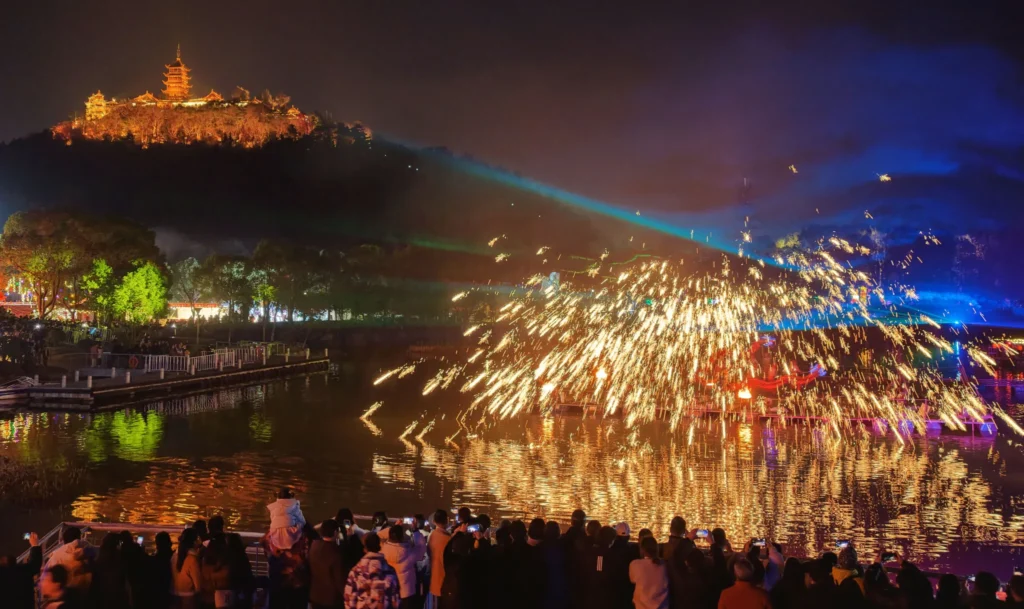
Last October, a fireworks display in the city of Liuyang — known as a center of fireworks production — malfunctioned during a public event, sending flaming debris toward spectators. Videos circulating online at the time showed people scrambling for cover as fireballs fell. Local authorities later said no serious injuries were reported, though small fires broke out and were quickly extinguished.
Beyond China, fireworks-related incidents have also drawn international scrutiny. On New Year’s Eve, a nightclub fire in Switzerland was ignited by celebratory pyrotechnics, killing 41 people and prompting a wide-ranging investigation into safety compliance at entertainment venues.
The Jiangsu explosion highlights the tension between cultural tradition and modern safety governance in China. Fireworks are central to Lunar New Year celebrations, symbolizing renewal and protection against misfortune. Yet their manufacture and use involve highly combustible materials that require stringent oversight.
As urbanization accelerates and population density increases, the risks associated with storing and igniting fireworks in residential or commercial areas grow more severe. Regulatory enforcement varies across provinces, and local authorities often face pressure to accommodate festive demand while preventing accidents.
The Ministry of Emergency Management’s rapid directive signals concern that isolated incidents can quickly escalate into broader safety crises during peak holiday periods. With millions expected to travel and celebrate, even minor regulatory lapses could have outsized consequences.
Moreover, this latest blast may influence whether local governments continue easing fireworks bans. Public sentiment often favors traditional displays, particularly after years of pandemic-related restrictions curtailed celebrations. However, high-profile accidents can reverse momentum toward liberalization and reinforce arguments for stricter control.
The economic dimension is also significant. China’s fireworks industry supports thousands of workers and small businesses, especially in provinces like Hunan and Jiangxi. Stricter enforcement, while enhancing safety, can affect livelihoods, creating a complex policy balance between economic activity and public protection.
As investigators determine the precise cause of Sunday’s explosion, authorities are likely to intensify inspections ahead of the holiday. Whether these measures will prevent further incidents during the Spring Festival period remains to be seen, but the tragedy in Jiangsu serves as a stark reminder of the hazards tied to one of China’s most enduring traditions.




