

A 65-year-old man convicted of fatally stabbing and strangling a Florida grocery store owner nearly four decades ago is scheduled to be executed Tuesday evening, marking the state’s second execution of the year.
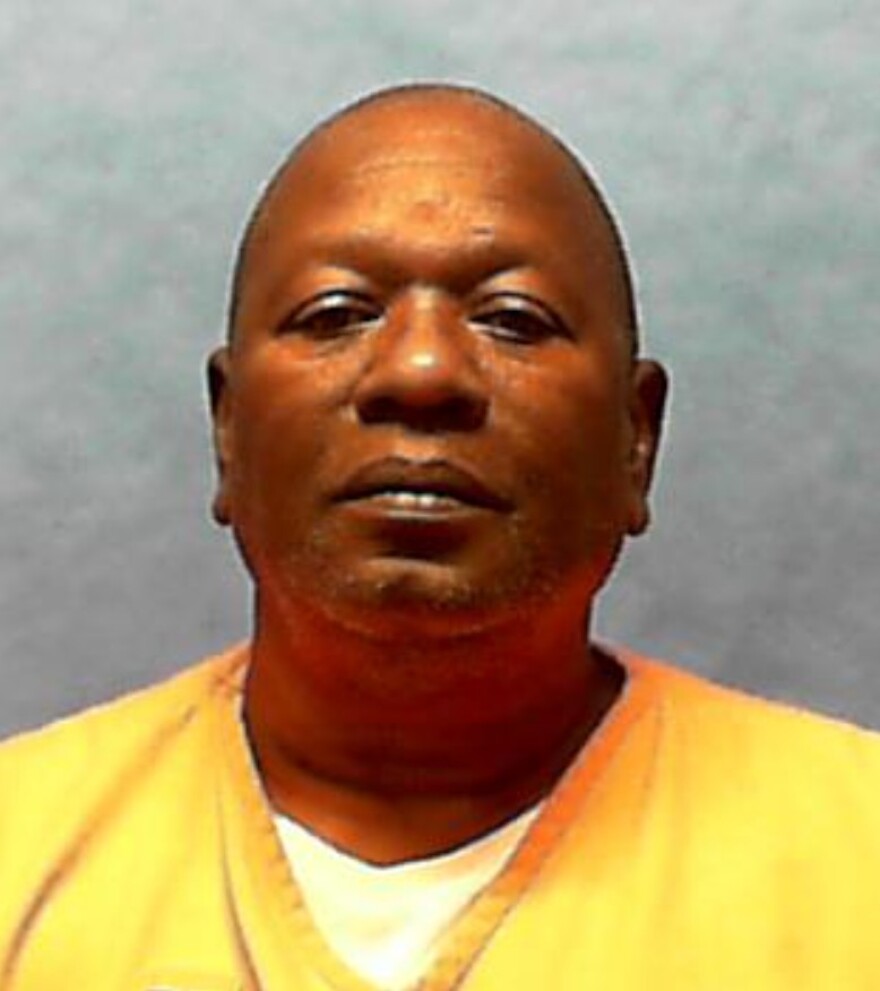
Melvin Trotter is set to receive a three-drug lethal injection at 6 p.m. at Florida State Prison near Starke. He was convicted in the 1986 killing of Virgie Langford, who was attacked inside her grocery store in Palmetto.
Trotter was originally sentenced to death in 1987. However, the Florida Supreme Court ordered a new sentencing proceeding in 1993 after concluding that errors had occurred in the way aggravating factors were weighed during the initial penalty phase. Following the new hearing, a jury again recommended the death penalty, and a judge reimposed the sentence.
According to court findings, Trotter strangled and stabbed Langford during the attack at her store. A truck driver later found her alive but gravely wounded. Before she died at a hospital, Langford described her assailant to authorities.
In addition to detailing his physical appearance, Langford told investigators that the attacker wore a Tropicana employee badge bearing the name “Melvin.” Court documents indicate that detectives later recovered a T-shirt with Langford’s blood type at Trotter’s residence and identified his handprint on a meat cooler inside the store.
Last week, the Florida Supreme Court rejected Trotter’s most recent appeals. His attorneys had contended that state corrections officials failed to properly follow execution protocols. They also asserted that Trotter’s age — 65 — should shield him from execution.
As of Tuesday morning, emergency appeals remained pending before the U.S. Supreme Court.
If carried out, the execution would follow 19 executions in Florida last year, the highest number in the state in decades. Gov. Ron DeSantis signed more death warrants in 2023 than any Florida governor since the U.S. Supreme Court reinstated the death penalty in 1976. That total surpassed the previous modern-era high of eight executions in 2014.
Nationally, 47 people were executed in the United States in 2025. Florida led the country in executions last year, while Alabama, South Carolina and Texas each carried out five. So far in 2026, Texas, Oklahoma and Florida have each conducted one execution.
On Feb. 10, Florida executed Ronald Palmer Heath, 64, who had been convicted of first-degree murder and other charges in the 1989 killing of Michael Sheridan, a traveling salesman he and his brother met at a bar.
Two additional executions are already scheduled in Florida next month. Billy Leon Kearse, 53, is slated for execution March 3, followed by Michael Lee King, 54, on March 17.
Florida carries out executions using a three-drug protocol administered intravenously, beginning with a sedative, followed by a paralytic agent and a drug that stops the heart, according to the Florida Department of Corrections.
Trotter’s case traces back to a time when Florida’s capital sentencing framework was undergoing significant legal scrutiny. In the years since his original conviction, the state’s death penalty statute has been reshaped repeatedly by court rulings addressing jury recommendations, aggravating factors and constitutional standards.
Supporters of capital punishment argue that executions provide justice for victims and their families, particularly in cases involving violent crimes. Critics counter that prolonged legal proceedings, evolving standards and questions about fairness in sentencing underscore systemic concerns within the death penalty system.
Trotter’s attorneys have not disputed the jury’s findings regarding his involvement in Langford’s killing but have focused recent challenges on procedural issues and his age. While the U.S. Supreme Court has barred executions of individuals with intellectual disabilities and those who were under 18 at the time of their crimes, it has not established an age-based exemption for older inmates.
Legal analysts note that age-related arguments in capital cases often center on declining health or humanitarian considerations rather than categorical constitutional protections. Courts, however, have generally declined to adopt age alone as grounds to halt an execution.
The case also reflects Florida’s renewed pace in carrying out death sentences after periods of lower activity tied to legal challenges and policy shifts. The state currently houses one of the nation’s largest death rows, and the recent increase in signed death warrants signals an assertive approach by state leadership.
For Langford’s surviving relatives, the scheduled execution represents the culmination of a case that has moved through Florida’s courts for nearly 40 years. For Trotter, it marks the final stage of a legal process that has spanned multiple appeals, resentencing proceedings and constitutional review.
Absent intervention from the U.S. Supreme Court, Florida prison officials are expected to proceed Tuesday evening with the execution at the state’s death chamber in Starke.
The Independent




