

Sophisticated thieves exploited Germany’s traditional Christmas shutdown to execute an elaborate bank heist, drilling through thick concrete walls to access a Sparkasse bank vault and steal at least €10 million in cash and valuables from customer safe deposit boxes, police confirmed Tuesday.

The perpetrators breached a branch of Sparkasse, one of Germany’s largest retail banking networks, in the western industrial city of Gelsenkirchen. Investigators believe the criminals worked methodically through the holiday period when most German businesses and financial institutions remain closed from December 24 evening through the following week, providing an extended window for the sophisticated operation.
According to Reuters, police discovered the breach only after a fire alarm activated in the early hours of Monday, December 29. Officers responding to the alarm found that thieves had penetrated a substantial concrete wall separating the vault from an adjacent structure, then systematically broke into several thousand individual safe deposit boxes housed within the secured facility.
The theft’s estimated value reached double-digit millions of euros, though police cautioned that final losses remain uncertain as investigators continue cataloging which boxes were accessed and awaiting confirmation from customers about their contents. Safe deposit box thefts present unique challenges for loss assessment because banks typically maintain no records of box contents, relying instead on customer declarations often made only after breaches occur.
By Tuesday afternoon, dozens of distraught customers had gathered outside the Gelsenkirchen branch, their frustration boiling over into repeated chants of “Let us in!” as they demanded access to assess their losses and explanations from bank management about security failures that enabled the heist. The scene reflected mounting anger from depositors who had entrusted life savings, family heirlooms, and irreplaceable documents to what they believed was secure storage.
“I couldn’t sleep last night. We’re getting no information,” one man told the Welt broadcaster while waiting outside the locked branch. The customer, who declined to provide his name, revealed he had maintained a safe deposit box at the location for 25 years, storing retirement savings he had accumulated through decades of work. His decision to keep assets in physical form rather than standard bank accounts reflected a preference common among older Germans who value tangible holdings and maintain skepticism about purely digital wealth storage.
Another customer explained he used his deposit box to secure cash reserves and jewelry intended for family members, representing not just monetary value but sentimental significance that made the theft particularly devastating. The practice of storing precious metals, jewelry, and cash in bank safe deposit boxes remains widespread in Germany, where cultural attitudes toward physical asset holdings differ from countries with greater reliance on electronic banking and investment accounts.
A Sparkasse bank spokesperson in Gelsenkirchen did not immediately respond to repeated requests for comment from journalists seeking information about the breach, security protocols that failed to prevent it, and plans for customer compensation. The silence compounded customer frustration and raised questions about whether the bank would accept liability for losses or invoke standard safe deposit box agreements that typically limit institutional responsibility for box contents.
Police investigators revealed that witnesses had reported observing several men carrying large bags through the stairwell of a parking garage adjacent to the bank during Saturday night. The sightings, initially dismissed as potentially ordinary activity, gained significance only after the vault breach was discovered Monday morning. Investigators now believe the bags likely contained drilling equipment, tools for breaking into individual deposit boxes, and possibly extracted valuables as the thieves made multiple trips to remove stolen items.
Additional witness reports described a black Audi RS 6 departing the parking garage in the early hours of Monday morning with masked occupants visible inside the high-performance vehicle. According to police statements, the car displayed license plates traced to a vehicle reported stolen in Hanover, a city located more than 200 kilometers northeast of Gelsenkirchen. The use of stolen plates represents a standard precaution among sophisticated criminals seeking to avoid identification through automated license plate recognition systems deployed throughout German highway networks.
The Audi RS 6 choice suggests professional criminals with substantial resources, as the model represents a high-performance luxury vehicle capable of rapid long-distance travel while maintaining an unremarkable appearance that wouldn’t attract attention in urban environments. The car’s powerful twin-turbocharged engine enables speeds exceeding 300 kilometers per hour, providing escape capabilities if police had discovered the operation in progress.
The heist’s timing exploited a vulnerability created by Germany’s extended Christmas closure customs. Most retail businesses, banks, and commercial operations shut down from December 24 evening and don’t resume normal operations until after December 26, with many remaining closed through the new year period. The extended shutdown creates unusual opportunities for criminals, as buildings sit vacant for longer periods than normal weekends, and reduced staffing at security monitoring centers may delay response to alarms.
Timesnownews reported that the thieves’ exploitation of the Christmas shutdown demonstrated sophisticated planning and understanding of German commercial rhythms. The perpetrators likely conducted surveillance to understand bank security protocols, identify optimal entry points, and determine the concrete wall’s thickness requiring specialized drilling equipment capable of penetrating reinforced barriers.
The drilling operation itself would have generated substantial noise and required hours of continuous work to create an opening large enough to move equipment and stolen items. The fact that no one reported suspicious sounds suggests either the adjacent parking garage’s isolation provided acoustic shielding, or the Christmas period meant fewer people in surrounding areas who might notice unusual activity.
Germany has experienced periodic high-value heists targeting bank vaults and jewelry stores, though operations of this scale and sophistication remain relatively uncommon. The 2019 theft of jewelry valued at over €100 million from Dresden’s Green Vault museum and the 2017 theft of a 100-kilogram gold coin from Berlin’s Bode Museum demonstrated that organized criminal networks possess both capability and willingness to target prestigious German institutions despite generally high security standards.
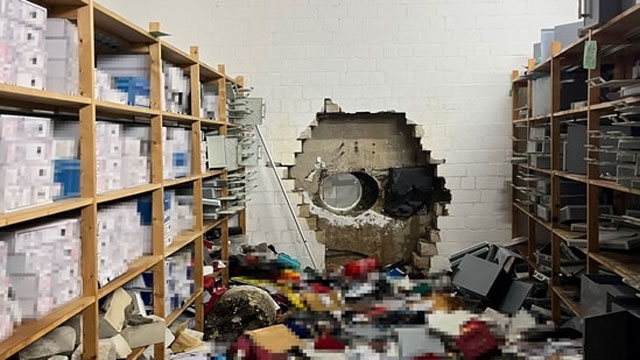
Safe deposit box security presents unique challenges compared to standard vault protection. While the outer vault typically features sophisticated alarm systems, reinforced walls, and time-delayed locks, individual deposit boxes within often rely on simpler key-based mechanisms that determined thieves can defeat given sufficient time and tools. Banks historically assumed that vault-level security provided adequate protection, but this breach demonstrates that assumption’s limitations when criminals successfully breach the outer barrier.
The incident raises questions about insurance coverage for safe deposit box losses. German banking regulations require deposit insurance for customer accounts but typically exclude safe deposit box contents from standard coverage. Customers who stored valuables without separate insurance policies may face total losses, while those who maintained appropriate insurance will need to document box contents to support claims—a process complicated because many depositors keep no detailed records of what they stored.
Legal liability for the losses remains uncertain. Safe deposit box rental agreements typically include clauses limiting bank responsibility for contents, arguing that boxes provide customers with private, controlled access that makes banks unable to guarantee security. However, German consumer protection laws may impose higher standards, particularly if investigators determine that bank security measures fell below reasonable industry standards. Customer lawsuits seeking compensation appear likely given the scale of losses and the angry scenes outside the branch.
The investigation continues as police analyze surveillance footage from surrounding areas, interview witnesses, and coordinate with law enforcement agencies in Hanover regarding the stolen vehicle used in the getaway. Forensic teams are examining the vault for fingerprints, DNA evidence, and tool marks that might identify specific drilling equipment and provide leads toward the perpetrators.
Authorities have not publicly disclosed whether they believe the heist involved organized crime syndicates operating across European borders or represented a domestic German criminal operation. The sophistication level suggests professional criminals with prior experience executing complex thefts, while the stolen vehicle’s origin in distant Hanover indicates willingness to operate across German regions and potentially represents an effort to misdirect investigators about the criminals’ actual base of operations.
The Gelsenkirchen theft highlights broader security challenges facing traditional banking infrastructure in an era where physical vault security competes for investment against growing cyber threats. Financial institutions increasingly focus resources on protecting digital systems from hackers while sometimes treating physical security as mature technology requiring minimal ongoing investment—an assumption this heist brutally challenges.
Customer reactions outside the branch Tuesday reflected not just financial anxiety but betrayal of trust. Many Germans, particularly older generations who experienced currency reforms and economic instability, specifically choose physical asset storage in bank facilities precisely because they perceive such arrangements as more secure than alternatives. The breach undermines that confidence and may accelerate shifts toward alternative storage methods including home safes, despite their own security limitations, or greater reliance on insured bank accounts rather than physical valuables storage.
Reuters/Timesnownews




