

Guineans cast ballots Sunday in the nation’s first presidential election since a 2021 military coup, with junta leader Gen. Mamadi Doumbouya heavily favored to win after systematically marginalizing opposition parties and leaders over four years of transition, analysts stated.
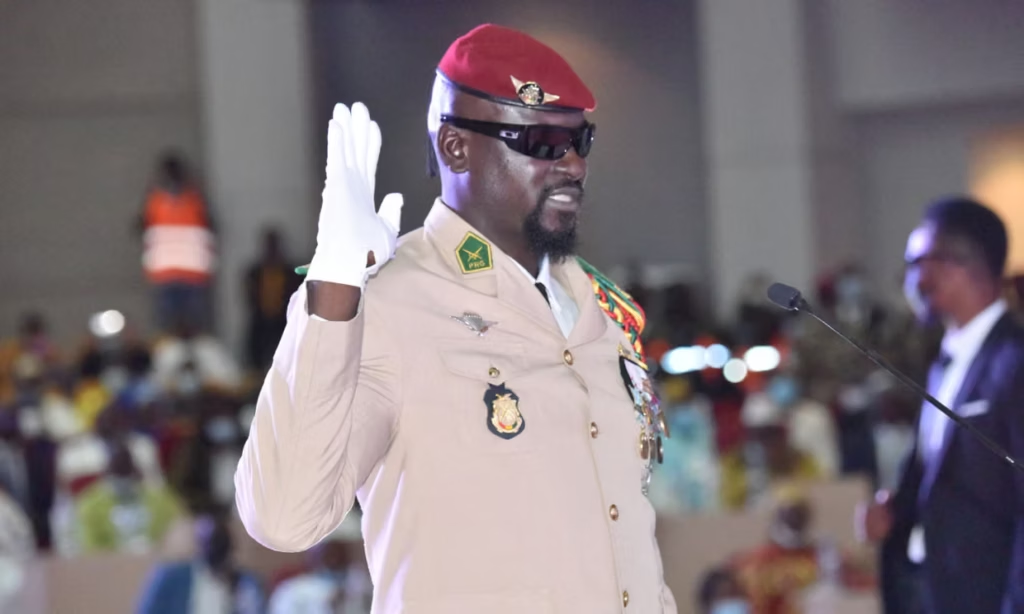
The election culminates a transition process that commenced after Doumbouya ousted President Alpha Condé four years ago. The junta leader has subsequently suppressed main opposition parties and dissent, critics say, leaving him without significant challengers among eight other candidates in the race.
Nine candidates are competing, with Doumbouya’s closest challenger being the little-known Yero Baldé of the Democratic Front of Guinea party, who served as education minister under Condé. Two opposition candidates, former Prime Minister Lansana Kouyaté and former government minister Ousmane Kaba, were excluded on technical grounds, while longtime opposition leaders Cellou Dalein Diallo and Sidya Toure have been forced into exile.
“This election will open a new page in Guinea’s history and mark the country’s return to the league of nations,” stated Guinea political analyst Aboubacar Sidiki Diakité. “Doumbouya is undoubtedly the favorite in this presidential election because the main opposition political parties have been sidelined and the General Directorate of Elections, the body that oversees the presidential election, is under the supervision of the government.”
The vote proceeds under a new constitution that revoked a ban on military leaders seeking office and extended the presidential mandate from five to seven years. That constitution received overwhelming approval in a September referendum despite opposition parties urging voters to boycott it.
Approximately 6.7 million registered voters are expected to cast ballots at roughly 24,000 polling stations nationwide, with results anticipated within 48 hours, the Associated Press reported. A runoff will occur if no candidate secures a majority of votes.
The West Africa regional bloc ECOWAS deployed an election observation mission ahead of the vote, though skeptics question whether meaningful oversight is possible given the political environment.
Long queues of predominantly young voters formed at polling stations while police officers closely monitored the process. Heavy security presence characterized Conakry and other parts of Guinea, with nearly 12,000 police officers among security forces mobilized and checkpoints established along major roads.
Authorities announced Saturday that security forces “neutralized” an armed group with “subversive intentions threatening national security” after gunshots were heard in Conakry’s Sonfonia neighborhood, though details about the incident remained limited.
“This vote is the hope of young people, especially for us unemployed,” said Idrissa Camara, an 18-year-old Conakry resident who stated he has been unemployed since graduating from university five years ago. “I’m forced to do odd jobs to survive. I hope this vote will improve the standard of living and the quality of life in Guinea.”
Despite Guinea’s abundant mineral resources—including status as the world’s largest bauxite exporter, used to manufacture aluminum—more than half of its 15 million people are experiencing unprecedented levels of poverty and food insecurity, according to the World Food Program.
The election represents the latest in a series of votes among African countries that have witnessed a surge in military coups since 2020. At least 10 countries on the continent have experienced soldiers forcefully seizing power after accusing elected leaders of failing to provide adequate governance and security for citizens.
In addition to a weakened opposition, activists and rights groups report that Guinea has witnessed civil society leaders silenced, critics abducted and press censorship since the coup. More than 50 political parties were dissolved last year in a move authorities characterized as efforts to “clean up the political chessboard” despite widespread criticism.
“It’s an election without the main opposition leaders and that is taking place in a context where civic space is heavily restricted,” stated Alioune Tine, founder of Afrikajom Center, a West African political think tank. “The vote is mostly designed to legitimize Doumbouya’s grip on power.”
Mamadou Bhoye Diallo, a restaurant owner in Conakry, stated he would not vote and characterized the election as a “farce.” “When a candidate is also the referee, can we expect a miracle?” Diallo questioned. “Major parties are sidelined and their leaders are in exile. You call that an election?”
However, Doumbouya enjoys support among many Guineans persuaded by his promises of prosperity. The leader has constructed his campaign around major infrastructure projects and reforms launched since assuming power four years ago.
While Baldé has centered his campaign on promises of governance reforms, anti-corruption efforts and economic growth, Doumbouya has emphasized infrastructure projects and initiatives implemented during his rule.
The junta’s signature project involves the Simandou iron ore development, a 75 percent Chinese-owned mega-mining operation at the world’s largest iron ore deposit that commenced production last month after decades of delays. Authorities assert that a national development plan tied to Simandou aims to create tens of thousands of jobs and diversify the economy through investments in agriculture, education, transport, technology and health.
“In four years, he (Doumbouya) has connected Guinean youth to information and communication technologies,” stated Mamadama Touré, a high school student wearing a T-shirt bearing Doumbouya’s image in Conakry, citing digital skills training programs implemented by authorities.
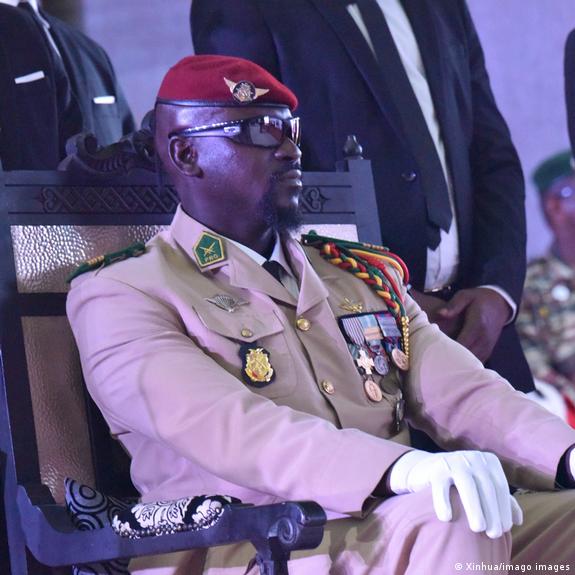
Doumbouya’s campaign, characterized by large rallies and extensive media coverage, has dominated the political landscape, with state media and administrative support providing him substantial advantages over rivals with limited resources.
Yet skepticism persists among some voters. “This is the third time I’ve voted in Guinea, hoping things will change. But nothing has changed,” said 22-year-old student Issatou Bah, who remained undecided about whether to vote. Bah expressed hope the election would improve “this country that has everything but struggles to take off.”
The election unfolds in a pattern increasingly common across Africa where military leaders who seize power subsequently legitimize their rule through carefully managed electoral processes. Mali, Burkina Faso, Chad and other countries have witnessed similar trajectories where coup leaders delay promised returns to civilian rule, then run in elections after consolidating power and marginalizing opposition.
The constitutional changes enabling Doumbouya’s candidacy—particularly eliminating restrictions on military leaders holding office—represent a reversal of democratization gains that many African nations achieved in previous decades. These changes institutionalize military rule rather than serving as temporary measures during transitions to civilian governance.
The dissolution of over 50 political parties, exile of opposition leaders and exclusion of candidates on technical grounds all point to systematic efforts to engineer electoral outcomes rather than conduct genuinely competitive votes. International observers face challenges in assessing whether such elections meet minimal democratic standards when the playing field has been so thoroughly tilted.
For Guinea’s young population—the majority of whom have known only economic hardship despite the country’s mineral wealth—the election represents both hope and cynicism. Some see Doumbouya’s infrastructure initiatives as tangible improvements after years of stagnation under previous leaders. Others view the vote as theater designed to provide democratic legitimacy to military rule.
The Simandou project, while potentially transformative for Guinea’s economy, also highlights questions about resource management and whether mineral wealth will translate into broad-based development or primarily benefit political and economic elites. Previous resource booms in African countries have often failed to lift populations out of poverty, instead fueling corruption and inequality.
The international community’s response to Guinea’s election will prove significant. ECOWAS and other regional bodies have condemned recent coups but face difficult choices about whether to recognize elections conducted under such constrained conditions. Legitimizing clearly flawed processes risks normalizing military seizures of power followed by managed elections, while isolation may further harm civilian populations.
As results emerge in coming days, the vote will likely confirm Doumbouya as Guinea’s next president for a seven-year term. The more consequential question is whether this election marks a genuine, if imperfect, step toward democratic governance or instead represents a sophisticated mechanism for military leaders to maintain power while claiming electoral legitimacy—a pattern that could reshape political norms across a continent struggling to consolidate democratic gains.
An AP original story




