

Gunmen raided a village market in northern Nigeria’s Niger State, killing at least 30 people and abducting dozens of others, police and local residents said Sunday, in one of the deadliest recent attacks linked to armed gangs operating from forest hideouts in the country’s northwest and north-central regions.
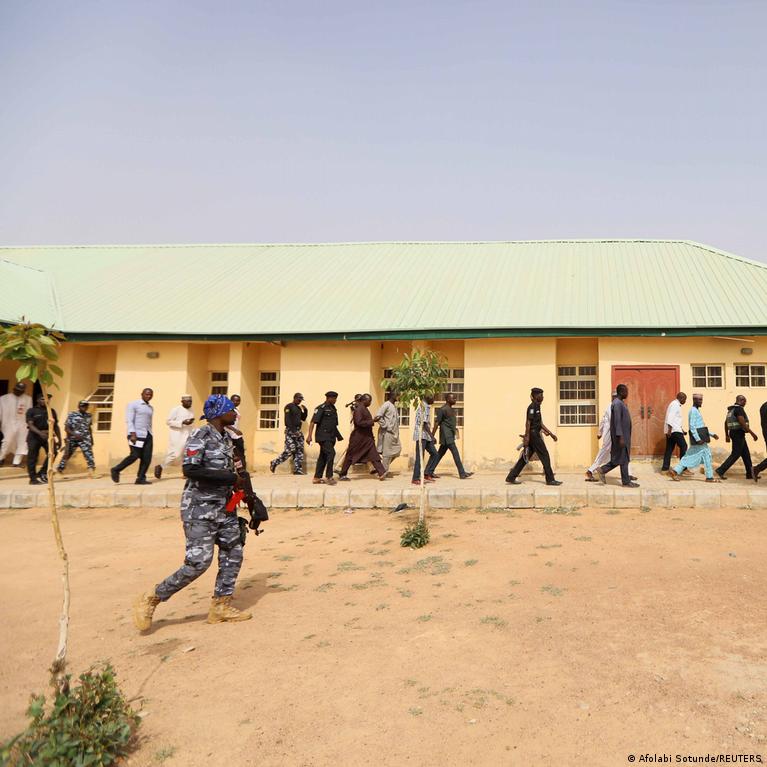
The attackers struck Saturday evening at Kasuwan Daji market in Demo village, located in the Kabe District of Borgu Local Government Area, setting fire to stalls and nearby homes, opening fire on residents and forcing captives toward the vast forests surrounding Kainji Lake National Park, authorities and witnesses said.
Niger State police spokesman Wasiu Abiodun confirmed the assault, telling AFP that more than 30 people were killed during the raid and that several others were abducted. He said a joint security team had visited the area and that efforts were underway to rescue those taken.
“Over 30 victims lost their lives during the attack, some persons were also kidnapped,” Abiodun said, adding that the assault occurred on Saturday.
The Associated Press, citing police, reported that at least 30 villagers were killed when gunmen stormed Kasuwan-Daji village and opened fire on residents. The attackers also razed the local market and several houses, Abiodun said in a police statement quoted by the AP.
However, residents and local community leaders suggested the death toll could be significantly higher. At least two residents told the AP that 37 people had been killed, with fears the number could rise as some villagers remained missing a day after the attack.
Rev. Fr. Stephen Kabirat, spokesman for the Catholic Church of the Kontagora Diocese where the attack occurred, told local media that more than 40 people were killed and that some of those abducted were children.
A resident who spoke on condition of anonymity for security reasons said the gunmen had been lurking around surrounding communities for about a week before launching the assault. He said the attack lasted as long as three hours, leaving survivors too frightened to return to recover bodies.
“The bodies are there in Kasuwan-Daji village,” the resident said. “If we don’t see any security, how can we go there?”
The resident’s account appeared to contradict police claims that security forces had been deployed quickly to the area. Some villagers said no security personnel were visible hours after the attack, deepening frustration and fear among survivors.
Local media outlets, including Leadership and PUNCH Online, reported that the assailants accessed the village through Kabe District and looted food items and other goods from the market before setting it ablaze. According to Leadership, the attackers shot indiscriminately at villagers and abducted many along paths leading into the expansive Kainji Lake National Park forest, a long-standing refuge for armed groups due to its size and limited security presence.
PUNCH Online said it had not independently verified the casualty figures or the precise timeline of the attack as of the time of its report.
Police said the attackers likely emerged from forest areas near the national park, reinforcing concerns about how abandoned or poorly monitored forest reserves across northern Nigeria have become sanctuaries for criminal gangs, locally referred to as bandits.
Such gangs, often heavily armed, routinely raid remote communities to steal livestock, extort ransoms through mass kidnappings and assert control over rural territories. While initially concentrated in northwestern states such as Zamfara and Katsina, the violence has increasingly spread into Niger State and neighboring areas.
Saturday’s attack occurred near the Papiri community, where more than 300 schoolchildren and their teachers were kidnapped from a Catholic school in November, an incident that shocked the nation and underscored the vulnerability of rural communities and institutions.
Nigeria, Africa’s most populous country, has for years grappled with overlapping security crises, including a 15-year Islamist insurgency in the northeast, farmer-herder conflicts in the Middle Belt, separatist unrest in the southeast and rampant banditry in the northwest and north-central regions. Despite repeated military operations and pledges by successive governments to restore security, attacks on villages, highways and schools continue with alarming regularity.
Analysts say the persistence of such violence reflects deep structural challenges, including under-policing of rural areas, difficult terrain, poverty, and the proliferation of illicit weapons. Forested regions like Kainji Lake National Park, which spans parts of Niger and Kwara states, offer cover and mobility for armed groups while complicating military operations.
President Bola Ahmed Tinubu’s administration has pledged to overhaul Nigeria’s security architecture, including improving intelligence gathering and increasing coordination among security agencies. However, critics argue that progress on the ground has been slow, particularly in protecting isolated farming communities.
The Niger State government has repeatedly warned residents against traveling at night or frequenting remote markets without security escorts, but villagers say economic realities often leave them with few alternatives.
In a statement, President Adama Barrow of neighboring Gambia recently described irregular migration tragedies as a “painful reminder” of systemic failures — language that echoes concerns raised by Nigerian civil society groups, who argue that unchecked violence and economic hardship are fueling displacement and desperation across West Africa.
In Niger State, the immediate focus remains on locating those abducted and providing support to survivors. Abiodun said security agencies were intensifying search-and-rescue operations, though residents expressed skepticism based on past experiences.
Human rights advocates have called for an independent investigation into the Kasuwan Daji attack, as well as greater transparency from authorities regarding casualty figures and response times.
As night fell Sunday, families in Demo village and surrounding communities remained in mourning, grappling with loss and uncertainty while fearing further attacks.
For many residents, the assault was not just another statistic in Nigeria’s ongoing security crisis but a devastating reminder of how quickly daily life can be shattered in areas where the state’s presence is thin and armed groups operate with near impunity.
AP/Punchng/Leadershipng




