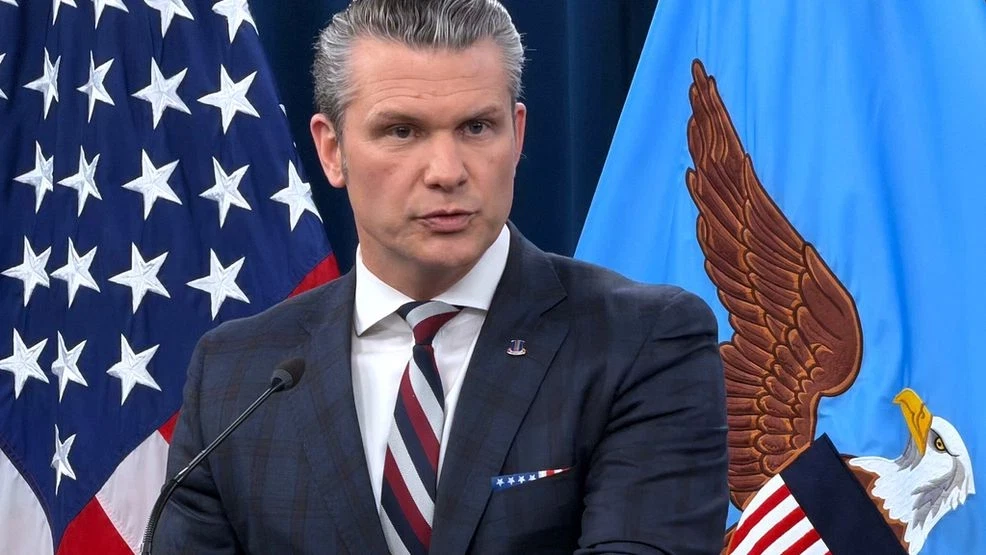
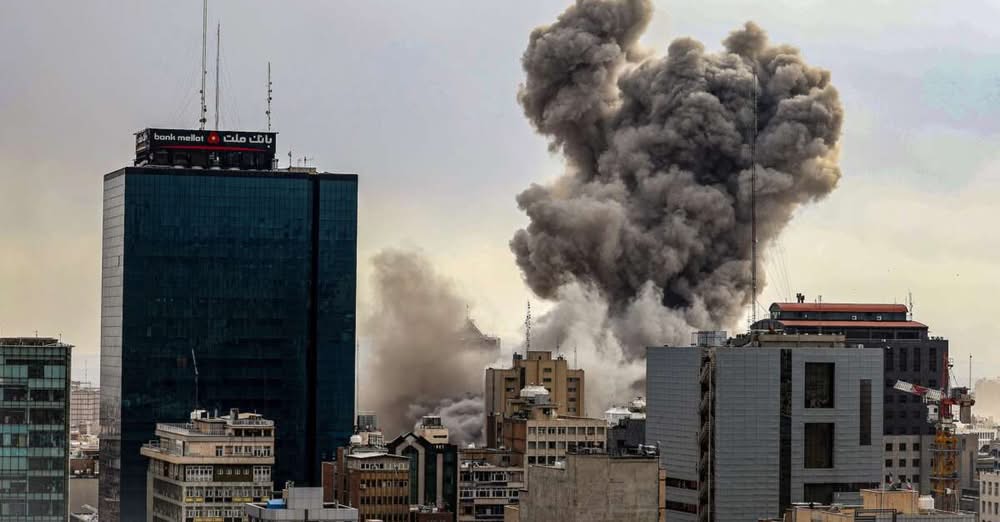
Defense Secretary Pete Hegseth declared Tuesday that American forces would unleash their “most intense day of strikes inside Iran” as Operation Epic Fury entered its tenth day, vowing to deploy unprecedented numbers of fighters and bombers to accomplish three core military objectives including permanently denying Tehran nuclear weapons capabilities.
“Today will be, yet again, our most intense day of strikes inside Iran,” Hegseth proclaimed during a Pentagon press conference alongside Gen. Dan Caine, chairman of the Joint Chiefs of Staff. “Iran stands alone, and they are badly losing on Day 10 of Operation Epic Fury.”
The defense secretary characterized the military campaign as producing devastating results for Iranian forces, noting that the previous 24 hours had witnessed “Iran fire the lowest number of missiles they’ve been capable of firing yet”—evidence he interpreted as demonstrating that sustained American bombardment was systematically degrading Tehran’s retaliatory capabilities despite ongoing counterattacks against U.S. regional bases and allies.
CNBC confirmed that Hegseth condemned Iran for attacking Gulf neighbors—some of whom Tehran had previously maintained alliances with—without provocation from those nations. The Iranian strikes on United Arab Emirates, Qatar, Kuwait, and other Gulf states have alienated regional powers that might otherwise have pressured Washington to moderate its military campaign, leaving Iran increasingly isolated diplomatically as its conventional military capabilities collapse under relentless American assault.
Hegseth pledged that the United States would dispatch “the most fighters, the most bombers, the most strikes” against Iranian targets Tuesday to press toward accomplishing three defined military objectives that he articulated with unusual specificity for a defense secretary typically cautious about publicly detailing operational goals.
Those objectives, he explained, encompass destroying Iran’s missile stockpiles and manufacturing capacity; “destroy their Navy;” and “permanently deny Iran nuclear weapons forever.” The comprehensive targeting reflects Trump administration determination to eliminate Iran’s ability to threaten American interests, regional allies, or international commerce through military force, even if achieving those goals requires weeks of sustained bombardment producing substantial Iranian military and civilian casualties.
“We’re crushing the enemy in an overwhelming display of technical skill and military force,” Hegseth declared with evident satisfaction. “We will not relent until the enemy is totally and decisively defeated.” His language echoed World War II-era rhetoric about unconditional surrender rather than the more measured terminology typically employed by defense officials discussing 21st century conflicts.
However, Hegseth simultaneously emphasized that the Trump administration would not become mired in nation-building efforts resembling those undertaken by the Bush and Obama administrations in Iraq and Afghanistan during protracted wars that consumed trillions of dollars and thousands of American lives while failing to establish stable democratic governance.
The defense secretary’s aggressive and confident comments echoed statements made one day earlier by President Donald Trump to journalists at his Miami-area golf club, where the president predicted the war would conclude “very soon” because destruction of Iranian military assets was progressing much faster than he anticipated when attacks commenced on February 28 alongside Israeli forces.
Trump also issued stark warnings to Iran’s ruling regime against withholding petroleum from world markets following the war’s conclusion. “If Iran does anything that stops the flow of Oil within the Strait of Hormuz, they will be hit by the United States of America TWENTY TIMES HARDER than they have been hit thus far,” Trump wrote Monday night in a Truth Social post employing his characteristic capital letters for emphasis.
The Strait of Hormuz represents a critical chokepoint through which approximately one-fifth of global oil supplies transit daily. Iranian threats to close the strait—either through military action or refusing to permit passage after hostilities cease—could trigger global economic disruption and petroleum price spikes that would reverberate through American gas stations and international energy markets.
Hegseth, who initially predicted the war could persist between three to eight weeks when operations commenced, told journalists Tuesday that Trump now “gets to control the throttle” for the conflict’s pace, adding that the president is “the one deciding … when we’re achieving particular objectives.” The comments suggested operational timelines remained fluid and subject to Trump’s political calculations rather than predetermined military planning.
“And so it’s not for me to posit whether it’s the beginning, the middle, or the end,” Hegseth acknowledged. “That’s his, and he’ll continue to communicate that.” The deference to presidential authority illustrated the subordinate role defense officials occupy when civilian leadership maintains direct control over operational decision-making in ways that can create confusion about strategic objectives and timelines.
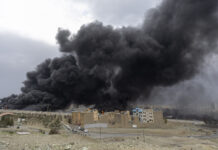
As Hegseth conducted his press conference, authorities in Abu Dhabi, United Arab Emirates, confirmed that an Iranian drone attack had ignited fires at the oil refinery within the Ruwais Industrial Complex. No injuries were immediately reported from the strike, though damage to refining capacity could temporarily reduce petroleum output from one of the world’s major energy producers.
Trump told Fox News during a Monday evening interview that he remained “not happy” that Iran selected Mojtaba Khamenei as its new supreme leader to succeed his father, Ayatollah Ali Khamenei, who perished at Operation Epic Fury’s commencement when American and Israeli forces assassinated him alongside dozens of senior Iranian officials.
“I don’t believe he can live in peace,” Trump said regarding Mojtaba Khamenei, suggesting that the new supreme leader would face relentless American military pressure until he capitulated to Washington’s demands or suffered the same fate as his father. The comments signaled that regime change remained an implicit objective despite administration claims of limited military goals.
Trump also indicated to Fox that “it’s possible” he would be willing to engage diplomatically with Iranian leaders despite the ongoing bombardment. “I’m hearing they want to talk badly,” he revealed, suggesting that backchannel communications might be occurring even as American warplanes continued dropping bombs on Iranian territory and Iranian missiles struck U.S. regional facilities.
At his Tuesday press conference, Hegseth referenced the new Iranian supreme leader obliquely, stating, “He would be wise to heed our president and not pursue nuclear weapons.” The warning implied that Mojtaba Khamenei could avoid his father’s fate by publicly renouncing nuclear weapons development and accepting American demands regarding Iran’s military posture.
NBC News documented that Hegseth emphasized “this is not 2003,” referencing the Iraq War that preceded years of American occupation, counterinsurgency operations, and nation-building efforts. “Our generation of soldier will not let that happen again, and nor will this president, who very clearly ran against those kinds of never ending, nebulously scoped missions,” he insisted. “Those days are dead.”
The defense secretary also highlighted Iran’s diplomatic isolation, noting that the country’s “neighbors, and in some cases, former allies in the Gulf, have abandoned them.” He added that Iranian proxy forces including “Hezbollah, the Houthis and Hamas, are either broken, ineffective or on the sidelines”—referring to militant organizations in Lebanon, Yemen, and Gaza respectively that had previously provided Tehran with asymmetric capabilities to threaten American and Israeli interests.
The United States, Hegseth proclaimed, was “winning with an overwhelming and unrelenting focus on our objectives,” though he acknowledged mixed messaging from Trump and administration officials about operational timelines and objectives. Hegseth reiterated that he has not specified how long the war would require, adding cryptically, “our will is endless.”
“Ultimately, the president gets to determine the end state of those objectives, right?” he continued. “But what he’s said continually, and I want the American people to understand, is this is not endless. It’s not protracted. We’re not allowing mission creep.” The assurances were designed to address concerns that Operation Epic Fury could devolve into another indefinite Middle Eastern commitment despite Trump’s campaign promises to avoid such entanglements.
Hegseth declined commenting on reports that Iran’s new supreme leader Mojtaba Khamenei had sustained injuries during American strikes. Rumors about Khamenei’s health circulated after Iranian state television referred to him as “janbaz”—meaning “wounded by the enemy”—during coverage of what Tehran terms the “Ramadan war,” the Islamic Republic’s designation for the American-Israeli military campaign.
When pressed about these reports during the press conference, Hegseth told journalists, “that’s not something I can comment on right now.” He would only state, “The new leader of Iran, he would be wise to heed the words of our president, which is to not pursue nuclear weapons and come out and state as such as far as his status.”
The defense secretary also addressed growing evidence that American forces likely struck an Iranian school, killing scores of children in an incident that has generated international condemnation and raised questions about targeting procedures and civilian casualty prevention protocols. “Where things happen that need to be investigated, we will investigate,” Hegseth promised, though his vague formulation provided little reassurance about accountability.
Hegseth cautioned that “open source” information—including video footage that NBC News and other outlets obtained appearing to show an American Tomahawk cruise missile hitting the area adjacent to the school—was “not the place to determine what did or did not happen.” His dismissal of publicly available evidence suggested official investigations might reach conclusions contradicting what video documentation appeared to demonstrate.
“We take things very, very seriously and investigate them thoroughly, which takes time,” he maintained, employing language familiar from previous incidents where military investigations of civilian casualties stretched for months before producing findings that frequently absolved American forces of wrongdoing or attributed deaths to unavoidable circumstances inherent in warfare.
Hegseth reiterated Trump’s warning regarding the Strait of Hormuz during the press conference that concluded after approximately 45 minutes. “If Iran does anything to stop the flow of oil within the Strait of Hormuz, they will be hit by the United States of America 20 times harder than they have been hit thus far,” he declared, directly quoting the president’s Truth Social post from Monday.
When Hegseth and General Caine were questioned about whether the United States would consider escorting commercial ships through the crucial waterway—a possibility both Trump and Treasury Secretary Scott Bessent have suggested—Caine responded cautiously. “We’ll look at the range of options to set the military conditions to be able to do that,” the Joint Chiefs chairman explained.
Any decision regarding naval escorts would require presidential approval and would depend on multiple factors, Caine elaborated: “what are the resources required? What is the command and control required? And what are the risks?” His measured response contrasted with Hegseth’s bombastic rhetoric, illustrating tensions between professional military officers focused on operational feasibility and political appointees emphasizing aggressive postures.
As Tuesday’s “most intense day of strikes” commenced, the fundamental questions about Operation Epic Fury’s ultimate objectives, expected duration, and acceptable costs remained unanswered despite ten days of sustained combat. Whether the campaign would achieve stated goals of destroying Iran’s military capabilities without triggering regional conflagration, producing massive civilian casualties, or requiring indefinite American military commitment remained uncertain as bombs continued falling on Iranian cities.
NBC/CNBC