

WASHINGTON — The Republican-controlled House of Representatives approved legislation Wednesday requiring Americans to provide proof of U.S. citizenship when registering to vote in November midterm elections, advancing a controversial measure that Democrats characterize as voter suppression designed to concentrate electoral power in President Donald Trump’s administration.
Lawmakers voted 218-213 to pass the SAVE America Act, with only one Democrat—Representative Henry Cuellar of Texas—joining Republicans to support the measure. The narrow partisan vote sends the legislation to the Republican-led Senate, where it faces uncertain prospects of securing the 60-vote supermajority necessary to overcome a filibuster.
The bill represents the latest iteration of election legislation that emerged during the 2024 presidential campaign, driven by Trump’s unsubstantiated claims that large numbers of people residing illegally in the country have been voting in federal elections. Similar measures passed the House twice—in April 2025 and during 2024—only to die in the Senate without receiving floor votes.
The House vote occurred barely a week after Trump called for Republicans to “take over” elections in more than a dozen locations, comments that Democrats cite as evidence of coordinated efforts to manipulate electoral processes. The legislation would require citizenship proof when registering to vote in midterm elections and would impose criminal penalties on election officials who register anyone without required documentation.
Republicans added a photo identification requirement for people casting ballots at polling places or via mail-in ballots in subsequent federal elections. They cited surveys including a Pew Research Center poll showing that 83 percent of voters—including 71 percent of Democrats—support photo identification requirements for voters.
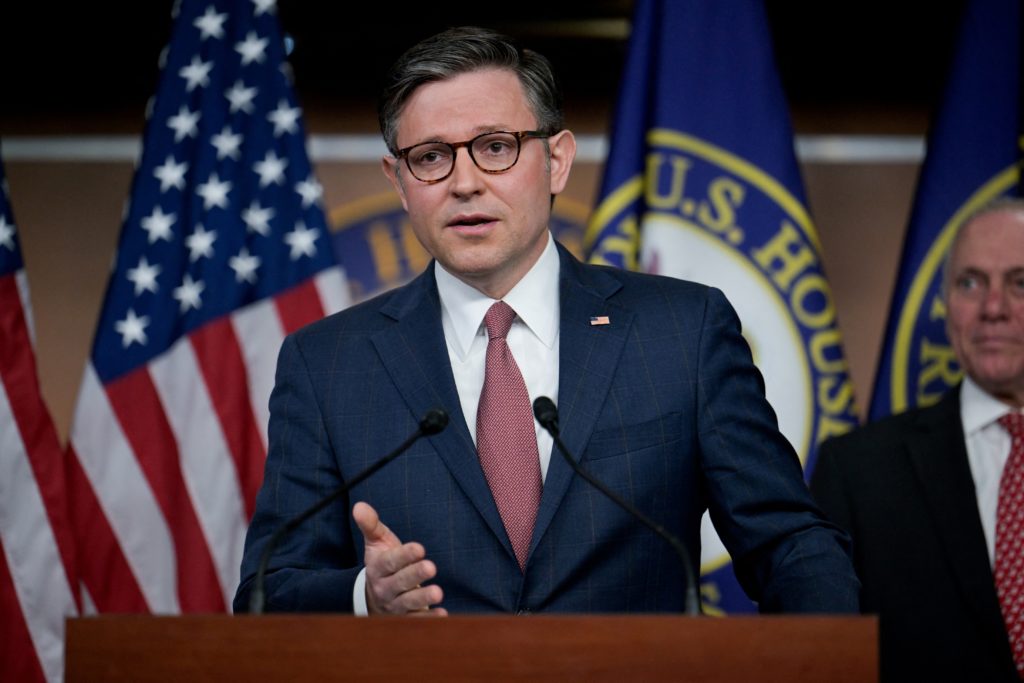
House Speaker Mike Johnson characterized the bill as “common sense legislation to just ensure that American citizens decide American elections,” framing the measure as addressing legitimate integrity concerns rather than creating voting obstacles.
However, Democratic Party leaders contend the legislation attempts to suppress voter turnout and undermine their electoral prospects at a moment when independent political analysts favor Democrats to capture House control. Republicans have been rattled by a series of Democratic special election victories, including one for the Texas state Senate that GOP strategists view as a warning signal heading into midterms.
“The SAVE America Act is part of a comprehensive Republican strategy to cement power this year. Speaker Johnson wants to make it harder for Americans to vote, easier for Washington Republicans to control how elections are run,” declared Representative Joe Morelle, the ranking Democrat on the House committee overseeing elections.
Federal law already prohibits non-citizens from voting in federal elections. Independent organizations across the political spectrum, along with state election officials, have consistently found such voting to be extraordinarily rare—contradicting Republican rhetoric suggesting widespread illegal voting represents a significant problem.
The left-leaning Brennan Center for Justice at New York University School of Law has cautioned that the SAVE America Act could deny voting rights to millions of U.S. citizens who lack ready access to passports, birth certificates and other documents proving their citizenship. This disproportionately affects low-income Americans, minorities, elderly citizens and those born in rural areas where documentation requirements were historically less rigorous.
Democracy advocates position the legislation within a larger confrontation between the Trump administration and state governments that has encompassed withholding federal funds, deploying National Guard troops and conducting an FBI search of a county election office in Georgia—actions critics characterize as federal overreach into traditionally state-controlled electoral administration.
“We have checks and balances in place that include state and local officials acting as a check against federal overreach,” explained Mai Ratakonda, program director of election protection at States United Democracy Center, a nonpartisan organization safeguarding free and fair elections. “That’s what the federal government is trying to undermine.”
Representative Chip Roy, the Texas Republican who authored the SAVE America Act, positioned the legislation as essential following what he characterized as an influx of millions of illegal immigrants entering the United States during the four-year Biden administration. The bill updates Roy’s earlier Safeguarding American Voter Eligibility (SAVE) Act that passed the House in April 2025 but never received Senate consideration.
Whereas the original SAVE Act would create a federal proof of citizenship mandate in voter registration processes and impose requirements for states to maintain voter rolls free of ineligible voters, the updated version additionally requires photo identification to vote in any federal elections.
The legislation would mandate information-sharing between state election officials and federal authorities when verifying citizenship on current voter rolls and enable the Department of Homeland Security to pursue immigration cases if non-citizens were discovered listed as eligible voters—provisions Democrats argue inappropriately federalize traditionally state-controlled election administration.
“If we want to rebuild confidence again in American elections, we need to pass the SAVE Act,” Representative Mike Haridopolos, a Florida Republican, told Fox News Digital. “What better way to eliminate that distrust than to make sure that whoever votes is an American citizen who is truly eligible to vote?”
House Minority Whip Katherine Clark, a Massachusetts Democrat, accused Republicans of attempting to suppress women’s votes specifically. She argued the legislation would complicate ballot-casting for married women whose surnames differ from their maiden names on birth certificates.
“Republicans aren’t worried about non-citizens voting. They’re afraid of actual American citizens voting. Why? Because they’re losing among women,” Clark asserted during House floor debate. “This is a minefield of red tape that you have put in front of women and American citizens and their right to vote.”
House GOP Policy Committee Chairman Kevin Hern, an Oklahoma Republican, emphasized that the legislation targets preventing illegal immigrants from voting in U.S. elections. “This really is about feeding the narrative that Democrats want illegals from all over the world to come here to support them,” Hern claimed regarding Democratic opposition.
Republican Study Committee Chairman August Pfluger, a Texas Republican, told Fox News Digital: “The American people did not give Republicans a mandate to make excuses. They gave us one to deliver wins, and the SAVE America Act is exactly that. Every single Democrat who voted no today proved they would rather let illegal aliens tip the scales in our national elections than protect your vote.”
If implemented, the bill could impose new requirements on voters participating in November midterm elections. However, Senate passage appears unlikely given current procedural rules requiring at least several Democrats to join Republicans in reaching the 60-vote threshold necessary to overcome a filibuster.
Republicans are simultaneously preparing a second, broader election bill designated the Make Elections Great Again Act, which would mandate paper ballot usage, restrict mail-in voting and prohibit ranked-choice voting in federal general elections. The House Administration Committee examined the legislation during a Tuesday hearing, suggesting Republicans intend pursuing comprehensive electoral system changes beyond citizenship verification alone.
The SAVE America Act’s partisan vote underscores the profound ideological divide regarding voting rights and election administration. Republicans frame the measure as common-sense integrity protections ensuring only eligible citizens participate in democracy, while Democrats characterize it as discriminatory suppression tactics designed to advantage Republican candidates by creating barriers disproportionately affecting constituencies likely to support Democratic candidates.
The citizenship proof requirement particularly affects Americans born before widespread hospital birth certificate issuance, those adopted or born overseas to American parents, individuals whose records were destroyed in natural disasters, and citizens who changed names through marriage or other legal processes. Obtaining replacement documentation often requires fees, travel to government offices during business hours, and bureaucratic navigation that creates obstacles for low-income workers and elderly citizens.
Critics note the ironic timing of Republicans advancing voting restrictions amid special election losses rather than after electoral victories, suggesting the legislation responds to political calculations about upcoming competitive races rather than evidence of actual voting irregularities.
As the legislation advances to the Senate, the fundamental question remains whether concerns about theoretical non-citizen voting—for which little evidence exists—justify imposing documentation requirements that voting rights advocates warn will disenfranchise eligible American citizens lacking easy access to required papers.
Foxnews/Reuters




