

TEHRAN, Iran (BN24) — At least 555 people have been killed in U.S. and Israeli strikes across Iran, the Iranian Red Crescent announced, as emergency crews continue rescue operations in dozens of cities and the country’s interim leadership seeks to consolidate authority following the reported killing of Supreme Leader Ayatollah Ali Khamenei.
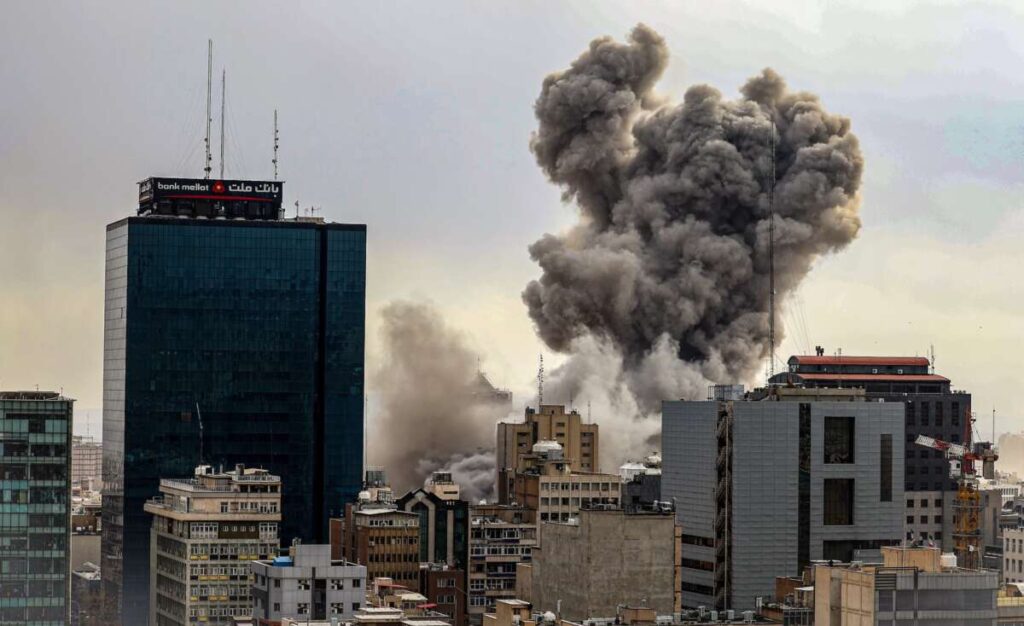
The humanitarian organization indicated that bombardments have affected a broad swath of the country, with attacks recorded in 131 cities nationwide. The figures were made public in a statement carried by The Telegraph, citing the Red Crescent’s assessment.
“Following enemy attacks in recent days, so far 131 cities have been involved in the incident,” the Iranian Red Crescent declared, adding that relief and medical teams were operating continuously.
The organization said 555 people had been killed and described ongoing efforts involving rescue, transport, and emergency medical services. More than 100,000 aid and relief personnel have been placed on heightened alert, it added, as authorities respond to what officials characterize as a widening humanitarian emergency.
The reported casualty toll emerges amid a dramatic shift in Iran’s political landscape. Iranian officials say the country’s Supreme Leader, Ayatollah Ali Khamenei, was killed in joint U.S.-Israeli strikes earlier in the conflict, an event that has intensified both domestic and regional tensions.
Iran’s temporary leadership council convened its second meeting late Sunday. Following the session, President Masoud Pezeshkian delivered a recorded address reaffirming continuity in governance and resistance to foreign pressure.
“The temporary leadership council started its work today and by God’s grace and power will continue the path of the late imam and the dear martyred leader and the path of all truth-seekers in the world,” Pezeshkian said.
He also directed pointed remarks toward Washington and Tel Aviv, asserting that the killing of Iran’s supreme leader would not diminish the country’s resolve.
“America and the Israeli regime should know that martyring the supreme leader of the Islamic Revolution will bring them nothing but humiliation,” Pezeshkian declared in the video message.
Calling on citizens to demonstrate unity during what he described as a period of mourning and national trial, Pezeshkian urged public solidarity in mosques, on the streets, and in civic spaces.
“Our dear nation is mourning this great martyr today, and all of us, with our presence on the scene and in the field, in mosques and streets, must thwart the enemies’ sinister plans with empathy and hand in hand,” he said.
He further maintained that Iran’s armed forces remain prepared for escalation.
“The armed forces of the Islamic Republic of Iran are ready and will be ready to crush the bases of enemies, and will disappoint enemies as always,” Pezeshkian said.
U.S. and Israeli officials have not immediately issued public responses to the casualty figures released by the Iranian Red Crescent. Independent verification of the toll was not immediately available.
The reported strikes represent one of the most expansive military operations inside Iran in recent years, affecting urban centers across multiple provinces. The geographic breadth of 131 cities suggests sustained and coordinated targeting rather than isolated incidents.
If confirmed, the death toll of 555 would mark a significant escalation in direct hostilities involving Iran, the United States, and Israel. Historically, confrontations between the three have often unfolded indirectly, through proxy groups or limited air operations. Large-scale strikes spanning more than 100 cities indicate a substantial shift in operational scope.
The killing of Ayatollah Ali Khamenei, if independently corroborated, would represent one of the most consequential geopolitical events in the Middle East in decades. As Iran’s supreme leader since 1989, Khamenei has been the country’s highest authority on military, political, and religious matters. His death could trigger both internal succession challenges and broader regional recalibrations.
Iran’s interim leadership council appears to be moving swiftly to project stability. Public messaging emphasizing continuity, religious symbolism,m and national unity reflects a strategic effort to prevent internal fragmentation. In times of crisis, Iranian officials have historically leaned on themes of martyrdom and resistance to rally public support.
At the same time, the mobilization of more than 100,000 relief workers underscores the humanitarian dimension of the crisis. Large-scale urban strikes often strain hospital capacity, infrastructure, re and supply chains. The Red Crescent’s description of round-the-clock operations suggests sustained casualty management efforts that could continue for days or weeks.
Regionally, the developments raise the prospect of broader conflict. Iran maintains alliances and partnerships with armed groups across the Middle East. Retaliatory measures, whether direct or through allied actors, could widen the confrontation beyond Iran’s borders.
Global energy markets may also respond to the instability. Iran occupies a strategic position along key oil transit routes, including the Strait of Hormuz. Heightened military activity in or near those waterways could disrupt shipping and influence global crude prices.
Diplomatically, the situation may intensify pressure on international mediators seeking to prevent a broader war. European governments, Gulf states,tes and multilateral organizations could face renewed calls to facilitate de-escalation.
For now, much of the available information comes from Iranian official channels, including the Red Crescent and statements by national leaders. Independent assessments of casualty figures, operational details, and the circumstances surrounding Khamenei’s reported death remain limited.
As rescue efforts continue across the country, the political and military consequences of the strikes appear poised to reverberate well beyond Iran’s borders, shaping the trajectory of Middle East security in the weeks ahead.





