

(Reuters) — Iran on Monday declared the Strait of Hormuz closed and warned that any vessel attempting to navigate the strategic waterway would face military action, marking a dramatic escalation in the widening confrontation between Tehran, Washington and Israel.
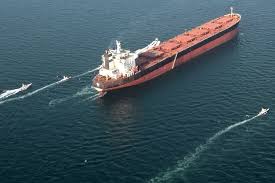
A senior official within the Islamic Revolutionary Guard Corps, the powerful branch of Iran’s armed forces, said naval and Guard units had been ordered to block traffic through the narrow channel linking the Persian Gulf to the Gulf of Oman and the Arabian Sea. Iranian state media carried remarks from Ebrahim Jabari, identified as a senior adviser to the Guards’ commander-in-chief, asserting that forces would strike ships seeking to pass.
“The strait is closed,” Jabari was quoted as saying. “If anyone tries to pass, our forces will set those ships ablaze.”
The warning represents Tehran’s clearest statement yet that it intends to halt maritime traffic through one of the world’s most critical energy corridors. The Strait of Hormuz handles roughly 20% of global daily oil consumption, funneling exports from major producers including Saudi Arabia, Iraq, the United Arab Emirates and Iran itself.
Iran’s move follows U.S. and Israeli military operations launched on Feb. 28 targeting Iranian leadership and military infrastructure. President Donald Trump publicly urged Iranians to rise against the country’s clerical leadership while backing continued military pressure.
Tehran responded with missile salvos aimed at Gulf states hosting U.S. forces, including Qatar, Kuwait and Bahrain. Iranian forces also fired missiles toward the United Arab Emirates, Saudi Arabia and Oman, broadening the geographic scope of the conflict.
The closure of the Strait fulfills years of Iranian threats to block the waterway in retaliation for foreign military action. The passage narrows to about 33 kilometers (21 miles) at its tightest point, making it both strategically vital and militarily vulnerable.
Oil traders reacted sharply to the announcement, with benchmark crude prices climbing amid fears that sustained disruption could choke global supply chains. Analysts note that even limited interference in the Strait can rattle markets because alternative export routes are limited.
Separately, Reuters cited Iranian news agencies as saying a fuel tanker identified as the Honduran-flagged Athe Nova — also referred to as Athen Nova in some reports — was ablaze in the Strait after being struck by two drones.
A statement attributed to the Revolutionary Guards accused the vessel of operating “in unison with America.” Maritime tracking services, including VesselFinder, indicated the 96-meter tanker had been present in the area shortly before the reported strike.
An Iranian military spokesperson, speaking on state television about Guard operations in Gulf waters, referenced the incident but did not explicitly state that Iranian drones carried out the attack. Iranian media outlets suggested the ship was supplying fuel to U.S. Navy vessels.
Reuters said it was unable to immediately reach the tanker’s registered owner for comment, and the ship’s manager did not respond to requests for clarification.
The Strait closure intensifies pressure on global shipping lanes already strained by attacks linked to Yemen’s Iran-aligned Houthi militants. Since the outbreak of the Gaza war in 2023, the Houthis have targeted commercial vessels in the Red Sea and Gulf of Aden with drones and missiles, disrupting trade routes connecting Asia and Europe.
Maritime security firms warned that insurers may suspend coverage for ships transiting the Strait if threats escalate further, potentially deterring commercial traffic even before any sustained blockade takes hold.
Energy-importing nations in Asia and Europe are particularly exposed. Japan, South Korea and India rely heavily on Gulf crude shipments routed through Hormuz, while European markets depend on liquefied natural gas exports from Qatar that also pass through the corridor.
Iran’s declaration signals a willingness to weaponize geography in its standoff with Washington and its regional allies. By threatening the Strait of Hormuz, Tehran leverages one of the few pressure points capable of exerting immediate economic impact far beyond the battlefield.
Yet the move carries profound risks. Any sustained blockade could provoke direct naval confrontation with the United States and allied maritime forces tasked with safeguarding freedom of navigation. Previous episodes of tanker seizures and mine attacks in the Gulf prompted multinational patrol operations and heightened military deployments.
A prolonged closure would likely strain Iran’s own economy as well. The country exports much of its oil through the same channel it now seeks to shut. Analysts suggest Tehran may be signaling resolve rather than preparing for an indefinite blockade, using the threat as leverage in a rapidly evolving conflict.
Markets remain volatile as governments assess contingency plans. Strategic petroleum reserves could cushion short-term disruptions, but a drawn-out standoff would test global supply resilience and risk pushing fuel prices sharply higher.
For now, commercial shipping companies face stark choices: risk transit under heightened military escort or reroute vessels at significant cost and delay. The coming days will determine whether Iran’s declaration becomes an enforced blockade or a bargaining chip in a confrontation that has already transformed the security landscape of the Gulf.




