

Iran (BN24) – Millions of Afghan migrants and refugees in Iran faced arrest Sunday as a government-imposed deadline expired, requiring them to leave the country or face forcible expulsion amid heightened security concerns following Iran’s recent conflict with Israel.
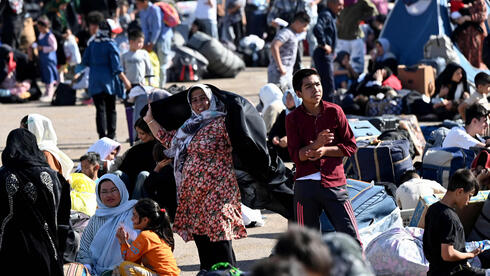
The Sunday deadline arrived as Iranian authorities expressed public concerns over national security in the aftermath of a 12-day conflict with Israel, which included U.S. airstrikes on Iran’s uranium-enrichment facilities. However, humanitarian organizations warned that mass deportations could further destabilize Afghanistan, already among the world’s most impoverished nations.
Iran hosts an estimated 4 million Afghan migrants and refugees, many of whom have lived in the country for decades after fleeing war, poverty and Taliban rule in their homeland.
Tehran launched a campaign in 2023 to expel foreigners it claimed were living “illegally” in the country. In March, the Iranian government ordered Afghans without legal residency status to leave voluntarily by Sunday or face expulsion.
More than 700,000 Afghans have departed since the March deadline was announced, with hundreds of thousands more facing expulsion. The United Nations International Organization for Migration reported that more than 230,000 Afghans left Iran in June alone.
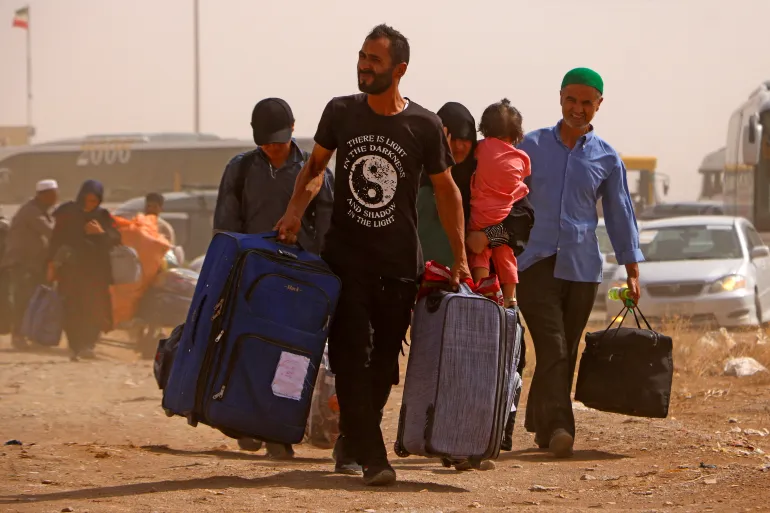
Iranian authorities denied specifically targeting Afghans, despite the overwhelming impact on the Afghan community. The government maintained that national security concerns necessitated the deportations.
Batoul Akbari, a restaurant owner in Tehran, told Al Jazeera that Afghans living in Iran were suffering from “anti-Afghan sentiment,” describing it as heartbreaking to see “people sent away from the only home they have ever known.”
“Being born in Iran gives us the feeling of having two homelands,” Akbari said. “Our parents are from Afghanistan, but this is what we’ve always known as home.”
Mohammad Nasim Mazaheri, a student whose family was forced to leave Iran, agreed that “the deportations have torn families apart.”
The Office of the UN High Commissioner for Refugees estimated that Iran deported more than 30,000 Afghans daily on average during the conflict with Israel, dramatically increasing from approximately 2,000 deportations per day previously.
“We have always striven to be good hosts, but national security is a priority, and naturally, illegal nationals must return,” Iranian government spokesperson Fatemeh Mohajerani said Tuesday.
The UNHCR reported that of 1.2 million Afghans returning to their homeland, more than half had come from Iran after the government set its March 20 deadline.
“They are coming in buses, and sometimes, five buses arrive at one time with families and others, and the people are let out of the bus, and they are simply bewildered, disoriented and tired and hungry as well,” said Arafat Jamal, the UNHCR representative in Afghanistan, describing scenes at border crossings.
“This has been exacerbated by the war, but I must say it has been part of an underlying trend that we have seen of returns from Iran, some of which are voluntary, but a large portion were also deportations.”
Al Jazeera correspondent Resul Serdar, reporting from Tehran, said Afghans have increasingly been blamed for economic hardships, shortages and social issues in Iran.
“These accusations have been fuelled by political rhetoric and social media campaigns following 12 days of conflict between Iran and Israel and claims that Israel has recruited Afghans as spies,” Serdar reported.
The mass deportations create additional challenges for Afghanistan’s Taliban government, which already struggles to provide basic services and economic opportunities for its population. The influx of returnees threatens to strain resources further in a country heavily dependent on international humanitarian aid.
International observers expressed concern that the deportations could contribute to regional instability, as Afghanistan lacks the infrastructure and economic capacity to absorb hundreds of thousands of returning migrants amid ongoing humanitarian crises.
aljazeera




