

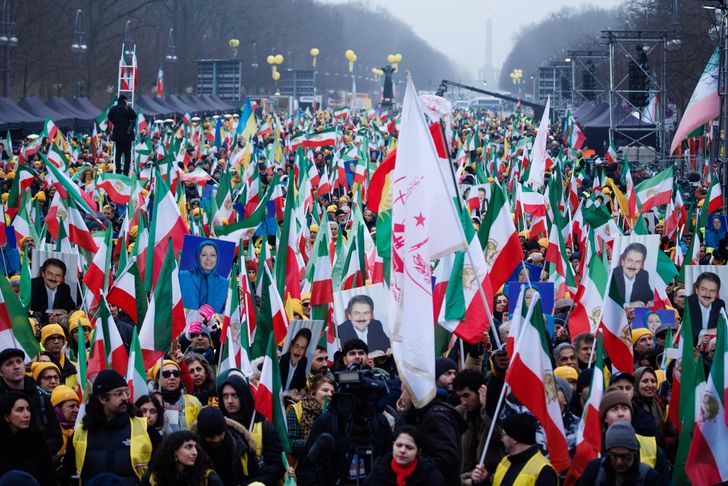
The number of people killed in Iran’s sweeping suppression of nationwide protests has climbed to at least 7,002, activists said Thursday, marking a dramatic escalation in one of the deadliest crackdowns in the Islamic Republic’s history.
The U.S.-based Human Rights Activists News Agency (HRANA), which has tracked casualties during previous waves of unrest, published the updated figure after weeks of verification through contacts inside Iran. The organization relies on a network of sources within the country to cross-check identities amid severe communication restrictions.
Iranian authorities have offered a significantly lower official figure. On Jan. 21, the government announced that 3,117 people had died. In past episodes of unrest, the theocratic leadership has been accused by rights groups of minimizing casualty counts or withholding them entirely.
The Associated Press has not been able to independently confirm the number of fatalities because Iranian officials have restricted internet access and disrupted international phone lines since the protests intensified.
The rising toll underscores mounting domestic pressure on Iran’s leadership even as the country navigates a high-stakes diplomatic standoff with the United States over its nuclear program. A second round of negotiations remains uncertain, particularly after Israeli Prime Minister Benjamin Netanyahu pressed President Donald Trump to harden Washington’s demands on Tehran.
Following discussions with Netanyahu, President Donald Trump wrote on Truth Social that he insisted talks with Iran continue “to see whether or not a Deal can be consummated.” He added that reaching an agreement would be preferable but warned that previous refusals had brought consequences for Tehran. “Hopefully this time they will be more reasonable and responsible,” Trump said.
Inside Iran, grief is expected to intensify as families begin marking the traditional 40-day mourning period for loved ones killed during the unrest. In Iranian culture, the fortieth day after a death often becomes a focal point for remembrance gatherings, which in previous protest movements have evolved into renewed demonstrations.
Diplomatic maneuvering has continued in parallel with domestic turmoil. Senior Iranian security official Ali Larijani met Wednesday in Qatar with Foreign Minister Sheikh Mohammed bin Abdulrahman Al Thani. Qatar hosts a major U.S. military installation that Iran attacked in June after U.S. forces struck Iranian nuclear facilities during a 12-day Iran-Israel conflict. Larijani also held discussions with Hamas officials and met Tehran-aligned Houthi representatives in Oman.
In remarks to Qatar’s Al Jazeera satellite network, Larijani acknowledged an “exchange of messages” with Washington but indicated no formal proposal had been delivered during talks in Oman. Qatar’s state-run Qatar News Agency said Emir Sheikh Tamim bin Hamad Al Thani later spoke with President Donald Trump about regional de-escalation and security efforts.
Iranian Foreign Minister Abbas Araghchi, speaking to Russian state broadcaster RT, emphasized Tehran’s distrust of Washington. He recalled that negotiations last June were interrupted by military action. “We need to make sure that that scenario is not repeated,” Araghchi said, adding that responsibility for avoiding escalation “is mostly up to America.” Despite skepticism, he suggested it might be possible to reach “a better deal than Obama,” referencing the 2015 nuclear agreement that Trump withdrew from during his first term.
The United States has increased its military footprint in the region. The aircraft carrier USS Abraham Lincoln and accompanying vessels have deployed to the Middle East. U.S. forces have shot down a drone that approached the carrier and intervened when Iranian forces attempted to stop a U.S.-flagged vessel in the Strait of Hormuz. Trump told Axios he is weighing the possibility of dispatching a second carrier strike group, stating, “We have an armada that is heading there and another one might be going.”
Vice President JD Vance, during a visit to Azerbaijan, said Washington remains focused on diplomacy but retains alternatives. “He’s going to have a lot of options, because we have the most powerful military in the world,” Vance said.
Meanwhile, the Norwegian Nobel Committee voiced alarm over the treatment of 2023 Peace Prize laureate Narges Mohammadi. The committee said it was “deeply appalled” by accounts describing her arrest, alleged physical abuse and continued denial of adequate medical care. It urged her immediate release, noting reports that she has fainted repeatedly and suffers from dangerously high blood pressure. Mohammadi, 53, was recently sentenced to more than seven additional years in prison.
Iran marked the 47th anniversary of its 1979 Islamic Revolution this week amid stark contrasts. State television broadcast images of large pro-government rallies featuring chants of “Death to America!” and displays of missiles and debris said to be from Israeli drones. President Masoud Pezeshkian addressed supporters at Tehran’s Azadi Square, asserting that Iran is “not seeking nuclear weapons” and stands ready for verification, although the International Atomic Energy Agency has been unable for months to conduct full inspections.
Simultaneously, witnesses in Tehran described hearing nighttime chants of “Death to the dictator!” from residential neighborhoods. Pezeshkian acknowledged that the crackdown beginning Jan. 8 had “caused great sorrow,” saying the government is “obligated to assist all those who were harmed.” He did not directly address the casualty figures cited by activists.
HRANA’s higher death count reflects the cumulative impact of security operations involving the Revolutionary Guard and other forces. Activists say tens of thousands have been detained. Iran’s population of roughly 85 million includes both staunch supporters of the theocracy and citizens increasingly vocal in opposition. Economic hardship, sanctions pressure and generational divides have compounded frustration.
The expanding casualty figures could further complicate diplomatic calculations. Western governments face growing scrutiny over engagement with Tehran while human rights conditions deteriorate. Conversely, Iranian leaders may view negotiations as a means to relieve sanctions pressure and stabilize the economy amid domestic unrest.
Whether nuclear talks advance or collapse may determine the trajectory of tensions across the Middle East. Regional governments fear that a breakdown could trigger broader confrontation, particularly given the military assets now concentrated in the Persian Gulf.
For many Iranians, however, the immediate concern remains accountability for the bloodshed. As mourning ceremonies approach, the country stands at a volatile intersection of grief, political dissent and international brinkmanship — a convergence that could shape Iran’s future well beyond the current crisis.
The Associated Press original




