

Senior Iranian officials warned President Donald Trump on Friday that any U.S. move to intervene in Iran’s ongoing protests would cross a “red line,” after Trump said Washington could come to the aid of demonstrators if security forces kill them.
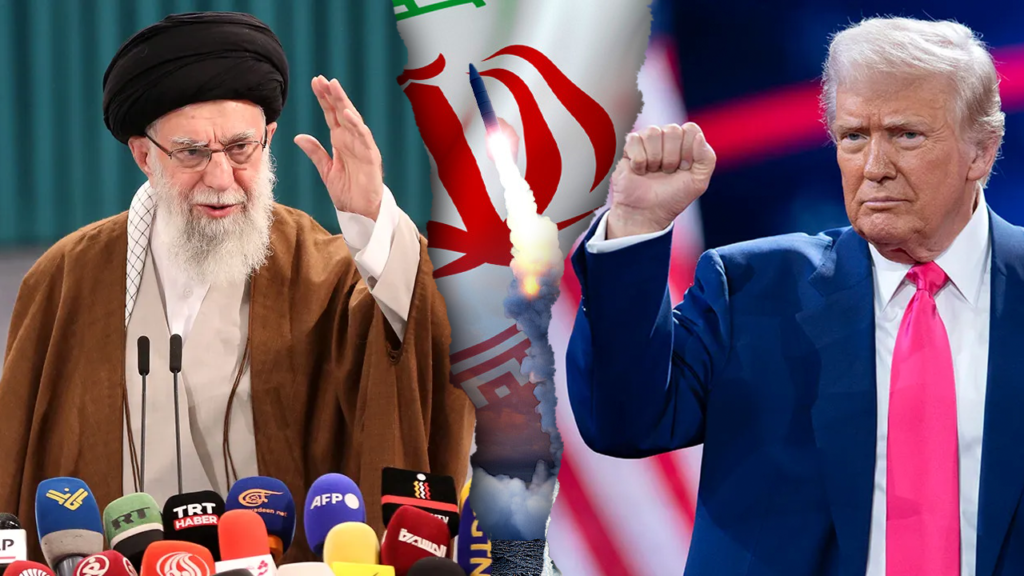
In a social media post, Trump said that if Iranian authorities “shoot and kill peaceful protesters,” the United States would “come to their rescue,” adding that the country was “locked and loaded and ready to go.” He did not elaborate on what action the United States might take.
The warning came as protests in Iran entered a sixth day, marking the largest wave of unrest since 2022, when the death of 22-year-old Mahsa Amini in police custody triggered nationwide demonstrations. The current protests erupted after a sharp collapse in Iran’s currency over the weekend, with the rial plunging to roughly 1.4 million to the U.S. dollar, intensifying pressure on an economy already strained by inflation and sanctions.
At least seven people have been killed since the unrest began, including a volunteer member of the Basij paramilitary force, according to Iranian media and rights groups. Videos circulating online have shown security personnel carrying shotguns, with gunfire audible in the background.
Ali Shamkhani, a senior adviser to Supreme Leader Ayatollah Ali Khamenei, said Iran’s national security was not “material for adventurist tweets.” In a post on X, he warned that “any intervening hand nearing Iran’s security on pretexts will be cut off with a regret-inducing response.”
Trump’s comments followed his recent statement that the United States could strike Iran if it were found to be rebuilding its nuclear program, further heightening tensions between the two longtime adversaries.
Ali Larijani, secretary of Iran’s Supreme National Security Council, also responded, accusing the United States and Israel of fueling the demonstrations — a claim Iranian officials have repeatedly made during periods of unrest. In a post on X, Larijani warned that U.S. involvement in Iran’s domestic affairs would destabilize the region and harm American interests, adding that Americans should be mindful of the safety of U.S. troops stationed abroad.
Iran has previously threatened U.S. forces in the Middle East, and in June launched missiles at the Al Udeid Air Base in Qatar after U.S. strikes on Iranian nuclear enrichment facilities.
The protests have centered in Tehran but have spread to cities including Isfahan. Shopkeepers have shuttered businesses in protest, while students have staged demonstrations on university campuses. Although economic grievances are at the core of the unrest, demonstrators have also chanted anti-government slogans and criticized what they describe as corruption and mismanagement.
President Masoud Pezeshkian initially struck a conciliatory tone, inviting protest leaders to talks and saying his government should listen to what he called the protesters’ “legitimate demands.” That approach contrasts with the heavy-handed crackdown during the 2022 demonstrations.
However, recent deaths could signal a tougher response. The Islamic Revolutionary Guard Corps said earlier this week it would act decisively against what it described as foreign interference or “sedition.”
As tensions rise at home, Iranian officials have also sought to counter U.S. claims that Tehran is reviving its nuclear program. Iran has said it is not enriching uranium anywhere in the country and has indicated a willingness to engage in negotiations with Western powers.
Reuters




