

The Israeli military launched a series of strikes on Gaza on Sunday, Israeli media and local residents reported, threatening to unravel a fragile U.S.-mediated ceasefire agreement amid renewed accusations between Israel and Hamas.
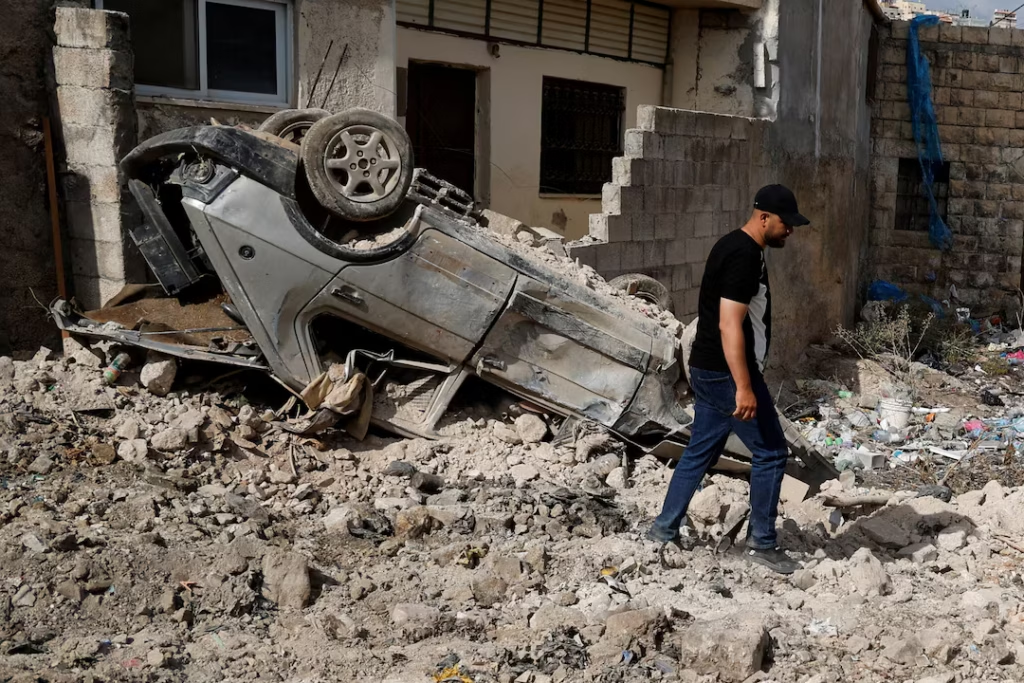
The assault marks the most serious challenge to the ceasefire that took effect on Oct. 11. Explosions and heavy gunfire were heard in Rafah in southern Gaza, according to Palestinian residents who spoke with Reuters. Witnesses also reported Israeli tank fire in the eastern town of Abassan, near Khan Younis, as well as waves of airstrikes launched into Rafah early Sunday afternoon.
An Israeli government spokesperson declined to confirm the strikes, referring inquiries to the military, which had no immediate comment.
Gaza health officials said two Palestinians were killed in an Israeli airstrike in the Jabalia area of northern Gaza. The Times of Israel reported that airstrikes in Rafah followed militant attacks on Israeli forces, though it did not identify a source.
An Israeli military official said Hamas fighters carried out multiple assaults against Israeli troops inside Gaza, including a rocket-propelled grenade attack and a sniper ambush.
“Both of the incidents happened in an Israeli-controlled area,” the official said. “This is a bold violation of the ceasefire.”
Senior Hamas official Izzat Al Risheq denied the allegations, insisting the militant group remains committed to the truce and accusing Israel of repeated violations. Neither Al Risheq nor the Israeli military made specific reference to Sunday’s reported airstrikes.
Gaza’s government media office accused Israel of committing 47 ceasefire violations since the deal was struck, resulting in 38 deaths and 143 injuries.
“These violations have ranged from direct shooting at civilians, to deliberate shelling and targeting operations, as well as the arrest of several civilians,” the office said in a statement.
The Rafah border crossing between Gaza and Egypt will remain closed until further notice, Israeli officials said, extending a months-long shutdown that began in May 2024.
The ceasefire agreement included commitments to increase humanitarian aid deliveries to Gaza, where international monitors warned of famine conditions in August. Israel and Hamas are also locked in a dispute over the return of the bodies of 28 deceased hostages. Hamas has so far returned 20 living hostages and 12 bodies but says recovering additional remains will require special equipment to dig through rubble.
The escalation underscores the steep challenges facing President Donald Trump’s plan to end the war. Critical issues — including Hamas disarmament, Gaza’s governance, the composition of an international stabilization force, and steps toward establishing a Palestinian state — remain unresolved.
The U.S. Embassy in Jerusalem referred inquiries to the State Department.
Renewed fighting and uncertainty over the ceasefire dragged Tel Aviv’s key share indices down nearly 2% on Sunday, reflecting investor unease.




